Nicole Gelinas reports on the effects of Mayor Michael Bloomberg’s controversial 2009 transportation reforms, which have unexpectedly lightened the traffic and dangers on New York’s streets.


Gelinas looks at what was unveiled as a "targeted adjustment" to pedestrianize segments of Broadway in Midtown Manhattan, but what some understood at the time, and has become clear since, was a revolutionary "shift away from a century's worth of New York transportation policy." In 2009, New Yorkers were concerned that the "adjustment" would only increase the traffic on nearby streets, but the conversion from car-filled avenue to "pedestrian plaza" has actually increased the flow of traffic and reduced traffic-related fatalities.
Gelinas looks at the successes of the improvements to Broadway, and beyond, as "New York has been rationally using its limited physical space to get more people moving more quickly-and that means not in automobiles. New York has achieved its improvements on the cheap. Better still, the changes have saved lives."
With New York facing the challenges of overflowing subways, clogged bus systems, and reckless cyclists, Gelinas argues that Mayor Bloomberg's transportation oriented plans are a step in the right direction towards creating a safer, speedier, and sustainable New York.
Thanks to Akemi Lueng
FULL STORY: Ungridlocked

De Blasio Indicates He May Revisit Popular Times Square Pedestrianization
In a debate held on Tuesday, and in a subsequent radio interview, leading New York City mayoral candidate Bill de Blasio indicated he'd like to study whether to bring back automobiles to a stretch of Broadway that had been closed for pedestrians.
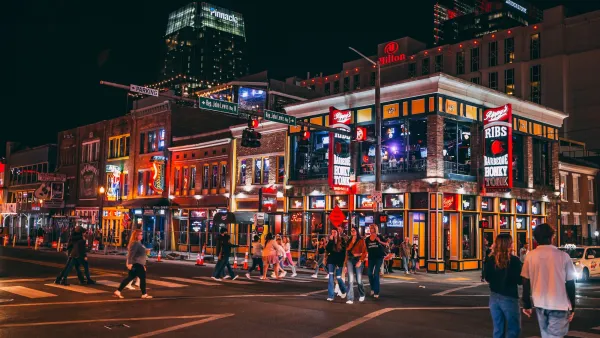
Tennessee DOT weighs making Nashville's Broadway car-free — sometimes
After a crash that killed one person and injured several others, state and city officials are in talks to consider options for closing the popular thoroughfare to cars during certain events.
Midtown Manhattan Rezoning Proposal Could Yield Almost 10,000 Housing Units
A plan to alter zoning for parts of Midtown would permit new housing and make it easier to convert office buildings to residential units.

Planetizen Federal Action Tracker
A weekly monitor of how Trump’s orders and actions are impacting planners and planning in America.

The state-sanctioned urbicide of Austin
People don’t kill cities. Freeways do.

US to reduce Colorado River water deliveries to Mexico
A new Colorado Treaty amendment reduces Mexico’s Colorado River water allocation by 250,000 acre feet.

5 New England states march closer to 800 megawatt wind energy project
Securing federal approval for the project may be complicated under the Trump administration, which has historically been hostile towards domestic wind power.

Baltimore to break ground on $50 million Transit Priority Project
The project will bring faster bus trips, safer streets and better bike connections to Baltimore.

Airbnb launches $250 million 'last-dollar financing' housing accelerator, makes first investment in Austin
The company will put $6.4 million towards affordable housing development in Texas’ capital.

FREE Course: Walkable City 1: Why Walkability?
After describing his path towards focusing on walkability as the essence of good planning, Jeff Speck marches through his five principal reasons for making more walkable places.
Reinventing Malls: Planning Alchemy—Turning Gray Fields Into Gold
The course focuses on the opportunities and imperatives that shape reinvention of mall sites.

Eagle County Government
Harvard University Graduate School of Design
Nashville Planning Department
The Architects Foundation
University of Cincinnati Online
The Pocatello Development Authority
The Urban Renewal Agency of the City of Pocatello
Journal of the American Planning Association