Launched May 1 within the Spitzer School of Architecture at the City College of New York, the new J. Max Bond Center on Design for the Just City will pursue the ways in which design can make "American cities more just and inclusive places to live."


Named for the architect who directed of one of the country's first community design centers, the Architects Renewal Committee of Harlem (ARCH), and died in 2009, the Bond Center will be led by Toni Griffin, the former deputy director of planning in Washington, D.C., who founded the Detroit Works Project, reports Julie Iovine.
"The center is a reinvigorated recast of the City College Architecture
Center (CCAC) that operated in the 1980s and '90s primarily as a pro
bono architecture and planning service for the Harlem community. The
Bond Center will focus more on faculty and collaborative research,
drawing on disciplines across the CUNY system and beyond, as well as
initiate urban projects engaging with policy reform that could become
models for other cities, and especially Harlem itself. An active
conference, publication, and events program is also on the agenda."
Read the full story: Walk This Way

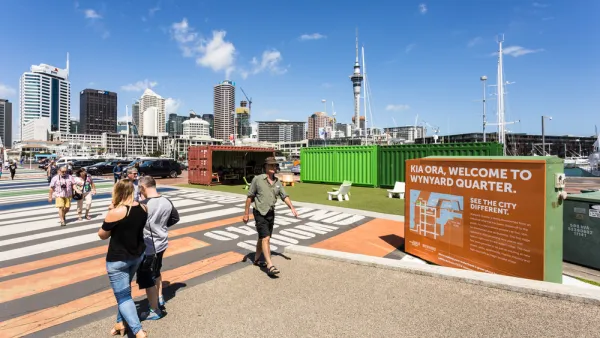
Considering Transportation Impacts on Well-Being and Livability
The New Zealand Transport Agency’s new report, "Transport Impacts on Wellbeing and Liveability" provides guidance for transportation planning that achieves fairness, neighborliness, respect, community identity, pride, fitness, and health.
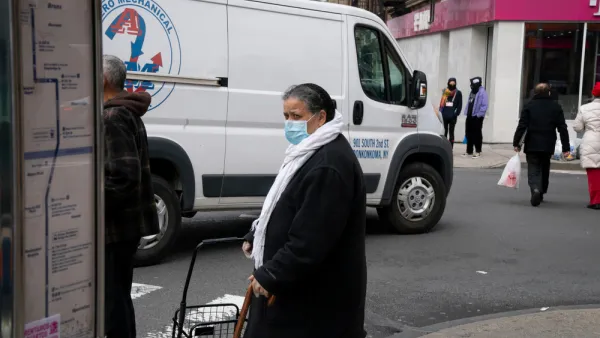
Survey Data on Coronavirus Effects Reveal Racial Lines
The economic and health effects of coronavirus have spread unevenly across racial lines in the United States, as further revealed by new research from the Pew Research Center.

Task Force Would Ensure Social Justice in COVID-19 Response in Pittsburgh
If approved by the Pittsbugh City Council, the proposed Greater Pittsburgh Covid-19 Racial Equity Task Force would work toward more equitable distribution of economic and public health resources, during the coronavirus pandemic and after.

Planetizen Federal Action Tracker
A weekly monitor of how Trump’s orders and actions are impacting planners and planning in America.

‘Going backwards:’ Baltimore mayor, students rally against state's transit funding plan
Maryland's proposed six-year plan provides no funding for Baltimore’s BMORE bus program and reduces its road maintenance funding.

Detroit to transform waterfront with $2.2 billion investment
Developers will convert about 18 acres of unused parking lot space into civic spaces.

More money, less service: Miami-Dade slashes bus routes after hiking fare
The department is facing a multi-million dollar funding gap.

Transit leaders progress high-speed rail from Portland to Vancouver, B.C.
Washington state officials may reveal feasible routes for the high-speed rail in late 2027.

LA to transform part of water treatment facility into new park
By rebuilding some of the Los Angeles-Glendale Water Reclamation Plant’s infrastructure, the city will free up 18,000 square feet to create a new green space for the public.

FREE Course: Walkable City 1: Why Walkability?
After describing his path towards focusing on walkability as the essence of good planning, Jeff Speck marches through his five principal reasons for making more walkable places.
Reinventing Malls: Planning Alchemy—Turning Gray Fields Into Gold
The course focuses on the opportunities and imperatives that shape reinvention of mall sites.

One Hundred Miles
County of Mendocino
planning NEXT
The Architects Foundation
University of Cincinnati Online
Montrose County
Northern Illinois Transit Authority (NITA)
The Pocatello Development Authority