Michael Coren explores a potentially solid idea for carbon sequestration - turning our greenhouse gas emissions into underground rock formations.


Aside from the growth of renewable energy technologies, there is another promising option to combat climate change being tested in pilot projects around the world. Iceland's new CarbFix project uses subterranean chemistry to transform carbon dioxide emissions into limestone rocks.
Coren writes, "CarbFix is injecting its CO2 emissions into volcanic basalt, where it (hopefully) leaches minerals from the surrounding volcanic basalt to form new rock." By doing so, it would allow for a larger storage capacity placed underground and less carbon in the air.
Although the science and technology are still being developed and perfected, its the cost that will likely determine the strategy's long-term success.
"CarbFix project's pilot project has spent $11 million to sequester its first 2,000 tons of CO2, even though researchers estimate the cost may fall to less than $10 per ton." Similar experiments in Australia and the U.S have been met with cost and technical challenges.
Read the full story: Turning CO2 Into Rocks With Upside-Down Smokestacks

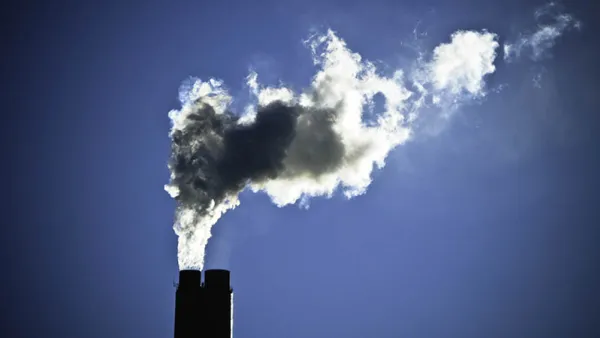
Largest Carbon Capture Plant in the World Opens in Iceland
The plant draws carbon from the atmosphere and turns it to stone in underground wells, but the technology remains relatively expensive.
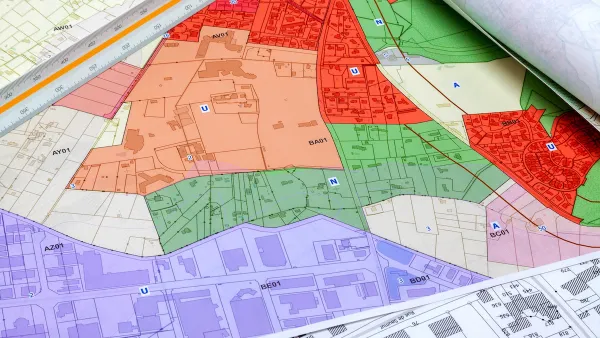
How Zoning Affects Greenhouse Gas Emissions
As the urgency of the climate crisis increases, a paper in the Notre Dame Law Review argues that increased density is not a universally effective strategy to reduce emissions and that different strategies are needed for low-carbon places versus high-carbon ones.
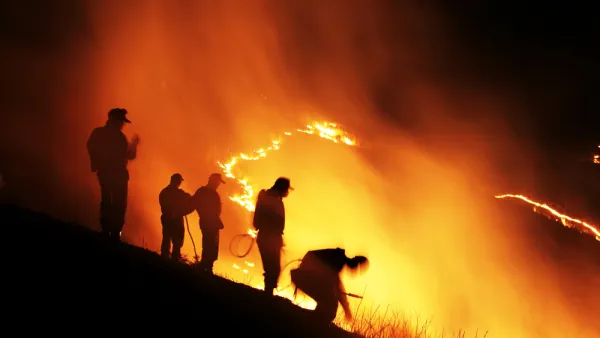
Climate Change Lesson Number One from the California Fires
Whether climate change 'caused' the California fires is a red herring, argues disaster resiliency expert Dave Hampton, in this first part in a series on lessons from the California fires about climate change.

Planetizen Federal Action Tracker
A weekly monitor of how Trump’s orders and actions are impacting planners and planning in America.

California plans to bury El Niño’s downpour
If the state plays its cards right, it may be able to store a billion acre-feet of El Niño’s water in aquifers.

Chicago breaks ground on $3 billion megadevelopment
The new neighborhood, titled Foundry Park, will one day host 3,700 residences.

Want to study the Missouri River? Soon, you may need unanimous approval from 10 states
Legislation would require 10 governors’ permission to study or build projects moving water outside the basin.

Desperate measures: Advocates weigh draining Lake Powell to fill Colorado River
Draining the reservoir could reduce evaporation losses by a couple hundred thousand acre-feet.

This road in NYC is infamously dangerous — and Mamdani can't fix it
New York City's Ocean Parkway is known for reckless driving, but the power to implement safety measures lies with the state rather than the city.

FREE Course: Walkable City 1: Why Walkability?
After describing his path towards focusing on walkability as the essence of good planning, Jeff Speck marches through his five principal reasons for making more walkable places.
Reinventing Malls: Planning Alchemy—Turning Gray Fields Into Gold
The course focuses on the opportunities and imperatives that shape reinvention of mall sites.

City of Rosemead
Rutgers University, Edward J. Bloustein School of Planning and Public Policy
One Hundred Miles
Hunter College, City University of New York (CUNY)
The Architects Foundation
University of Cincinnati Online
City of Cambridge
Montrose County
The Pocatello Development Authority