Yonah Freemark reports on Chicago's commitment of $7.3 million, supplementing $24.6 million in federal funds already in place, to improve bus service between Union Station and Navy Pier.


While Freemark's description of the enhancements envisioned under the plan seem to fall short of a full bus rapid transit system, they will serve to speed movement for thousands of passengers each day.
Funded by tax increment financing (on the city's end), Freemark reports that the project will consist of, "painting dedicated bus lanes on the Madison/Washington and Clinton/Canal Street pairs for a total of two miles, offer signal priority, improve bus shelters, and add bike lanes. New buses and a small bus transit center at Union Station are also part of the plan.
According to Freemark, "Under Mayor Rahm Emanuel's leadership, Chicago is taking an incremental approach to the improvement of public transportation in the city, steering away from the mega-fantasies of the Daley era."
Read the full story: Chicago Commits to Downtown Bus Priority

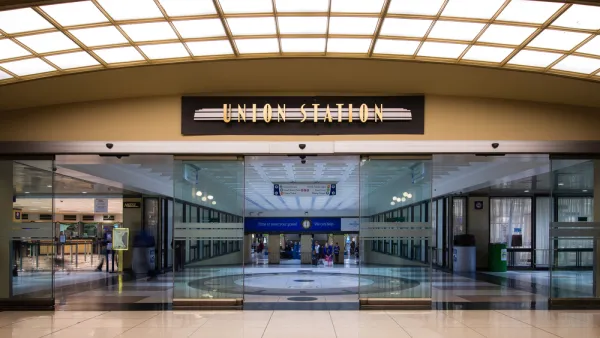
First on Chicago's Wish List from the Trump Administration: $1 Billion for Union Station
The Emanuel Administration has yet to secure needed funding for a big project to update Chicago's Union Station. Now it's up to the Trump Administration to supply a needed loan.
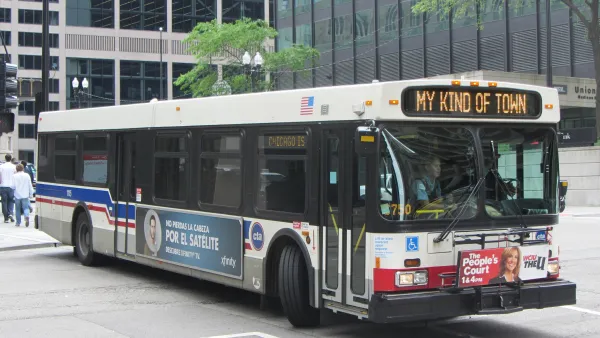
Bus Advocates: Chicago BRT Plan Could Be Better
The Central Loop BRT project, scheduled to break ground this month, will improve commuter travel times. But a collection of compromises means many ideal BRT components won't be installed.
Emanuel Campaign Announces Neighborhood-Level Infrastructure Plans
Mayor Rahm Emanuel, busy on the campaign trail for re-election this week, made a big push for infrastructure investments at the neighborhood level.

Planetizen Federal Action Tracker
A weekly monitor of how Trump’s orders and actions are impacting planners and planning in America.

Amtrak, CN end decades-long dispute with eight-year agreement
The new operating agreement establishes an updated framework for the companies to work together, including processes to resolve disputes.

Judges permit Denver to divert 77,000 acre feet from the Colorado River for reservoir expansion
Overuse and climate change have caused the Colorado River’s water levels to plummet.

Philadelphia to invest $2 billion into upgrading city airports as PHL places last in customer satisfaction
Modernizations to Philadelphia's airports will include baggage system upgrades and a new automated parking garage guidance system.

The LA housing policies making developers turn away from the city
Despite LA’s housing shortage, developers say the city’s "mansion-tax" and pandemic-era policies make it an unappealing place to build housing.

New density bill would require 7 California cities to establish regional transit hubs
The bill would also require major cities in California to permit high-rise residential buildings.

FREE Course: Walkable City 1: Why Walkability?
After describing his path towards focusing on walkability as the essence of good planning, Jeff Speck marches through his five principal reasons for making more walkable places.
Reinventing Malls: Planning Alchemy—Turning Gray Fields Into Gold
The course focuses on the opportunities and imperatives that shape reinvention of mall sites.

City of Wisconsin Rapids
Harvard University Graduate School of Design
KFH Group Inc.
The Architects Foundation
University of Cincinnati Online
The Pocatello Development Authority
The Urban Renewal Agency of the City of Pocatello