Calling it "uniquely terrible", the Times questions whether it will even survive a full floor vote in the House. The editorial lists three major problems with the bill, but notes there are many more.


The Times reminds its readers that it was the president so revered today by House Republicans, Ronald Reagan, that signed the the Surface Transportation Assistance Act of 1982 that created the Mass Transit Account that they wish to eliminate. The bill also increased the gas tax by five cents - a 125% increase over the existing four cent tax.
"It would make financing for mass transit much less certain, and more vulnerable, by ending a 30-year agreement that guaranteed mass transit a one-fifth share of the fuel taxes and other user fees in the highway trust fund.
It would open nearly all of America's coastal waters to oil and gas drilling, including environmentally fragile areas that have long been off limits.
It would demolish significant environmental protections by imposing arbitrary deadlines on legally mandated environmental reviews of proposed road and highway projects."
Read the full story: EDITORIAL - A Terrible Transportation Bill
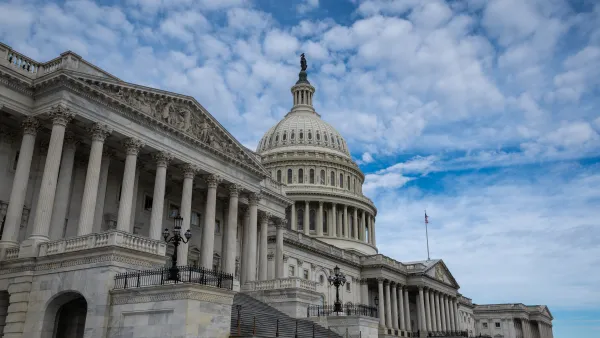
House’s stopgap bill would reduce passenger rail investment by 83%
The bill would also lessen surface level public transit investment by 20% and eliminate the advance appropriations provided by the Infrastructure Investment and Jobs Act.
Trump Administration Proposes to Divert Billions from Mass Transit to Highways; Advocates Sound Alarm
Two proposals from the Trump DOT would eliminate a federal mass transit fund and make it harder for states to allocate funding to transit projects.

How a Truck Tax Could Save the Highway Trust Fund
The freight trucking industry is a prime candidate for a mileage tax that would boost road maintenance revenue.

Planetizen Federal Action Tracker
A weekly monitor of how Trump’s orders and actions are impacting planners and planning in America.

Eastern Nebraska is running out of electricity
Data centers and electrification are straining eastern Nebraska’s grid, throttling economic development.

Study reveals best places in the U.S. for cycling, walking
New research from Streetlight Data examines bicycle and pedestrian miles per capita in the 100 largest U.S. cities by population.

Federal government nominates new FTA administrator
Mark Aesch is currently the founder and CEO of a transportation management consulting firm.

Developers reveal $10 billion stadium plan as ‘Hail Mary’ to keep Bears in Chicago
The plan would also boast a public park, high- and mid-rise buildings and a youth sports complex.

As Texas embraces carbon storage, a Black community questions the risks
Texas now issues permits for companies to store carbon dioxide underground. East Texas residents fear safety risks, and skeptics doubt the climate benefits.

FREE Course: Walkable City 1: Why Walkability?
After describing his path towards focusing on walkability as the essence of good planning, Jeff Speck marches through his five principal reasons for making more walkable places.
Reinventing Malls: Planning Alchemy—Turning Gray Fields Into Gold
The course focuses on the opportunities and imperatives that shape reinvention of mall sites.

City of Charlotte
City of Rosemead
Rutgers University, Edward J. Bloustein School of Planning and Public Policy
University of Michigan School for Environment and Sustainability (SEAS)
Hunter College, City University of New York (CUNY)
The Architects Foundation
City of Cambridge
The Pocatello Development Authority
The Urban Renewal Agency of the City of Pocatello