Sarah Laskow reports on a new study by the Center for Neighborhood Technology (CNT) that seeks to rethink how affordable housing is defined to incorporate transportation costs.


An analysis by CNT of the Chicago region's affordable housing developments has found that some are not very affordable when transportation costs are considered.
Typical transportation costs, the second largest expense in a household budget, ranged from $750 per month in many Chicago neighborhoods with affordable housing units to more than $1,000 in more distant suburbs. The report also found that suburban Cook County, which has comparatively low transportation costs, has fewer affordable housing units compared with the city of Chicago and the region's collar counties.
"Transportation costs don't only bust the budgets of low-income households. As the price of gas rises, working- and middle-class families can find themselves in what the New America Foundation calls "the energy trap" - stuck with the high costs of car ownership and fuel. It's a particular problem for families that have moved out to the exurbs in search of more affordable housing without considering how much more they'll have to pay to reach their jobs or their grocery store."
According to Laskow, "Sustainability advocates often start with the premise that dense, transit-accessible community save energy. But start with saving money for individual households - savings that people might feel more connected to - and the end point is the same."
Thanks to Annette Stahelin
Read the full story: Sustainable Development Makes Housing Affordable

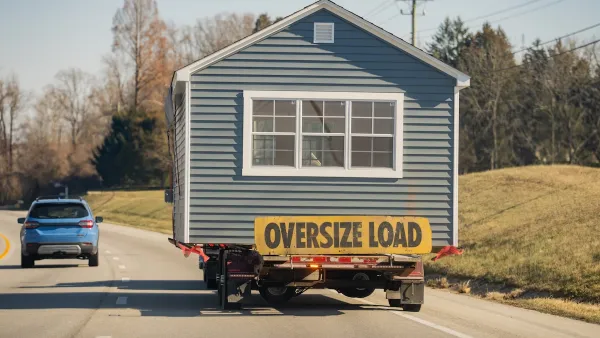
A third of Texas cities must update their zoning codes to comply with new housing law
Texas municipalities are now required to allow manufactured housing in at least one residential zoning district.
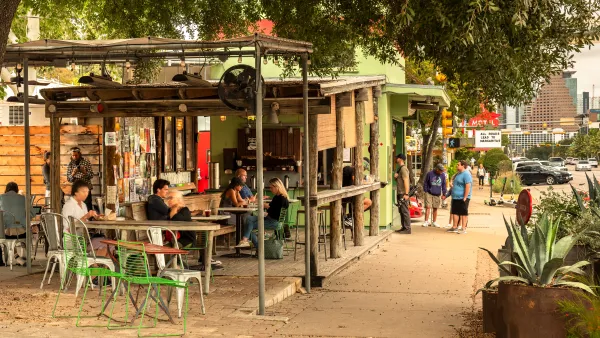
Large projects near Austin's light rail must include affordable housing
Elsewhere in the city, developers can pay into a city bank account for affordable housing rather than providing the required affordable units within their projects.

91% of Utah renters can’t enter the homebuying market
Homeownership in Utah has dropped to historic lows, despite improvements in the number of affordable rentals on the market.

Planetizen Federal Action Tracker
A weekly monitor of how Trump’s orders and actions are impacting planners and planning in America.

Amtrak, CN end decades-long dispute with eight-year agreement
The new operating agreement establishes an updated framework for the companies to work together, including processes to resolve disputes.

Nation's most wind-powered state turns to coal as data centers increase energy demand
For the first time in decades, Iowa has increased its generation of coal power.

Trump is considering data centers on 6 states' public land — some state officials say they had no idea
If the administration approves the proposed projects, data center and data center-related developments will cover 17,600 acres of public land.

Despite court ruling, Trump is keeping nearly all wind projects in the US on hold
At least 110 wind energy projects have not heard from the government since a federal judge ruled that the Trump administration's freeze on wind turbine clearances was likely illegal.

Community feedback ushers in changes to NYC’s Park Avenue redesign
New aspects of the design include a two-way bike lane and separate paths for cyclists and pedestrians.

FREE Course: Walkable City 1: Why Walkability?
After describing his path towards focusing on walkability as the essence of good planning, Jeff Speck marches through his five principal reasons for making more walkable places.
Reinventing Malls: Planning Alchemy—Turning Gray Fields Into Gold
The course focuses on the opportunities and imperatives that shape reinvention of mall sites.

KFH Group Inc.
Greater Baltimore Committee
Eagle County Government
The Architects Foundation
University of Cincinnati Online
The Pocatello Development Authority
The Urban Renewal Agency of the City of Pocatello