Emily Badger explores the art of environmental graphic design, or wayfinding, and what it takes to strike the right balance between intuitive navigation and individual discovery.


Badger makes a distinction between intuitive older European cities and complex contemporary cities that require guidance to navigate, and the often subconscious ways in which wayfinding should operate on the latter.
"Architectural signage and wayfinding isn't about building a nicely designed sign," says Sue Labouvie, one such expert whom we tapped to explain the science of helping us find our way in the city. "It's about the information content and the analysis of the space or place that you're trying to move people through, and coming up with a strategy of how you make this big complex thing simple and understandable to the user."
Read the full story: The Surprisingly Complex Art of Urban Wayfinding
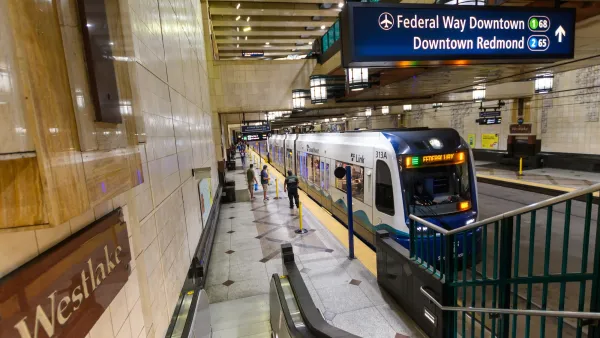
Commentary: Seattle's new transit wayfinding system is 'more confusing than clarifying'
Changes to Sound Transit signage could make it difficult to navigate the region's train system.
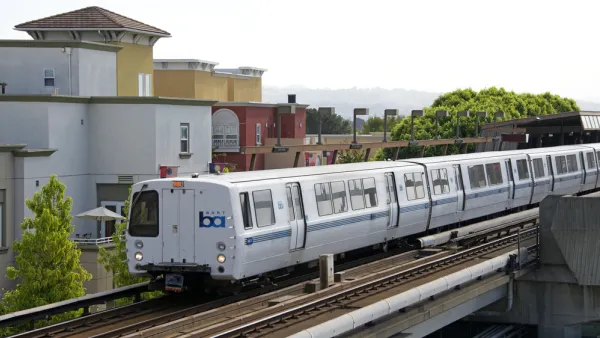
California Bill Would Mandate Seamless Transit
With 27 transit agencies, traveling across the Bay Area can be a daunting task. Advocates for 'seamless transit' want to change that.
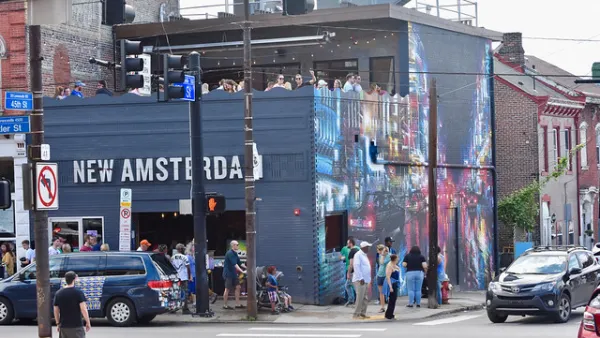
Pittsburgh Pedestrian Wayfinding Program Set to Launch
Southwestern Pennsylvania Commission awarded $1.4 million to the city of Pittsburgh to launch the Pittsburgh Pedestrian Wayfinding initiative.

Desperate measures: Advocates weigh draining Lake Powell to fill Colorado River
Draining the reservoir could reduce evaporation losses by a couple hundred thousand acre-feet.

Eastern Nebraska is running out of electricity
Data centers and electrification are straining eastern Nebraska’s grid, throttling economic development.

Malls are becoming the midtowns of the future
Mall and office park redevelopments are a generational opportunity to create new nodes of urbanity.

Officials claim feds 'rushed' Amtrak environmental review
Amtrak plans to move their Chicago maintenance facility from an industrial area to a residential one.

NYC breaks ground on anti-flooding infrastructure project
New York City's new system will reduce stormwater flows to local sewers by 90%.

One Kentucky town’s secret to affordable housing
The Smoketown Community Land Trust has already built seven affordable homes for community members.

FREE Course: Walkable City 1: Why Walkability?
After describing his path towards focusing on walkability as the essence of good planning, Jeff Speck marches through his five principal reasons for making more walkable places.
Reinventing Malls: Planning Alchemy—Turning Gray Fields Into Gold
The course focuses on the opportunities and imperatives that shape reinvention of mall sites.

City of Rosemead
Rutgers University, Edward J. Bloustein School of Planning and Public Policy
One Hundred Miles
University of Michigan School for Environment and Sustainability (SEAS)
Hunter College, City University of New York (CUNY)
The Architects Foundation
City of Cambridge
Montrose County
The Pocatello Development Authority