In an another nuance of the ownership laws that govern New York's parks and plazas, the modernist masterpiece Lever House will close today to keep its plaza privately public.


The owners of Lever House close the plaza once a year to protect their control of the property against any possible claim of "adverse possession," a concept with ancient roots. "It holds - to put it simply - that if someone openly and notoriously uses another's property for a long period without ever being challenged by the rightful owner, the property becomes that of the possessor," explains David Dunlap.
"One wonders why owners even bother to go through the ritual. "I don't want to call it a vestige of the past - because it's still done - but it does have a quaintness to it," said Jerold S. Kayden, director of the Urban Planning Program at Harvard, and arguably the nation's leading authority on privately owned public space. "
Read the full story: Lever House Closes Once A Year To Maintain Its Ownership Rights

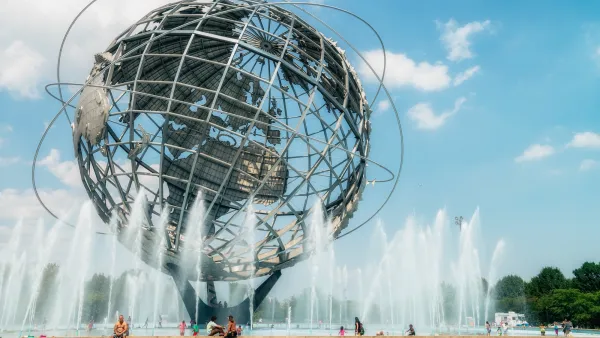
Historic Queens park is getting a $120M upgrade
The borough's largest park will undergo significant upgrades for accessibility, flood mitigation and historic preservation.
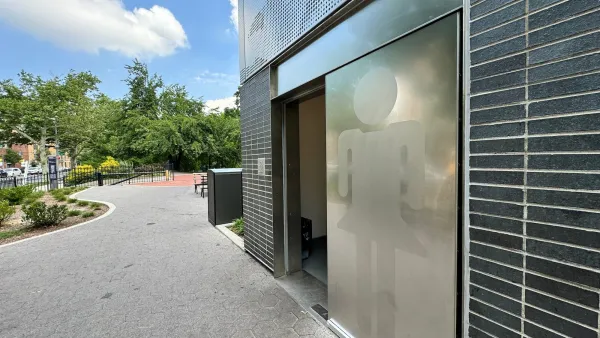
Mamdani Administration Promises 20-30 New Public Bathrooms by End of Summer
Of the city’s 1,000 public restrooms, just 30 percent are located outside of parks.
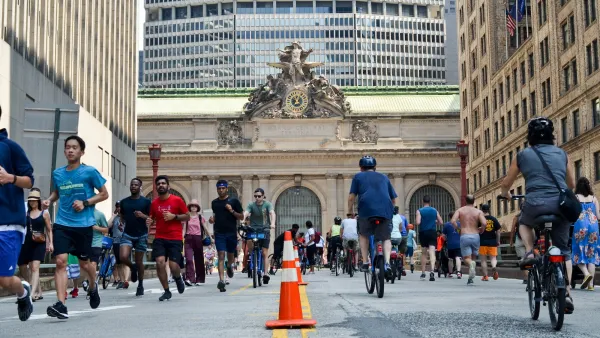
Mamdani’s Budget Fails to Expand Open Streets, Breaking Campaign Promise
The proposed budget allocates $2 million to Summer Streets and Open Streets, less than the $2.1 million allocated by the Adams administration last year.

Planetizen Federal Action Tracker
A weekly monitor of how Trump’s orders and actions are impacting planners and planning in America.

Amtrak, CN end decades-long dispute with eight-year agreement
The new operating agreement establishes an updated framework for the companies to work together, including processes to resolve disputes.

Northwest rail fans eager for Sept. 30 debut of Amtrak’s Airo fleet
Get ready for that new train smell and more seats. But they won’t go faster or run more frequently on the Cascades route in Washington and Oregon.

Atlanta City Council unanimously backs $3.5 billion Beltline light rail project
The resolution was drafted after Atlanta Mayor Andre Dickens pulled support for the Atlanta Streetcar extension last year.

SEPTA to bring nearby frequent transit to over 1 million new riders as part of decade-long plan
The agency's Accelerate plan will also bring frequent transit to twice the amount of jobs that are currently located near it.

NYC plants over 18,000 trees, the most new foliage in a decade
Many of the trees were planted in communities vulnerable to extreme heat.

FREE Course: Walkable City 1: Why Walkability?
After describing his path towards focusing on walkability as the essence of good planning, Jeff Speck marches through his five principal reasons for making more walkable places.
Reinventing Malls: Planning Alchemy—Turning Gray Fields Into Gold
The course focuses on the opportunities and imperatives that shape reinvention of mall sites.

City of Thousand Oaks
City of Wisconsin Rapids
Harvard University Graduate School of Design
The Architects Foundation
University of Cincinnati Online
The Pocatello Development Authority
The Urban Renewal Agency of the City of Pocatello