Tom Angotti believes that community participation and neighborhood-level planning are key to a wider network of bike infrastructure in New York City.


"Community boards routinely review proposals for bicycle lanes and even though they have no veto power it can take only a few disgruntled speakers angry at losing a parking space to kill a proposal.
The problem with this system of neighborhood governance is that it could lead to the creation of a more sharply divided city, one for cyclists and pedestrians and another for the car culture. Community boards open to more bike lanes have usually gotten them. They usually have more cyclists who attend board meetings and get appointed to the boards."
Read the full story: Making Bikes a Part of the Neighborhood
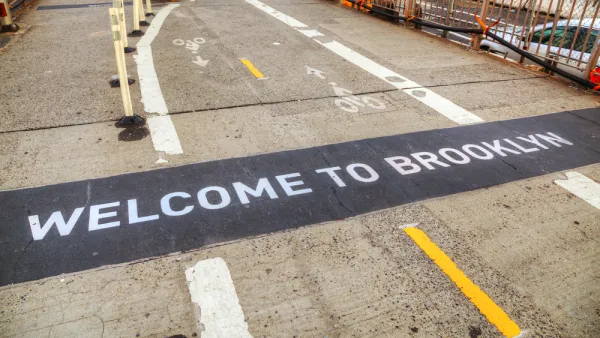
Brooklyn Bridge Bike Path Could Be Wider, Safer
Advocates want to see a safer plan for the proposed two-way path on one of the country's busiest commuter corridors.
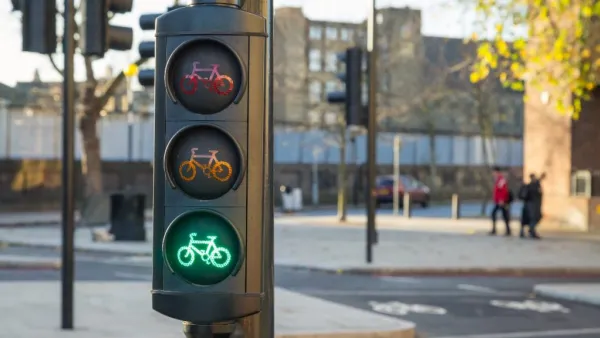
This is How the British Started Cycling More
Cycling has never felt more relevant or encouraged in the UK. Since May, the London Councils have upgraded 60 km of bike lanes in the capital city, added 20,000 square metres of extra pavement space, and installed 1,500+ additional cycle parking.
America's Best Bike Cities
With gas prices at an all time high, bike riding has never looked better. Shermans Travel identifies the top cities to bike through, noting a bounty of amenities to save on costs for the urban biker.

Planetizen Federal Action Tracker
A weekly monitor of how Trump’s orders and actions are impacting planners and planning in America.

California plans to bury El Niño’s downpour
If the state plays its cards right, it may be able to store a billion acre-feet of El Niño’s water in aquifers.

Desperate measures: Advocates weigh draining Lake Powell to fill Colorado River
Draining the reservoir could reduce evaporation losses by a couple hundred thousand acre-feet.

Chicago voters approve permanent festival grounds, penalty for vacant property owners
Currently, major summer and fall festivals take over public parks for weeks at a time, drawing criticism from nearby residents

NYC votes to cut outdoor dining red tape, speed up permitting
New York City also voted to allow the Department of Transportation to begin work on urgent projects before notifying elected officials.

California appears to reject Prop. 45
The proposition would have expanded the projects that qualify for a streamlined environmental review, effectively paring down the California Environmental Quality Act.

FREE Course: Walkable City 1: Why Walkability?
After describing his path towards focusing on walkability as the essence of good planning, Jeff Speck marches through his five principal reasons for making more walkable places.
Reinventing Malls: Planning Alchemy—Turning Gray Fields Into Gold
The course focuses on the opportunities and imperatives that shape reinvention of mall sites.

City of Rosemead
Rutgers University, Edward J. Bloustein School of Planning and Public Policy
One Hundred Miles
Hunter College, City University of New York (CUNY)
The Architects Foundation
University of Cincinnati Online
City of Cambridge
Montrose County
The Pocatello Development Authority