TransCanada is trying to use eminent domain to obtain easements from unwilling landowners for the proposed Keystone XL pipeline.


Canadian company, TransCanada, under its U.S. subsidiary Keystone Pipeline, has been working to obtain easements across the mid-west and Texas for a proposed pipeline. The company has threatened owners with eminent domain if they are unwilling to grant the company an easement. The proposed pipeline has yet to be approved by the federal government and property owners are left wondering how eminent domain can be exercised without actual approval.
"Eminent domain laws generally allow for the confiscation of private property if taking it is judged to serve a larger public good. These kinds of laws differ slightly from state to state as do the processes by which pipelines are approved and licensed. As a result, there is both debate and confusion over whether TransCanada has the right to use the courts to demand easements from property owners in advance of final approval for the project."
Thanks to Cathie Pagano
Read the full story: Eminent Domain Fight Has A Canadian Twist

Gas Pipelines Through Neighborhoods Are A Difficult Proposition
Fort Worth, Texas officials try to tackle the thorny issue of gas pipelines snaking through residential neighborhoods.
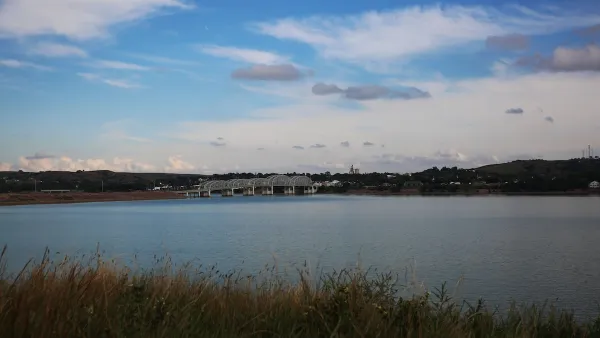
Want to study the Missouri River? Soon, you may need unanimous approval from 10 states
Legislation would require 10 governors’ permission to study or build projects moving water outside the basin.
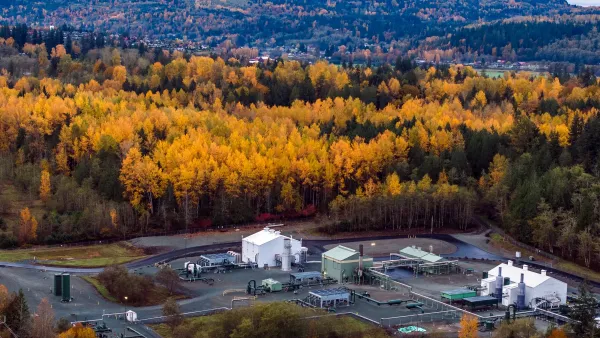
Developers may expand largest gas pipeline network in Northwest
Pipeline giant Williams has proposed new expansions for its Northwest Pipeline from the Colorado Rockies through Idaho, Oregon and Washington.

Planetizen Federal Action Tracker
A weekly monitor of how Trump’s orders and actions are impacting planners and planning in America.

California plans to bury El Niño’s downpour
If the state plays its cards right, it may be able to store a billion acre-feet of El Niño’s water in aquifers.

Chicago breaks ground on $3 billion megadevelopment
The new neighborhood, titled Foundry Park, will one day host 3,700 residences.

California High-Speed Rail Authority CEO resigns after $600,000 scandal
Under Ian Choudri, the authority used taxpayer dollars to fund first class flights and trips to nightclubs.

Want to study the Missouri River? Soon, you may need unanimous approval from 10 states
Legislation would require 10 governors’ permission to study or build projects moving water outside the basin.

Desperate measures: Advocates weigh draining Lake Powell to fill Colorado River
Draining the reservoir could reduce evaporation losses by a couple hundred thousand acre-feet.

FREE Course: Walkable City 1: Why Walkability?
After describing his path towards focusing on walkability as the essence of good planning, Jeff Speck marches through his five principal reasons for making more walkable places.
Reinventing Malls: Planning Alchemy—Turning Gray Fields Into Gold
The course focuses on the opportunities and imperatives that shape reinvention of mall sites.

City of Rosemead
Rutgers University, Edward J. Bloustein School of Planning and Public Policy
One Hundred Miles
Hunter College, City University of New York (CUNY)
The Architects Foundation
University of Cincinnati Online
City of Cambridge
Montrose County
The Pocatello Development Authority