Ethiopia is planning to construct a large hydroelectric dam on the Nile River to supply power for itself and neighboring countries.


Known as the Grand Millennium Dam, the project has sparked some concerns from environmentalists, but the plan seems to be moving ahead.
"When completed in 2015, the Grand Millennium Dam will be the largest hydroelectric power plant in Africa. It will also create the country's largest artificial lake, with a capacity of 63 billion cubic meters of water-twice the size of Lake Tana in Ethiopia's Amhara region.
In late June, Ethiopia announced that it would build four additional dams on the Blue Nile that will work in conjunction with the Grand Millennium Dam to generate more than 15,000 megawatts of electricity.
The cost of the four new dams has not been disclosed, but the Grand Millennium Dam is estimated to cost about $4.7 billion."
Read the full story: Ethiopia Moves Forward with Massive Nile Dam Project

Last Dam in Klamath River Removal Project Comes Down
Salmon can now move freely along the river and its tributaries for the first time in over a century.
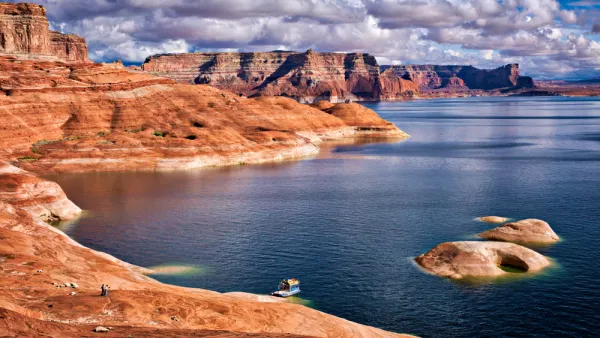
Glen Canyon Dam Could Stop Producing Hydropower
Lake Powell levels could dip below the dam’s capacity to generate electricity, cutting off one of the Southwest’s most important power sources.
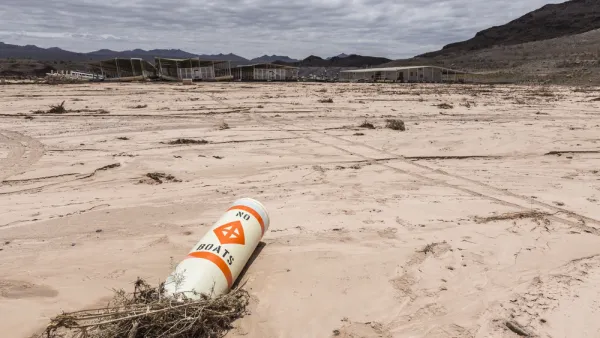
Federal Government Declares Water Shortage as Lake Mead Reaches Critical Low
The first-of-its-kind declaration triggers major water cutbacks for Arizona farmers and reduced allocations for Nevada and Mexico.

Planetizen Federal Action Tracker
A weekly monitor of how Trump’s orders and actions are impacting planners and planning in America.

Eastern Nebraska is running out of electricity
Data centers and electrification are straining eastern Nebraska’s grid, throttling economic development.

Washington state to charge fee to drivers with fuel-efficient cars
Revenue from the fee will go towards supporting the state’s highways.

Instead of building new housing, LA developers are turning mansions into mega-mansions
In the richest areas, the number of houses valued at $30 million with demolition permits has skyrocketed since 2018.

Illinois considers spending $1 billion in taxpayer money on data center
A quantum computing campus and data center are currently under construction in Chicago.

As development costs rise, Boston moves to lessen affordable housing requirements
The Boston Zoning Commission and the City Council still need to approve Boston Mayor Michelle Wu’s proposed changes

FREE Course: Walkable City 1: Why Walkability?
After describing his path towards focusing on walkability as the essence of good planning, Jeff Speck marches through his five principal reasons for making more walkable places.
Reinventing Malls: Planning Alchemy—Turning Gray Fields Into Gold
The course focuses on the opportunities and imperatives that shape reinvention of mall sites.

City of Charlotte
City of Rosemead
Rutgers University, Edward J. Bloustein School of Planning and Public Policy
University of Michigan School for Environment and Sustainability (SEAS)
Hunter College, City University of New York (CUNY)
The Architects Foundation
University District Partnership
City of Cambridge
The Pocatello Development Authority