Washington D.C.'s first sidewalk cafe opened 5-plus years ago. This piece from The Washington Post looks at the history of outdoor eating in the city, and how the trend has picked up over the years.


There are now more than 450 sidewalk cafes in the city.
"City officials raised myriad objections, as described in a Washington Post story at the time: Sidewalk cafes expose food to "windblown foreign matter," creating a health hazard and attracting birds and rodents, the city's public health director said; too many cafes would cause a "cessation" of pedestrian traffic, forcing walkers into the streets, where they would get run over, another official cautioned; and tables and chairs would interfere with the deployment of fire hoses, the fire chief warned.
But the strongest objection came from Deputy Police Chief Howard V. Covell, who described sidewalk cafes as 'a potential source of disorder.'"
Read the full story: D.C. feeds the alfresco frenzy

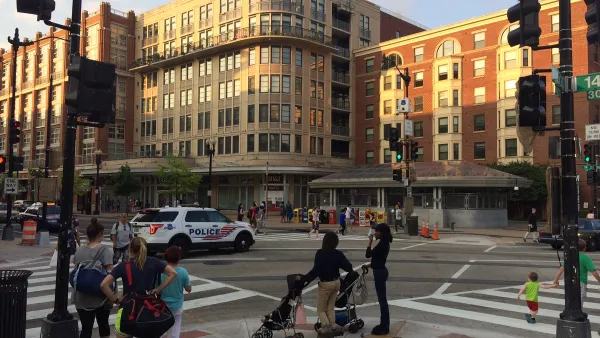
Vision Zero on the Streets of D.C.
Bike and pedestrian deaths have been on the rise in D.C. despite a Vision Zero commitment. New legislation will pave the way for new infrastructure and safety improvements.

In D.C., Sidewalks Don’t Equal Walkability
In theory, sidewalks are what make cities walkable. But in Washington, D.C., many sidewalks are not accessible to the people who use them.
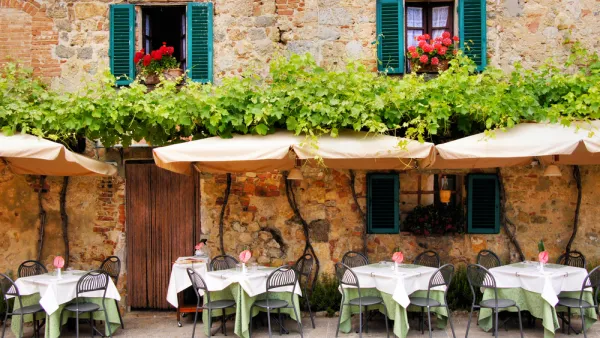
Seattle Experiments With Fence-Free Sidewalk Cafés
Sidewalk-adjacent eating spaces generally separate diners from pedestrians. By using markers instead of fences, some Seattle eateries are opening their dining areas to the street.

Planetizen Federal Action Tracker
A weekly monitor of how Trump’s orders and actions are impacting planners and planning in America.

‘Going backwards:’ Baltimore mayor, students rally against state's transit funding plan
Maryland's proposed six-year plan provides no funding for Baltimore’s BMORE bus program and reduces its road maintenance funding.

Detroit to transform waterfront with $2.2 billion investment
Developers will convert about 18 acres of unused parking lot space into civic spaces.

'Texas' Main Street' gets a multimodal glow-up
Congress Avenue in Austin is undergoing a major renovation to receive bike lanes and upgraded pedestrian infrastructure.

The Massachusetts town that didn't get the T wants a re-do
Fifty years ago, Arlington said no to a stop on the MBTA Red Line connecting it to Boston. Now, the town wants a second chance.

After $600,000 wasted, CA high-speed rail board limits CEO’s power
Ian Choudri will no longer be able to sign, change or manage contracts.

FREE Course: Walkable City 1: Why Walkability?
After describing his path towards focusing on walkability as the essence of good planning, Jeff Speck marches through his five principal reasons for making more walkable places.
Reinventing Malls: Planning Alchemy—Turning Gray Fields Into Gold
The course focuses on the opportunities and imperatives that shape reinvention of mall sites.

One Hundred Miles
County of Mendocino
planning NEXT
The Architects Foundation
University of Cincinnati Online
Montrose County
Northern Illinois Transit Authority (NITA)
The Pocatello Development Authority