The sudden appearance of a ping pong table in a public park in Dallas is a perfect example of the concept of emergence in cities, according to this post on Pegasus News.


The Main Street Garden park works because it enables this sort of contribution to the public realm by a large variety of actors, according to Patrick Kennedy.
"Who added the ping pong table? It is irrelevant. Who cares. What matters is that the park is shape-shifting. Adapting due to the individual actions of its numerous agents, including just the regular users. That is emergence. Cities are the amalgam of millions of numerous actions often acting independently. Somebody said, "I would like a ping pong table here." And there it appears.
It may come. It may go. But you know a place has come alive when it becomes the result of numerous actors, a superorganism comprised of the actions of individual organisms. It starts to have a life of its own. Constantly adapting to and adapted by its surroundings."
Read the full story: Ping pong table in Main Street Garden in Dallas an example of emergence

Dallas Mulling Proposals for a Redesigned Fair Park
The future of Dallas is very much under consideration. Case in point: an effort to redesign and plan the 277 acres of Fair Park with the potential to offer improved public access to a critical area east of Downtown.
Freeways Going Green
Dallas, Texas is building a new park on a deck over the Woodall Rodgers Freeway, a strategy for creating new public spaces that is being tried across the country.
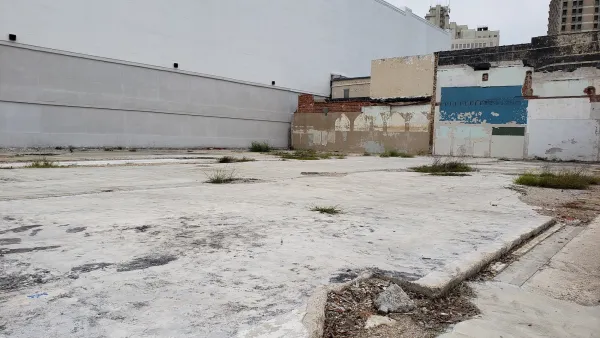
Vacant lots in south Dallas are giving way to affordable housing
A land use analysis found that Dallas could increase tax revenue and close resource gaps if it invests in vacant lot redevelopment.

Planetizen Federal Action Tracker
A weekly monitor of how Trump’s orders and actions are impacting planners and planning in America.

Amtrak, CN end decades-long dispute with eight-year agreement
The new operating agreement establishes an updated framework for the companies to work together, including processes to resolve disputes.

Northwest rail fans eager for Sept. 30 debut of Amtrak’s Airo fleet
Get ready for that new train smell and more seats. But they won’t go faster or run more frequently on the Cascades route in Washington and Oregon.

Brightline Florida files for bankruptcy
The transit company is over $5 billion in debt.

St. Louis Metro to test if single-car trains can reduce operating costs, maintain rider satisfaction
The pilot program will run from October to spring 2027, and begin with one single-car train operating on Metrolink’s Red and Blue lines.

Pennsylvania is building data centers in abandoned mines
Housing data centers in mines provides an alternative to destroying local forests and may spare residents from data centers’ noise and air pollution.

FREE Course: Walkable City 1: Why Walkability?
After describing his path towards focusing on walkability as the essence of good planning, Jeff Speck marches through his five principal reasons for making more walkable places.
Reinventing Malls: Planning Alchemy—Turning Gray Fields Into Gold
The course focuses on the opportunities and imperatives that shape reinvention of mall sites.

City of Thousand Oaks
City of Wisconsin Rapids
Harvard University Graduate School of Design
The Architects Foundation
University of Cincinnati Online
The Pocatello Development Authority
The Urban Renewal Agency of the City of Pocatello