California's redevelopment agencies have almost as much if not more debt than what they pull in from tax revenues, according to this investigation by The Wall Street Journal.


The paper reviewed documents from the 2009 fiscal year representing more than two dozen redevelopment agencies. The implication is that efforts to counteract blight and create jobs are straining city budgets beyond the point of sustainability.
"Cities and towns in the state created redevelopment agencies to attract tax-paying businesses to blighted areas. When new developments raise property values, the additional property-tax revenue goes to the agencies to pay off bondholders. But such plans go awry when property values tumble.
Hercules, Calif., a city of 25,000 people northeast of San Francisco, sold some $260 million in redevelopment bonds, mainly to acquire private land it sought to improve to attract new businesses. But the recession wrecked those plans as plunging property values dried up hoped-for revenue gains.
The old industrial city, once famous for dynamite manufacturing, faces some $15 million in annual interest payments on redevelopment bonds and related costs, exceeding the $10.5 million in higher yearly property tax collections generated by the redevelopment district."
Read the full story: Blight Cures Drain City Coffers

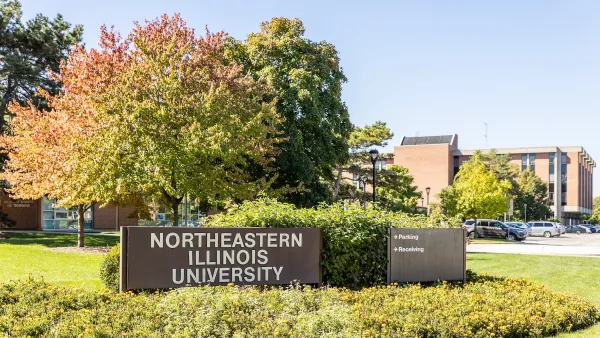
This university-owned city block in Chicago has languished for over a decade. Neighbors say it's time to let go
The university never built its planned student housing, letting a row of storefronts sit vacant for years.
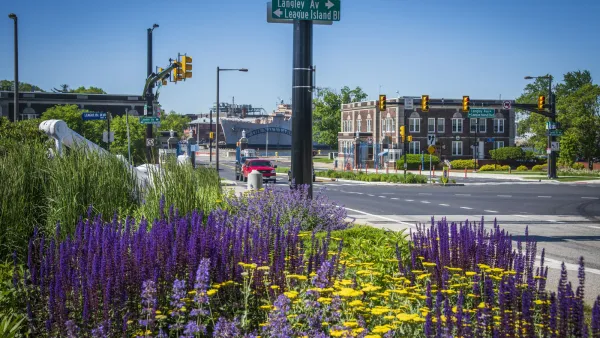
Philadelphia sees 29% drop in gun violence near new green spaces
A city-backed program that cleans up blighted and vacant lots is creating new public spaces and reducing crime in surrounding communities.
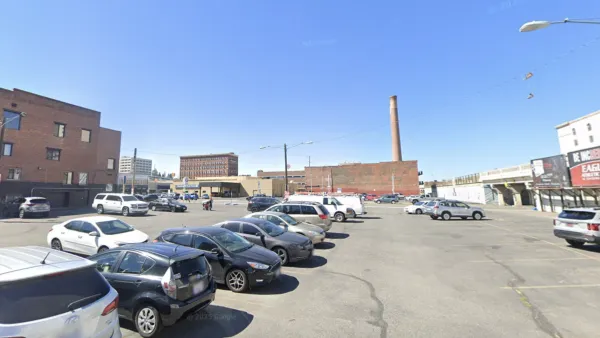
Spokane Could Tax Parking Lots 12% to Increase Development
A proposal before the city council would tax surface parking lots in an effort to boost infill development.

Planetizen Federal Action Tracker
A weekly monitor of how Trump’s orders and actions are impacting planners and planning in America.

California plans to bury El Niño’s downpour
If the state plays its cards right, it may be able to store a billion acre-feet of El Niño’s water in aquifers.

Chicago breaks ground on $3 billion megadevelopment
The new neighborhood, titled Foundry Park, will one day host 3,700 residences.

California High-Speed Rail Authority CEO resigns after $600,000 scandal
Under Ian Choudri, the authority used taxpayer dollars to fund first class flights and trips to nightclubs.

Want to study the Missouri River? Soon, you may need unanimous approval from 10 states
Legislation would require 10 governors’ permission to study or build projects moving water outside the basin.

Desperate measures: Advocates weigh draining Lake Powell to fill Colorado River
Draining the reservoir could reduce evaporation losses by a couple hundred thousand acre-feet.

FREE Course: Walkable City 1: Why Walkability?
After describing his path towards focusing on walkability as the essence of good planning, Jeff Speck marches through his five principal reasons for making more walkable places.
Reinventing Malls: Planning Alchemy—Turning Gray Fields Into Gold
The course focuses on the opportunities and imperatives that shape reinvention of mall sites.

City of Rosemead
Rutgers University, Edward J. Bloustein School of Planning and Public Policy
One Hundred Miles
Hunter College, City University of New York (CUNY)
The Architects Foundation
University of Cincinnati Online
City of Cambridge
Montrose County
The Pocatello Development Authority