Toronto's recently elected Mayor Rob Ford has announced that Toronto will build a subway extension -- but nobody knows where the $4 billion needed to build it will come from.


Ford killed Toronto's previous Transit City plan and replaced it with a subway, but there is no budget for it. Ford insists that the private sector will finance it and the city will own and operate it, but many fear that Toronto's taxpayers will be on the hook instead. Marcus Gee of the Globe and Mail writes,
"Under the transit plan announced by Mr. Ford and Premier Dalton McGuinty, the provincial government will spend virtually all of the $8.4-billion dedicated to the now-defunct Transit City plan on a new midtown light-rail line. Much of it will travel underground, at Mr. Ford's insistence, adding enormously to its expense.
That leaves no money for rapid transit on the busy Finch Avenue corridor, which was supposed to get a light-rail line under Transit City but will now have to make do with buses for at least a decade. More important, it leaves the city of Toronto on its own to pay for Mr. Ford's favoured project: a $4-billion extension of the Sheppard Avenue subway."
Read the full story: Mayor should put his money where his plans are
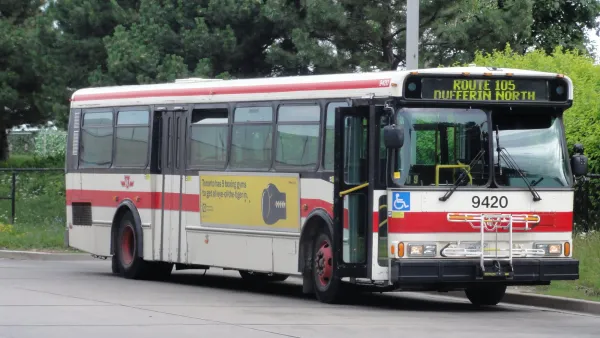
Toronto Could Give Buses and Streetcars Priority
In a shift away from subway expansions and upgrades, Toronto looks to improve the bus and streetcar systems.
Celebrity Voices to Remind You to Keep Your Feet Off the Seats
From Judi Dench to Queen Latifah, CityLab writers match transit systems with the personalities they think would make the best announcements.
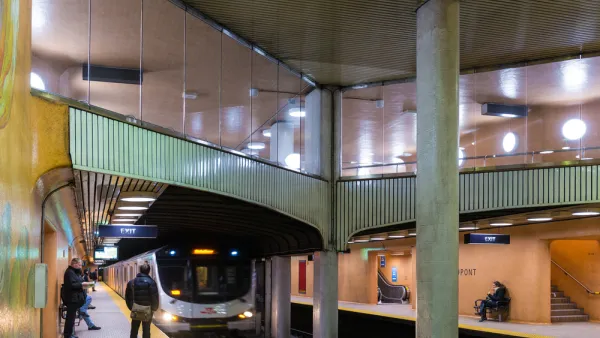
Toronto Extends its Subway for the First Time in 15 Years
Fanfare, a full slate of politicians, and a day of free rides celebrated the opening of the extended Line 1 of the TTC subway system. There was also criticism of the new extension.

Planetizen Federal Action Tracker
A weekly monitor of how Trump’s orders and actions are impacting planners and planning in America.

California plans to bury El Niño’s downpour
If the state plays its cards right, it may be able to store a billion acre-feet of El Niño’s water in aquifers.

Desperate measures: Advocates weigh draining Lake Powell to fill Colorado River
Draining the reservoir could reduce evaporation losses by a couple hundred thousand acre-feet.

In Texas, data centers are swallowing promised parkland
Residents who moved to Taylor, Texas for a rural community now have to contend with three data centers in their backyard.

How a Chicago-sized wind farm beat the odds and powered on
The project spanned five presidential administrations and a standoff with a U.S. military base.

MTA gives itself 30 days to transform pit into basketball court
The site has been under construction since 2022; the city originally estimated it would finish the court in 2024.

FREE Course: Walkable City 1: Why Walkability?
After describing his path towards focusing on walkability as the essence of good planning, Jeff Speck marches through his five principal reasons for making more walkable places.
Reinventing Malls: Planning Alchemy—Turning Gray Fields Into Gold
The course focuses on the opportunities and imperatives that shape reinvention of mall sites.

City of Rosemead
Rutgers University, Edward J. Bloustein School of Planning and Public Policy
One Hundred Miles
Hunter College, City University of New York (CUNY)
The Architects Foundation
University of Cincinnati Online
City of Cambridge
Montrose County
The Pocatello Development Authority