Drastic flooding inundated Queensland, Australia, and damaged many of the city's buildings. As recovery begins, some are rethinking the city's development patterns.


Despite obvious mistakes of the past, floodplain development continues.
"The larger issue is, perhaps, whether investors will be keen to finance rebuilding projects without some certainty that future floods can be prevented. The last major flood in Queensland, which occurred in Brisbane in 1974, resulted in the construction of the Wivenhoe Dam on the Brisbane River, but it did not lead to regulation regarding construction in flood-prone areas.
Making matters worse, new residential construction in vulnerable areas is ill equipped to handle flooding. While the traditional "Queenslander" home was made of timber with a raised first floor perched on poles like a stilt house, new homes often are slab-on-grade, timber-framed or brick structures. Moreover, many owners of Queenslander houses have built out the open area beneath the raised first floor to increase interior space, notes Lindsay Clare, an architect from Queensland who now practices in Melbourne. "If you fill them in," he says, "the water is going to put more pressure on the structure and you'll see more damage." "
Read the full story: Examining the Queensland Floods
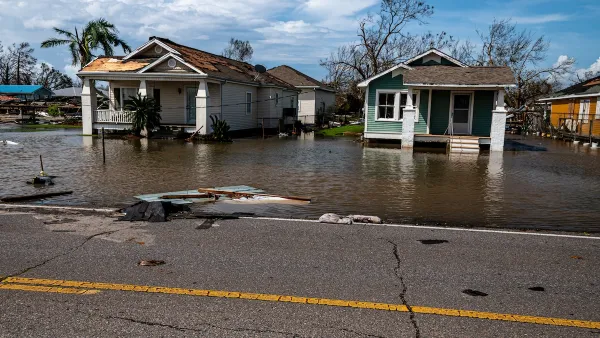
Floodplain Development Largely Concentrated in Gulf Coast States
Many U.S. cities use ‘routine’ practices like zoning changes and permitting to discourage development in high-risk flood zones.
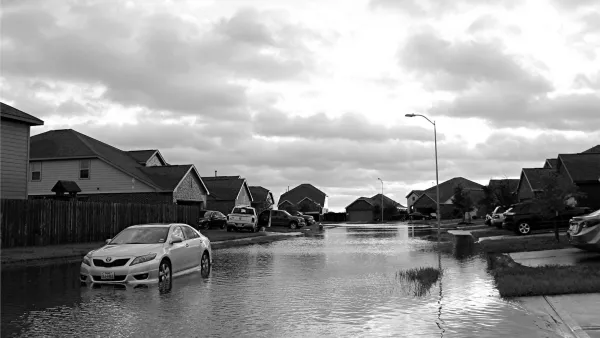
NPR: HUD Sells Flood-Prone Homes Without Disclosing Risks
The troubling trend is particularly pronounced in lower-income communities, where experts worry households are being inadvertently set up for big financial losses.
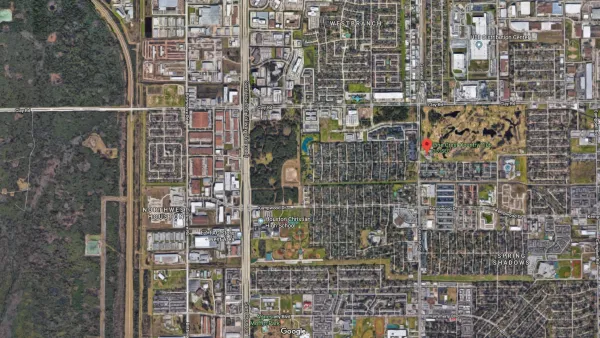
800 New Homes Approved for Houston's Floodplain
The city of Houston approved a new development that doesn't meet new elevations standards approved by the city of Houston earlier this month.

Planetizen Federal Action Tracker
A weekly monitor of how Trump’s orders and actions are impacting planners and planning in America.

California plans to bury El Niño’s downpour
If the state plays its cards right, it may be able to store a billion acre-feet of El Niño’s water in aquifers.

Desperate measures: Advocates weigh draining Lake Powell to fill Colorado River
Draining the reservoir could reduce evaporation losses by a couple hundred thousand acre-feet.

US buildings threatened, destroyed by fires set to triple by 2060
Researchers found a high fire risk for socioeconomically vulnerable neighborhoods in the American West.

LA residents may be allowed to paint their own crosswalks
Councilwoman Katy Yaroslavsky put out a motion instructing the Los Angeles Department of Public Transportation to study the feasibility of allowing volunteers to paint crosswalks.

Dallas moves to overhaul its zoning code
The city's zoning reform will allow more multi-family and mixed-use developments.

FREE Course: Walkable City 1: Why Walkability?
After describing his path towards focusing on walkability as the essence of good planning, Jeff Speck marches through his five principal reasons for making more walkable places.
Reinventing Malls: Planning Alchemy—Turning Gray Fields Into Gold
The course focuses on the opportunities and imperatives that shape reinvention of mall sites.

City of Rosemead
Rutgers University, Edward J. Bloustein School of Planning and Public Policy
One Hundred Miles
Hunter College, City University of New York (CUNY)
The Architects Foundation
University of Cincinnati Online
City of Cambridge
Montrose County
The Pocatello Development Authority