For many immigrants in Los Angeles, bicycling is the only viable way to get around. A group of activists is trying to make that transportation reality safer and more reliable.


"The goals of the City of Lights program are ambitious, but the group started small, in response to complaints that immigrant bicyclists were riding on sidewalks at night (which is legal in the city of Los Angeles) but without lights or reflectors (which is not). City of Lights began distributing lights at day labor centers and were soon inundated with questions about routes and the intricacies of bike repair. Their next step was to open a weekly educational and bike repair workshop at a day labor center, south of downtown. In October, they were successful in getting the city to install bike racks in some of the poorest neighborhoods of Los Angeles.
All small steps, the organizers concede. But they could be crucial ones in building momentum for big picture environmental justice."
Organizers say the program has been slow to catch on, but they argue that pervasive safety concerns and the amount of people in need underscore its importance.
Read the full story: The Invisible Cyclists: Immigrants and the Bike Community
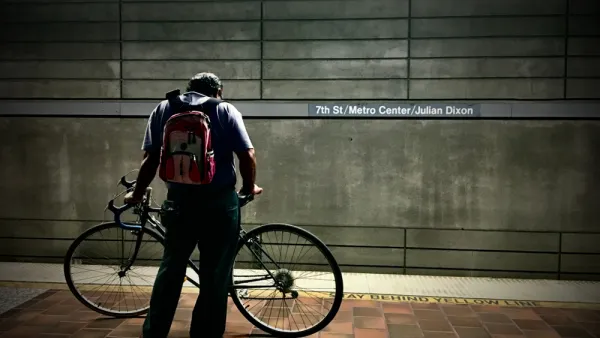
Scooter Revenue, Empty Streets Allow for Quick Construction of Bike Lane in L.A.
A busy corridor, popular with bike and scooter riders, is gaining a new protected bike lane in Los Angeles.
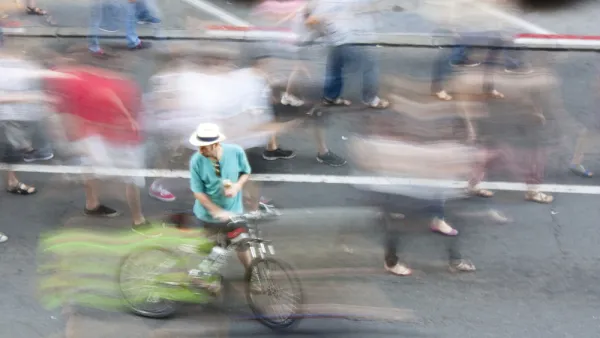
The Bicyclists' Manifesto for an Autonomous Vehicle Future
"Policy goals" won't be enough to protect bicyclists once the cars start driving themselves. Strong standards will be necessary to govern the interactions between cars and bikes in an autonomous future.
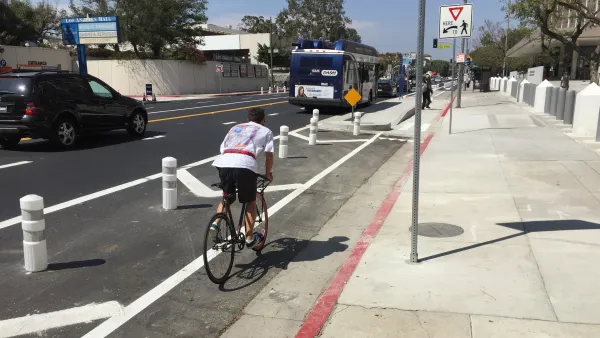
First Bicycle Traffic Signals Come to Los Angeles
The traffic signals are part of the Los Angeles Street 'full-featured' protected bike lane that also includes transit stop islands and two-stage turn queue boxes. Ribbon-cutting for the cycle track, the third in the city, was held Thursday.

Washington state to charge fee to drivers with fuel-efficient cars
Revenue from the fee will go towards supporting the state’s highways.

Illinois considers spending $1 billion in taxpayer money on data center
A quantum computing campus and data center are currently under construction in Chicago.

Trump to blast ‘hydrocarbon highway’ through ‘world’s longest art gallery’
Environmental and historic preservation groups are suing to stop the project.

NYC, state sue feds over mixed-immigration-status housing assistance rule
The state’s lawsuit argues that the rule change violates the Administrative Procedure Act.

Michigan to turn neighborhood into virtual power plant
Residents will soon be able to divert their excess energy to the grid in exchange for compensation.

Data center, mining project swarm to long-awaited Alaska railroad line
The state-owned railroad approved final plans for the spur line this week; the project is expected to cost $311 million, mostly funded by the federal government

FREE Course: Walkable City 1: Why Walkability?
After describing his path towards focusing on walkability as the essence of good planning, Jeff Speck marches through his five principal reasons for making more walkable places.
Reinventing Malls: Planning Alchemy—Turning Gray Fields Into Gold
The course focuses on the opportunities and imperatives that shape reinvention of mall sites.

City of Charlotte
City of Rosemead
Rutgers University, Edward J. Bloustein School of Planning and Public Policy
University of Michigan School for Environment and Sustainability (SEAS)
Hunter College, City University of New York (CUNY)
The Architects Foundation
University District Partnership