The District Department of Transportation recently released detailed plans for the new system, which has been in the making for more than 14 years.


Initial plans call for construction of two lines: a 2-mile track connecting Union Station and the H Street Corridor and a 1-mile segment between the Navy Annex and the Anacostia Metrorail station. The project, which District hopes will expand options for crosstown commuters and spur growth in underdeveloped areas, is expected to cost $194 million, with operation beginning in 2012. Eventually, the streetcar network will extend 37 miles citywide.
Finding adequate funding is the major challenge to kicking off the first phase, writes Derek Kravitz:
"The District government has applied for more than $110 million in federal funding, but last week it lost out on $18 million worth of U.S. Transportation Department infrastructure grants. Transportation officials have proposed tapping $180 million of debt service provided for the Metrorail system; private landowners have been lobbied to consider a special tax district or additional fees for zoning or density allowances; and public-private partnerships are being looked at."
Read the full story: Details emerge for D.C. streetcars, set to begin in 2012
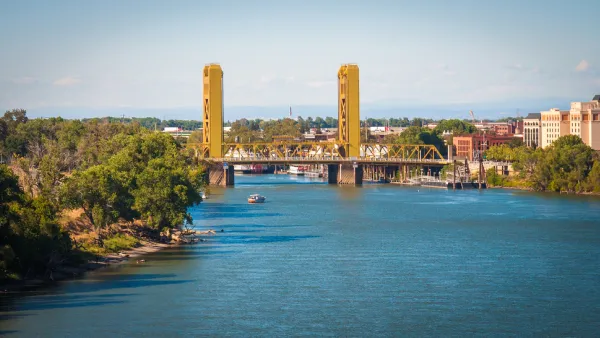
The Details of Sacramento's Proposed Downtown Streetcar Line
The cities of West Sacramento and Sacramento have high hopes for a streetcar line planned for some of the most beautiful and urban neighborhoods in the region. The Trump Administration could still change the course of the project, however.
Cities Try New Approaches to Fund Streetcars
As federal transportation funding grows increasingly uncertain, cities across the country are trying new approaches to generate funds for their planned streetcar projects.
Dallas Streetcar is 1 of 51 Projects to Receive Federal Funding
DOT Secretary Ray LaHood announced $1.5 billion in transportation grants this morning, including $23 million towards a streetcar project in Dallas.

Planetizen Federal Action Tracker
A weekly monitor of how Trump’s orders and actions are impacting planners and planning in America.

California plans to bury El Niño’s downpour
If the state plays its cards right, it may be able to store a billion acre-feet of El Niño’s water in aquifers.

Desperate measures: Advocates weigh draining Lake Powell to fill Colorado River
Draining the reservoir could reduce evaporation losses by a couple hundred thousand acre-feet.

US buildings threatened, destroyed by fires set to triple by 2060
Researchers found a high fire risk for socioeconomically vulnerable neighborhoods in the American West.

LA residents may be allowed to paint their own crosswalks
Councilwoman Katy Yaroslavsky put out a motion instructing the Los Angeles Department of Public Transportation to study the feasibility of allowing volunteers to paint crosswalks.

Dallas moves to overhaul its zoning code
The city's zoning reform will allow more multi-family and mixed-use developments.

FREE Course: Walkable City 1: Why Walkability?
After describing his path towards focusing on walkability as the essence of good planning, Jeff Speck marches through his five principal reasons for making more walkable places.
Reinventing Malls: Planning Alchemy—Turning Gray Fields Into Gold
The course focuses on the opportunities and imperatives that shape reinvention of mall sites.

City of Rosemead
Rutgers University, Edward J. Bloustein School of Planning and Public Policy
One Hundred Miles
Hunter College, City University of New York (CUNY)
The Architects Foundation
University of Cincinnati Online
City of Cambridge
Montrose County
The Pocatello Development Authority