The opening of a new 220-mph high speed train and the peak energy production at the Three Gorges Dam shows that China's been able to successfully launch major infrastructure project faster than the rest of the world.


"The successes demonstrate how, after decades of acquiring technology from the west, Beijing has begun to push the limits of its new capabilities, setting the bar higher on mega-projects as it seeks to promote the image of a powerful, modern China. But many of these initiatives have come at great human and environmental cost, and some have questioned whether the country fosters a sufficiently innovative spirit to compete on the next level.
Still in the works: more nuclear power plants, a gargantuan project to pump river water from the fertile south to the arid north, and a $32.5 billion, 820-mile (1,300-kilometer) Beijing-to-Shanghai high-speed railway that is scheduled to open in 2012."
Officials are hoping to position themselves as models for the rest of the world -- and possibly partners.
Read the full story: Booming China shows off its 220 mph train

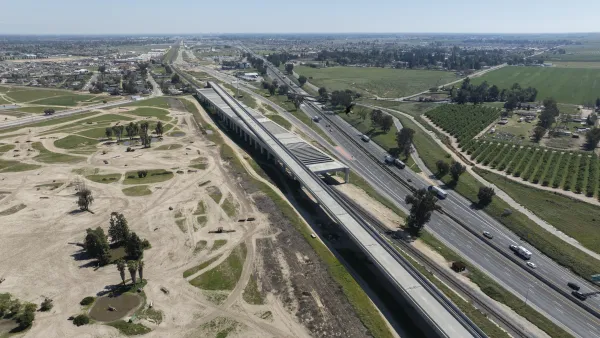
California High-Speed Rail Authority could be broke by the end of 2027
A report from the Office of Inspector General says the authority must borrow against state infusions to stay afloat.
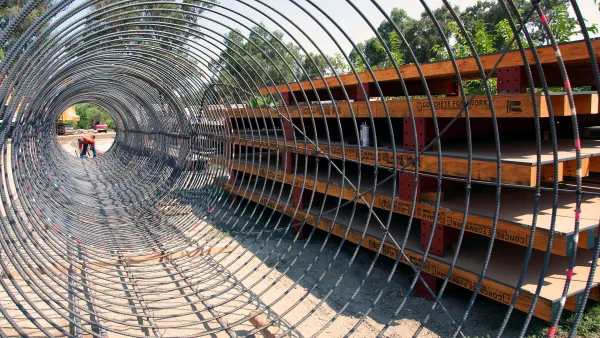
California High Speed Rail to lay first tracks
High Speed Rail Authority officials describe the milestone as "the moment this project truly begins to become a railroad."
TOD Opportunities Around America's First True High-Speed Rail Line
Brightline West hopes to break ground, in anticipation of a 2027 opening. Cities in the Inland Empire and High Desert areas of Southern California are looking to take advantage.

Planetizen Federal Action Tracker
A weekly monitor of how Trump’s orders and actions are impacting planners and planning in America.

Colorado’s Largest Data Center Could Rise Next to Homes — Without a Public Hearing
The proposed campus would consume 11 times the power of Denver International Airport; as it has across the country, opposition mounts.

US to reduce Colorado River water deliveries to Mexico
A new Colorado Treaty amendment reduces Mexico’s Colorado River water allocation by 250,000 acre feet.

'This is going to be painful:’ Virginia stares down $1.7 billion funding gap for highway maintenance
The state may address the deficit by shifting $290 million from its construction budget to maintenance projects.

Judges permit Denver to divert 77,000 acre feet from the Colorado River for reservoir expansion
Overuse and climate change have caused the Colorado River’s water levels to plummet.

Amtrak, CN end decades-long dispute with eight-year agreement
The new operating agreement establishes an updated framework for the companies to work together, including processes to resolve disputes.

FREE Course: Walkable City 1: Why Walkability?
After describing his path towards focusing on walkability as the essence of good planning, Jeff Speck marches through his five principal reasons for making more walkable places.
Reinventing Malls: Planning Alchemy—Turning Gray Fields Into Gold
The course focuses on the opportunities and imperatives that shape reinvention of mall sites.

KFH Group Inc.
Greater Baltimore Committee
Eagle County Government
The Architects Foundation
University of Cincinnati Online
The Pocatello Development Authority
The Urban Renewal Agency of the City of Pocatello