Rejected entirely last February for federal funding, planners made two important changes: Scaled down the project considerably, and scaled-up the city's contribution - which says little as their prior contribution had been zero!


With construction now set to begin in 2012, Atlanta Mayor Kasim Reed was delighted last week to hear from DOT Secretary Ray LaHood that his city had won a $48 million TIGER (Transportation Investment Generating Economic Recovery) II grant - having lost out entirely in the first round last February.
Initially, "the city had sought almost $300 million for a Peachtree streetcar that would run from downtown to Midtown. But under that proposal, the city put up no matching funds, which some say hurt Atlanta's chances.
The project will cost about $72 million, with $10 million coming from the Atlanta Downtown Improvement District and about $15.6 million from the city as part of the local match for capital costs, Reed's office said.
The city also will provide up to $1 million annually in hotel/motel and car rental taxes for operations and maintenance."
From DOT Press Release: "An example of projects funded is $47.6 million to the City of Atlanta to construct a new streetcar line connecting many of the most important downtown residential, cultural, educational and historic centers, demonstrating the Department's commitment to improving quality of life in major metropolitan areas. "
From theTransportPolitic: TIGER II Grants Emphasize Limited Investments in Small and Mid-Size Communities: "After focusing on streetcar grants for big cities earlier in the year, the Department of Transportation takes a step back, providing funds for a number of smaller communities. Three big exceptions: Atlanta, Orlando, and Salt Lake City."
Thanks to Streetsblog San Francisco
FULL STORY: Ray LaHood Hands Atlanta a $48 Million Check for Streetcar Line

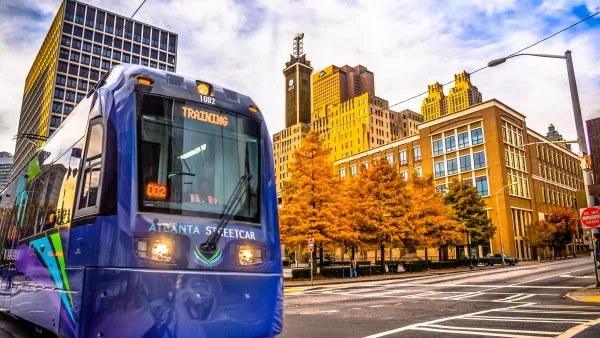
Expansion Planned for Atlanta Streetcar
A proposed expansion of Atlanta's beleaguered downtown streetcar could turn the 'novelty' line into a truly useful transportation option in the car-centric city.
Atlanta's Nascent Streetcar Systems Begins Charging, Critics Pounce
After a stumbling start getting off the ground, proponents of Atlanta's new streetcar see hope in its future while others question further investment.
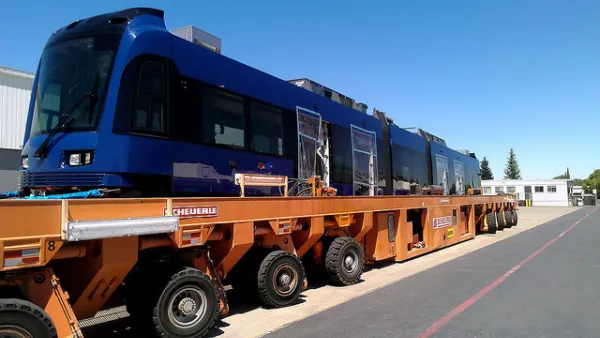
Streetcar Extension Plan Approved in Atlanta
The transit map is being redrawn in Atlanta.

Planetizen Federal Action Tracker
A weekly monitor of how Trump’s orders and actions are impacting planners and planning in America.

The state-sanctioned urbicide of Austin
People don’t kill cities. Freeways do.

US to reduce Colorado River water deliveries to Mexico
A new Colorado Treaty amendment reduces Mexico’s Colorado River water allocation by 250,000 acre feet.

5 New England states march closer to 800 megawatt wind energy project
Securing federal approval for the project may be complicated under the Trump administration, which has historically been hostile towards domestic wind power.

Baltimore to break ground on $50 million Transit Priority Project
The project will bring faster bus trips, safer streets and better bike connections to Baltimore.

Airbnb launches $250 million 'last-dollar financing' housing accelerator, makes first investment in Austin
The company will put $6.4 million towards affordable housing development in Texas’ capital.

FREE Course: Walkable City 1: Why Walkability?
After describing his path towards focusing on walkability as the essence of good planning, Jeff Speck marches through his five principal reasons for making more walkable places.
Reinventing Malls: Planning Alchemy—Turning Gray Fields Into Gold
The course focuses on the opportunities and imperatives that shape reinvention of mall sites.

Eagle County Government
Harvard University Graduate School of Design
Nashville Planning Department
The Architects Foundation
University of Cincinnati Online
The Pocatello Development Authority
The Urban Renewal Agency of the City of Pocatello
Journal of the American Planning Association