Philip Langdon argues that if the U.S. is going to shift toward compact, less resource-consuming patterns of development, Americans will have to rely increasingly on mass transit - so it better work.


Langdon talks with Ken Archer, who writes for Greater Greater Washington and is an outspoken critic of Washington, D.C.'s deteriorating transit system. Archer says the way MetroRail decides when to replace a part is to wait until the end of its "useful life."
"Is 'useful life'-based replacement really the solution?" Archer asks. Maintenance based on the "useful life" of infrastructure typically relies on scheduled maintenance, which seems at first glance to be a good thing but which has, in Archer's view, "one fundamental weakness." It boils down to this: "because maintenance is based on a calendar and not the objective condition of an asset, it is almost always either too late and a breakdown has already occurred, or it is way too early and thus wasteful."
Thanks to Renee Brutvan
Read the full story: Needed: a better way of keeping infrastructure working well


Cost of living too high? Planners to the rescue!
Excessive costs of living force many people to work more than optimal hours, leaving less time for family and fun. Local policies that favor affordable housing and transportation increase freedom, opportunity and happiness.
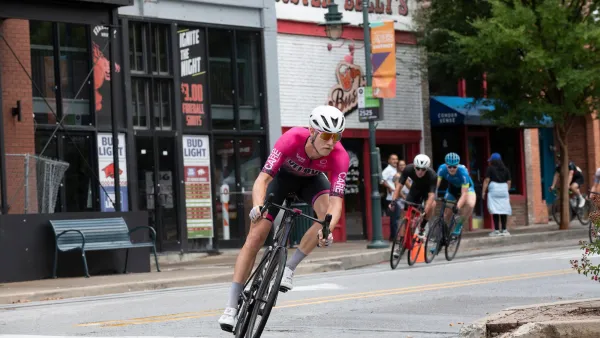
Northwest Arkansas grapples with growth as it prepares to host New Urbanism gathering
A compelling story of a fast-growing, polycentric region grappling with identity and affordability, Susan Henderson reframes CNU 34 as a hands-on workshop, inviting planners to explore Northwest Arkansas as it decides what it will become.
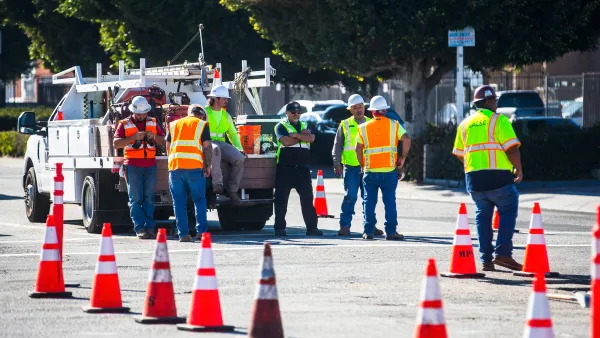
Commentary: LA’s ‘Large Asphalt Repair’ Policy Privileges Drivers, Endangers Others
A new policy to perform spot repairs rather than resurfacing entire streets lets the city skirt requirements to install accessibility and pedestrian infrastructure.

Amtrak, CN end decades-long dispute with eight-year agreement
The new operating agreement establishes an updated framework for the companies to work together, including processes to resolve disputes.

Judges permit Denver to divert 77,000 acre feet from the Colorado River for reservoir expansion
Overuse and climate change have caused the Colorado River’s water levels to plummet.
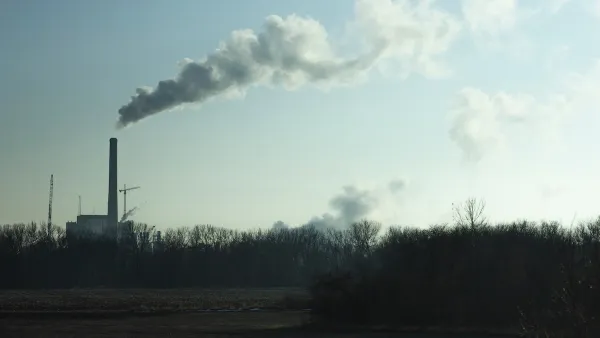
Nation's most wind-powered state turns to coal as data centers increase energy demand
For the first time in decades, Iowa has increased its generation of coal power.

Boston has spent millions making the Green Line more accessible — and there’s no end in sight
While the city has invested millions into expanding and adding platforms to the Green Line to make it more accessible, new train cars set to arrive next year will be too tall for disabled passengers to board without raising the current platforms.

Idaho may see an 18% drop in federal surface transit funding — the largest estimated cut in the US
Transit systems in rural communities are much more reliant on federal funding to provide their services.

How ‘post-disaster gentrification’ alters neighborhoods after natural calamities
After hurricanes, fires or other calamities, the original residents of a community are often replaced by younger, wealthier residents.

FREE Course: Walkable City 1: Why Walkability?
After describing his path towards focusing on walkability as the essence of good planning, Jeff Speck marches through his five principal reasons for making more walkable places.
Reinventing Malls: Planning Alchemy—Turning Gray Fields Into Gold
The course focuses on the opportunities and imperatives that shape reinvention of mall sites.

City of Wisconsin Rapids
Harvard University Graduate School of Design
KFH Group Inc.
The Architects Foundation
University of Cincinnati Online
The Pocatello Development Authority
The Urban Renewal Agency of the City of Pocatello