That's the title of an exhibit currently at The Museum of the City of New York, which shows how the auto dominated many aspects of city life. There are also showings of current "Streetfilms" by 'Livable Streets' showing how to undo it.


Cars, Culture, and the City shows "how central the car has been to New York's evolution" just as it has to cities like Detroit of LA that are far more auto-dependent.
The exhibit includes much memorabilia including a "1909 book, Street Traffic Regulation, by William Phelps Eno, who also, we are told, wrote the world's first city traffic code, for New York, in 1903 and is credited with the invention of the stop sign, the crosswalk, the one-way street and the taxi stand."
The shaping of the city by the auto precedes the reign of Robert Moses. "The nation's first road for high-speed cars, we learn, was the Long Island Motor Parkway, designed in 1908."
Contributor's Note: This article appeared as a "Last Chance" segment of the New York Times. An article on the exhibit first appeared on March 19, "Cars and the City, Imperfect Together".
Thanks to Gladwyn d'Souza
Read the full story: The Anatomy of a Citywide Traffic Jam

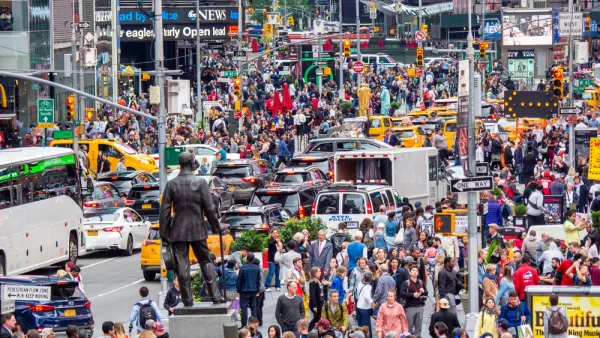
Liberating Cities from Cars
Examining models of progress toward restrictions on the use and storage of automobiles from urban areas around the world.
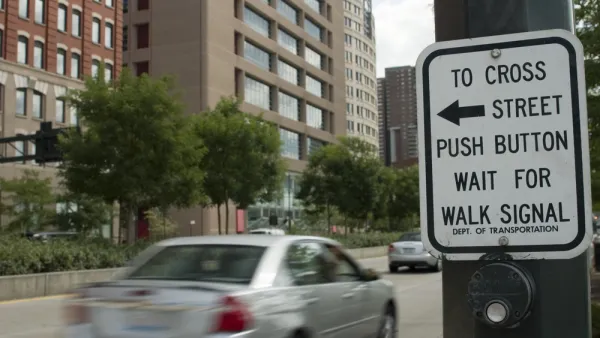
In Support of the Right to Cross the Street
Benjamin Ross argues that the walk signal is a fundamentally flawed approach to creating walkable streets and shareable roadways—making walking slower, less convenient, and more dangerous.
Also Setting Records: Auto Sales and Auto Loan Debt
More evidence that reports of "peak car" in the United States were premature.

Planetizen Federal Action Tracker
A weekly monitor of how Trump’s orders and actions are impacting planners and planning in America.

The state-sanctioned urbicide of Austin
People don’t kill cities. Freeways do.

Colorado’s Largest Data Center Could Rise Next to Homes — Without a Public Hearing
The proposed campus would consume 11 times the power of Denver International Airport; as it has across the country, opposition mounts.

Judges permit Denver to divert 77,000 acre feet from the Colorado River for reservoir expansion
Overuse and climate change have caused the Colorado River’s water levels to plummet.

Amtrak, CN end decades-long dispute with eight-year agreement
The new operating agreement establishes an updated framework for the companies to work together, including processes to resolve disputes.

Raised interest rates may kill financially vulnerable construction projects
The chief economist at ConstructConnect warns that if construction project owners are negatively impacted by the raised rates, it could result in delayed payments to contractors.

FREE Course: Walkable City 1: Why Walkability?
After describing his path towards focusing on walkability as the essence of good planning, Jeff Speck marches through his five principal reasons for making more walkable places.
Reinventing Malls: Planning Alchemy—Turning Gray Fields Into Gold
The course focuses on the opportunities and imperatives that shape reinvention of mall sites.

KFH Group Inc.
Greater Baltimore Committee
Eagle County Government
The Architects Foundation
University of Cincinnati Online
The Pocatello Development Authority
The Urban Renewal Agency of the City of Pocatello