To ensure its longevity, developers of London's Olympic Park have made integration of its facilities into a larger urban renewal plan a priority.


Other cities have faced similar post-Olympics challenges, and some have never been able to use the infrastructure they built for the Games to its full capacity afterward, says Nikos Karadimitriou, a lecturer in urban planning at University College London, who was hired as a junior urban planner during the Olympics in Athens in 2004. The real question is how to use the venues and infrastructure so that they "impact the social fabric in a positive way for years to come", Mr. Karadimitriou says. "This has been successfully implemented in cities with a long-term development strategy."
Barcelona, which held the summer Olympic Games in 1992, is usually cited as an Olympic legacy success story. Three kilometers of derelict industrial waterfront was transformed by the Olympic village, and after the Games provided locals with new access to the sea and a new and highly popular esplanade, where restaurants and other leisure facilities have flourished. In Athens, however, where the Games were held in 2004, many of the 22 venues built for the Games lie abandoned.
Read the full story: London Looks to Learn From Others' Olympic Mistakes
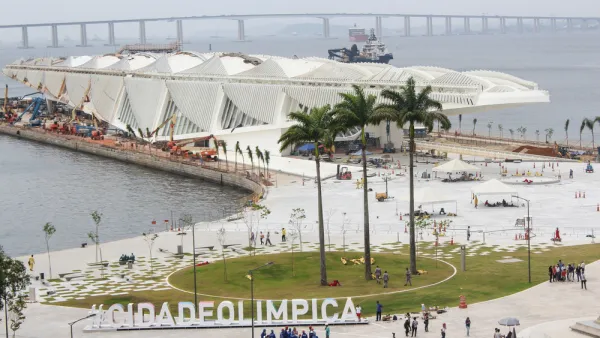
Abandoned Olympic Venues Cast Doubt on the Value of Hosting
Though cities hope for an economic boost, these photos show it's far from guaranteed.
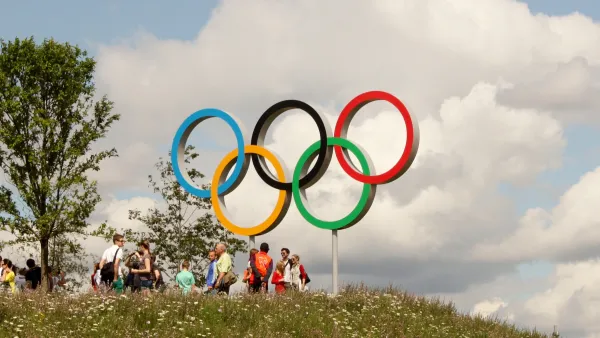
For Host Cities, Olympic Legacies Are Mixed
The two-week competition is often touted as a galvanizing force for urban development. But that's only cities include the Games' legacy in their planning process from the start.
In the Shadow of the Olympics: Dickensian Squalor
Simon Clark and Chris Spillane document the illegal, and often squalid, housing that can be found only three miles from the gleaming Olympic Stadium.

Planetizen Federal Action Tracker
A weekly monitor of how Trump’s orders and actions are impacting planners and planning in America.

Washington state to charge fee to drivers with fuel-efficient cars
Revenue from the fee will go towards supporting the state’s highways.

Trump to blast ‘hydrocarbon highway’ through ‘world’s longest art gallery’
Environmental and historic preservation groups are suing to stop the project.

Minnesota Gold Line extension now has launch date
Plans to extend the Gold Line have existed since 2025.

Data centers need power – lower income, rural residents pay the price
In 2025, data centers paid only 38% of the energy infrastructure costs linked to their growth, with households, especially rural and low-income residents, bearing the remaining burden.

MBTA Green Line project moved to next phrase of CIG program
The modernization effort will cost $4.08 billion.

FREE Course: Walkable City 1: Why Walkability?
After describing his path towards focusing on walkability as the essence of good planning, Jeff Speck marches through his five principal reasons for making more walkable places.
Reinventing Malls: Planning Alchemy—Turning Gray Fields Into Gold
The course focuses on the opportunities and imperatives that shape reinvention of mall sites.

City of Charlotte
City of Rosemead
Rutgers University, Edward J. Bloustein School of Planning and Public Policy
University of Michigan School for Environment and Sustainability (SEAS)
Hunter College, City University of New York (CUNY)
The Architects Foundation
University District Partnership