New York's Broadway goes pedestrian, while Sacramento's K Street goes back to having car traffic. Are pedestrian plazas a relic of the past, or the wave of the future?


Yonah Freemark says that density is key.
Freemark writes, "California's capital may have suffered from a density problem: it didn't have enough residents and office workers in the immediate surrounding area to keep its streets active during off-hours, so the pedestrian mall often felt too quiet to be comfortable. The fact that many consumers visiting the street arrived by automobile made the situation worse. In New York, where there are hundreds of people on virtually every block, there's little to fear, and most people visiting businesses likely come on foot anyway, so getting rid of car access won't change much."
Read the full story: Are pedestrian malls the future or the relic of antiquated thinking?
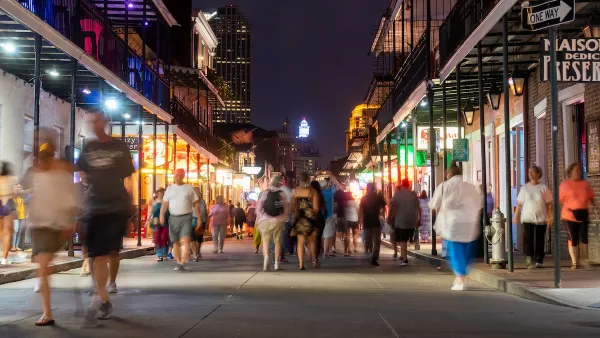
Bourbon Street Could Be a Model for Pedestrian Spaces
The conversation around pedestrianizing public streets isn’t new — think Times Square. Could one of America’s oldest streets lead the way in a revival of the pedestrian mall?
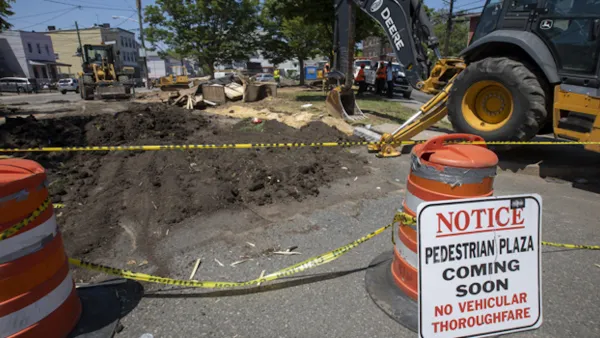
How Jersey City Dramatically Improved Its Public Realm
The city’s new Department of Infrastructure consolidates the management of public amenities and has guided the creation of new bike lanes, pedestrian plazas, and parks.
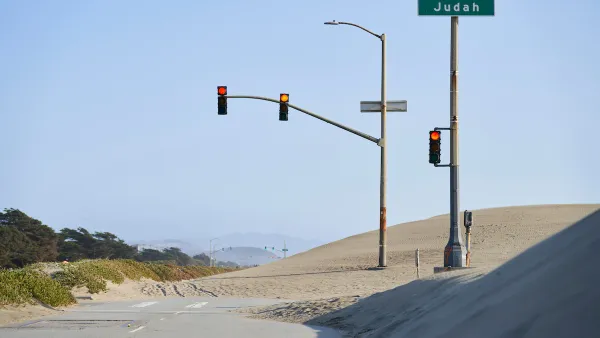
Sea Level Rise Prompts Closure of San Francisco’s Great Highway
The city plans to repurpose a segment of the roadway frequently blocked by blowing sand into a pedestrian plaza.

Planetizen Federal Action Tracker
A weekly monitor of how Trump’s orders and actions are impacting planners and planning in America.

Eastern Nebraska is running out of electricity
Data centers and electrification are straining eastern Nebraska’s grid, throttling economic development.

Washington state to charge fee to drivers with fuel-efficient cars
Revenue from the fee will go towards supporting the state’s highways.

Instead of building new housing, LA developers are turning mansions into mega-mansions
In the richest areas, the number of houses valued at $30 million with demolition permits has skyrocketed since 2018.

Illinois considers spending $1 billion in taxpayer money on data center
A quantum computing campus and data center are currently under construction in Chicago.

As development costs rise, Boston moves to lessen affordable housing requirements
The Boston Zoning Commission and the City Council still need to approve Boston Mayor Michelle Wu’s proposed changes

FREE Course: Walkable City 1: Why Walkability?
After describing his path towards focusing on walkability as the essence of good planning, Jeff Speck marches through his five principal reasons for making more walkable places.
Reinventing Malls: Planning Alchemy—Turning Gray Fields Into Gold
The course focuses on the opportunities and imperatives that shape reinvention of mall sites.

City of Charlotte
City of Rosemead
Rutgers University, Edward J. Bloustein School of Planning and Public Policy
University of Michigan School for Environment and Sustainability (SEAS)
Hunter College, City University of New York (CUNY)
The Architects Foundation
University District Partnership
City of Cambridge
The Pocatello Development Authority