In his commentary, Rob Steuteville questions whether we should work toward sustaining what we have, or building a more resilient future.


"Sustainability is a popular and useful word - yet one that also has shortcomings. It begs the question, for example, of what we want to sustain. Those who are invested in suburban, automobile-dependent living may contend that their way of life deserves sustenance - regardless of its impact on carbon emissions. The federal government's recent bailout of bad mortgages is a policy that kept many suburbs afloat.
Sustainability implies judgments that divide people. We run the risk of sounding self-righteous when we argue that urban patterns are more sustainable than sprawl. So the question must be asked: Is there a less divisive and more precise way to make this argument?"
Thanks to Renee Brutvan
Read the full story: Resilience and smart growth

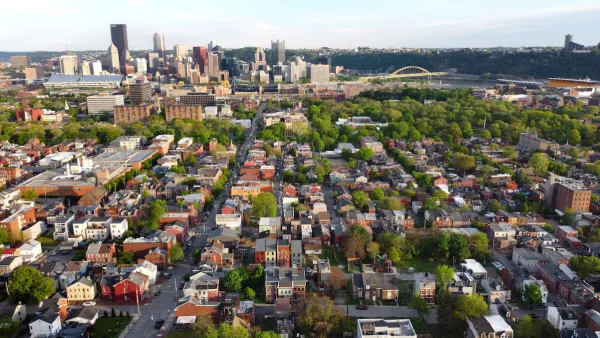
A Better Understanding of Smart Growth Benefits
Smart Growth creates compact, multimodal communities where residents consume less land, drive less, and rely more on non-auto modes. Planners have important stories to tell about the benefits of Smart Growth.
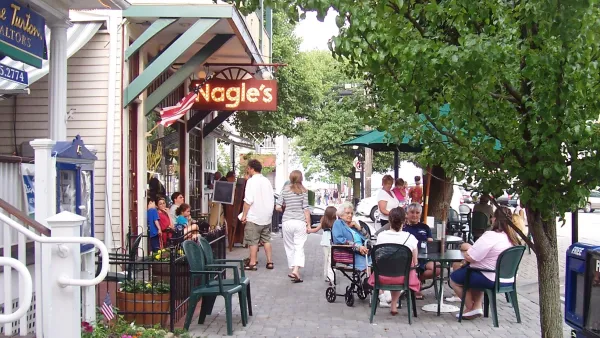
Defining the Buzzword: What's a 15-Minute City?
What does it mean to be a 15-minute city?

Different Types of Pro-Development Urbanism, Explained
Can't tell New Urbanism from YIMBY? This post tries to help.

Planetizen Federal Action Tracker
A weekly monitor of how Trump’s orders and actions are impacting planners and planning in America.

Amtrak, CN end decades-long dispute with eight-year agreement
The new operating agreement establishes an updated framework for the companies to work together, including processes to resolve disputes.

Judges permit Denver to divert 77,000 acre feet from the Colorado River for reservoir expansion
Overuse and climate change have caused the Colorado River’s water levels to plummet.

NYC DOT wants faster, more permanent street upgrades
The city is examining ways to build more concrete infrastructure without getting entangled in 'decades-long' projects.

'Something we’ve never seen before:' rising utility rates could strain city finances nationwide
Data centers, climate change and other factors have caused utility rates in the United States to increase by 38% since 2020.

Trump to overrule local leaders, lease millions of acres of America’s Pacific Island territories’ seafloors to mining companies
International law says that the Indigenous people of America’s territories have a right to prior and informed consent regarding projects that impact their countries.

FREE Course: Walkable City 1: Why Walkability?
After describing his path towards focusing on walkability as the essence of good planning, Jeff Speck marches through his five principal reasons for making more walkable places.
Reinventing Malls: Planning Alchemy—Turning Gray Fields Into Gold
The course focuses on the opportunities and imperatives that shape reinvention of mall sites.

Harvard University Graduate School of Design
KFH Group Inc.
Greater Baltimore Committee
The Architects Foundation
University of Cincinnati Online
The Pocatello Development Authority
The Urban Renewal Agency of the City of Pocatello