Low-cost, high capacity urban gondolas and cable cars are being successfully used as public transit and tools of urban revitalization in Colombia, Algeria and other parts of the developing world.


Megan McConville writes: "Metrocable was designed to reach some of the least developed suburban areas of Medellín, poor barrios on the hills surrounding the city that cannot be reached by conventional public transit. Opened in 2006, Metrocable was intended to connect the inhabitants of these barrios to the rest of the city. It has succeeded in easing their commutes and has also helped revitalize some of the areas it passes through. 'People in Santo Domingo [one of the barrios] used to say that they weren't part of Medellin,' says a cable car engineer. 'They had to take three separate buses to get to it. But now they feel that they are involved in the city.'"
Thanks to Steven Dale
Read the full story: Up, Up and Away in a Cable Car

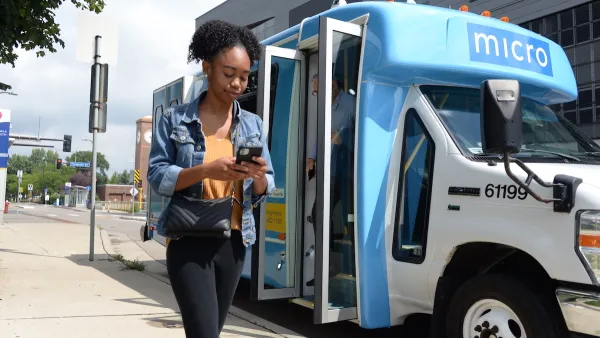
Public Transit Alternatives to Rideshare Offer Affordable and Accessible Mobility
In Minnesota, local transit agencies are seeing growth in ridership for on-demand microtransit services since the start of the pandemic.
Opinion: Transportation Funding Priorities Are Outdated
Investing in technology and promoting innovation in the transportation sector can further the Biden administration's goals of reducing carbon emissions and improving public transit.
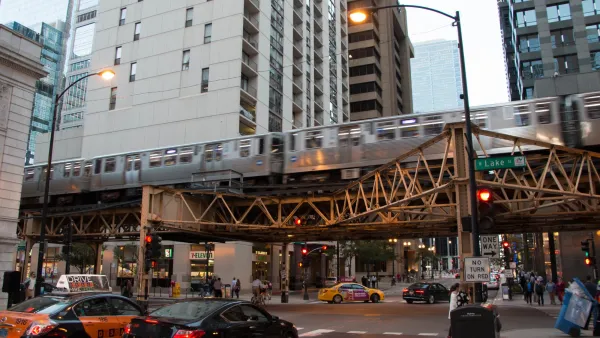
Ride-Hailing Report Examines Effects on Chicago's Congestion
A new report looks at how the increase of ride-hailing in Chicago is affecting infrastructure and mobility.

Planetizen Federal Action Tracker
A weekly monitor of how Trump’s orders and actions are impacting planners and planning in America.

California plans to bury El Niño’s downpour
If the state plays its cards right, it may be able to store a billion acre-feet of El Niño’s water in aquifers.

Chicago breaks ground on $3 billion megadevelopment
The new neighborhood, titled Foundry Park, will one day host 3,700 residences.

This road in NYC is infamously dangerous — and Mamdani can't fix it
New York City's Ocean Parkway is known for reckless driving, but the power to implement safety measures lies with the state rather than the city.

One of Denver’s busiest corridors to gain BRT
The project will span 18 miles and contain 74 bus rapid transit stations.

275,000 bus trips are at stake on Seattle's ballot
If passed, the Seattle Transit Measure would trigger a 0.3% sales tax and raise an average of $138 million per year to maintain and expand Seattle’s bus services.

FREE Course: Walkable City 1: Why Walkability?
After describing his path towards focusing on walkability as the essence of good planning, Jeff Speck marches through his five principal reasons for making more walkable places.
Reinventing Malls: Planning Alchemy—Turning Gray Fields Into Gold
The course focuses on the opportunities and imperatives that shape reinvention of mall sites.

City of Rosemead
Rutgers University, Edward J. Bloustein School of Planning and Public Policy
One Hundred Miles
Hunter College, City University of New York (CUNY)
The Architects Foundation
University of Cincinnati Online
City of Cambridge
Montrose County
The Pocatello Development Authority