The director of the Cincinnati Art Museum says in order to prepare for the future, the city should rebuild its streetcar system and build on its strengths in the arts.


Aaron Betsky, director of the Cincinnati Art Museum, says that Cincinnati is in excellent shape compared to its rust-belt neighbors, but needs to make investments to prepare for an uncertain future. The city's strengths, he says, lie in the natural landscape and a strong arts scene.
Betsky writes, "So, what can planning do to build on those strengths? I believe the city should be investing in iconic attractors located strategically around this sprawling landscape. These could be visual and performing arts centers, schools (whether charter or not I leave to others for the moment), or recreational facilities, and they should be scaled from the regional or national to the local. This being a conservative city, the focus right now is on renovation of existing and often mediocre structures, while the city should be building for the future."
Read the full story: Making A City Work

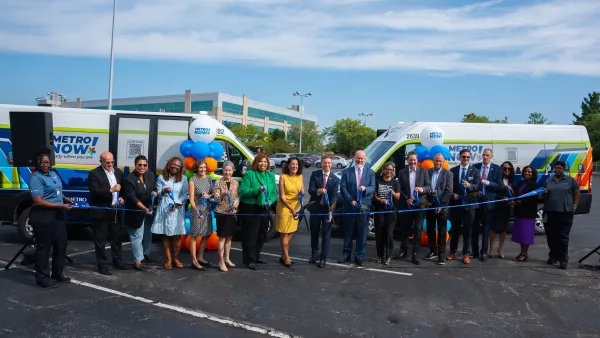
Three agencies expanding on-demand transit
Multiple states across America increasing access to flexible public transportation.

Cincinnati upzoning plan paves way for revitalized waterfront district
The city hopes to kickstart new development on five vacant lots in the riverfront entertainment district.
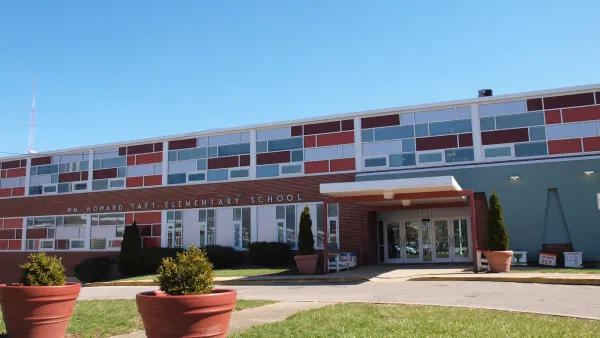
Cincinnati school district to open 'Safe Sleep' lot for unhoused families
The safe parking lot is part of Project Connect, a district-led initiative that provides services to students and families.

Planetizen Federal Action Tracker
A weekly monitor of how Trump’s orders and actions are impacting planners and planning in America.

Northwest rail fans eager for Sept. 30 debut of Amtrak’s Airo fleet
Get ready for that new train smell and more seats. But they won’t go faster or run more frequently on the Cascades route in Washington and Oregon.

Trump is considering data centers on 6 states' public land — some state officials say they had no idea
If the administration approves the proposed projects, data center and data center-related developments will cover 17,600 acres of public land.

California may destroy its beaches trying to save homes from El Niño
Boulders and seawalls can protect homes from waves, but ultimately destroy sandy beaches.

California high-speed rail accomplishes only one legislative goal in 2026
The majority of the agency's failed pitches were never developed into written proposals.

Sharp cuts to federal passenger rail, public transit funding arrive today
The American Public Transportation Associations estimates the stopgap bill will result in an over 80% cut to federal passenger rail investment and 20% cut to public transit investment.

FREE Course: Walkable City 1: Why Walkability?
After describing his path towards focusing on walkability as the essence of good planning, Jeff Speck marches through his five principal reasons for making more walkable places.
Reinventing Malls: Planning Alchemy—Turning Gray Fields Into Gold
The course focuses on the opportunities and imperatives that shape reinvention of mall sites.

City of Thousand Oaks
City of Wisconsin Rapids
Harvard University Graduate School of Design
The Architects Foundation
University of Cincinnati Online
Northern Illinois Transit Authority (NITA)
The Pocatello Development Authority
The Urban Renewal Agency of the City of Pocatello