In one North Carolina county, the land development process -- from permitting to building plan submission to inspection -- is now organized under one electronic, online system.


The new system eliminates the need for hard copies of plans, and the cross-town trips between different departments to share documents and gain approvals.
"'It really amazed me how many steps there are in even the simplest permit,' Bledsoe said. 'You want to build a small house out here -- nothing special, just a house -- but there are all kinds of steps. You can't just walk in, get a permit and walk out.'
The county's new system streamlines the permitting process by connecting all land management departments to a centralized network. Supported by $600,000 in local project funds, the system integrates electronic plans review and geographic information system (GIS) platforms. The previous system had GIS maps, but they were static, limited and new information had to be put in manually. This new GIS system is live. Anything that's entered into the GIS is automatically available within permitting services, and vice versa. Users can access live maps and see the placement of any other buildings on the targeted lot, and data can move electronically from city to city."
Thanks to Governing
Read the full story: North Carolina County Puts Land Management Into Centralized Network


‘Cut the Tape’ Report Takes Aim at Inefficiencies
A set of recommendations from the Chicago mayor’s office calls for streamlining city processes to stimulate more residential and commercial development.

Tribes to co-manage California’s biggest lake, protect its sacred fish
The Clear Lake hitch, a fish only found in Clear Lake, must contend with mercury contamination, algal blooms and predatory invasive fish in the watershed.
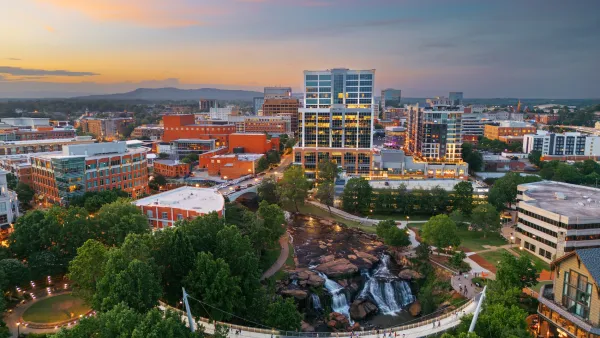
Greenville, SC pushes for missing middle housing
The city recently overhauled its zoning rules to permit more 'low-intensity' housing options.

Amtrak, CN end decades-long dispute with eight-year agreement
The new operating agreement establishes an updated framework for the companies to work together, including processes to resolve disputes.

Judges permit Denver to divert 77,000 acre feet from the Colorado River for reservoir expansion
Overuse and climate change have caused the Colorado River’s water levels to plummet.

Nation's most wind-powered state turns to coal as data centers increase energy demand
For the first time in decades, Iowa has increased its generation of coal power.

Boston has spent millions making the Green Line more accessible — and there’s no end in sight
While the city has invested millions into expanding and adding platforms to the Green Line to make it more accessible, new train cars set to arrive next year will be too tall for disabled passengers to board without raising the current platforms.

Idaho may see an 18% drop in federal surface transit funding — the largest estimated cut in the US
Transit systems in rural communities are much more reliant on federal funding to provide their services.

How ‘post-disaster gentrification’ alters neighborhoods after natural calamities
After hurricanes, fires or other calamities, the original residents of a community are often replaced by younger, wealthier residents.

FREE Course: Walkable City 1: Why Walkability?
After describing his path towards focusing on walkability as the essence of good planning, Jeff Speck marches through his five principal reasons for making more walkable places.
Reinventing Malls: Planning Alchemy—Turning Gray Fields Into Gold
The course focuses on the opportunities and imperatives that shape reinvention of mall sites.

City of Wisconsin Rapids
Harvard University Graduate School of Design
KFH Group Inc.
The Architects Foundation
University of Cincinnati Online
The Pocatello Development Authority
The Urban Renewal Agency of the City of Pocatello