The utility says it has dramatically reduced its backlog, but applicants say they still face months-long delays for approvals for new electrical work.



Homeowners in California say the utility company PG&E is delaying the building of accessory dwelling units (ADUs) through long and onerous permitting and inspection processes, making property owners wait as long as a year to approve new electrical panels or wiring.
According to a San Francisco Chronicle article by Jessica Roy, homeowners and developers are citing “pervasive” problems with the utility, including “weather-related delays, communication issues, inconsistent enforcement of rules from PG&E’s ‘Green Book,’ and poor management of the contractors PG&E outsources some of its work to.”
For its part, PG&E says it is working to improve its processes and that it reduced its application backlog from six months in 2023 to less than one month at the end of 2024. To ensure the process goes as smoothly as possible, the utility recommends “having a licensed electrician or general contractor advise them on the feasibility of the planned ADU location and panel upgrades; submitting a Residential Load Request Form to ensure the existing neighborhood power grid can handle the additional demand from an ADU; and having a site plan produced by an architect or civil engineer that lays out where the new structure and utilities will go.”
FULL STORY: PG&E is delaying ADU construction in California, builders and homeowners say

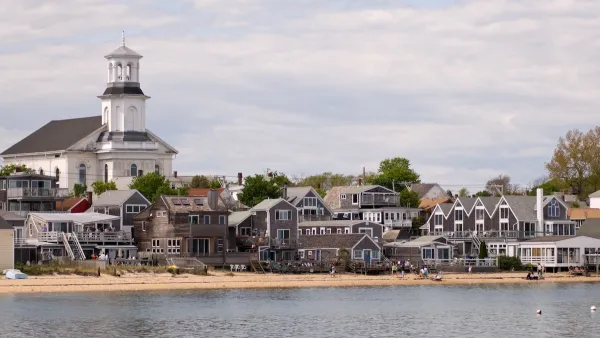
Affordable Homes Act Targets ADUs, ‘Seasonal Communities’ in Massachusetts
State legislators say the new law could support 65,000 new housing units.

ADUs account for nearly 28% of Bay Area housing permits
In Hillsborough, 56 of 58 homes permitted in 2025 were ADUs.

Report: Massachusetts zoning reform not enough to stimulate ADU production
Massachusetts cities issued over 1,200 applications for ADUs in the last year, short of the Healey administration's goal of 1,600 to 2,000 units per year.

Planetizen Federal Action Tracker
A weekly monitor of how Trump’s orders and actions are impacting planners and planning in America.

The state-sanctioned urbicide of Austin
People don’t kill cities. Freeways do.

US to reduce Colorado River water deliveries to Mexico
A new Colorado Treaty amendment reduces Mexico’s Colorado River water allocation by 250,000 acre feet.

5 New England states march closer to 800 megawatt wind energy project
Securing federal approval for the project may be complicated under the Trump administration, which has historically been hostile towards domestic wind power.

Baltimore to break ground on $50 million Transit Priority Project
The project will bring faster bus trips, safer streets and better bike connections to Baltimore.

Airbnb launches $250 million 'last-dollar financing' housing accelerator, makes first investment in Austin
The company will put $6.4 million towards affordable housing development in Texas’ capital.

FREE Course: Walkable City 1: Why Walkability?
After describing his path towards focusing on walkability as the essence of good planning, Jeff Speck marches through his five principal reasons for making more walkable places.
Reinventing Malls: Planning Alchemy—Turning Gray Fields Into Gold
The course focuses on the opportunities and imperatives that shape reinvention of mall sites.

Eagle County Government
Harvard University Graduate School of Design
Nashville Planning Department
The Architects Foundation
University of Cincinnati Online
The Pocatello Development Authority
The Urban Renewal Agency of the City of Pocatello
Journal of the American Planning Association