Almost six months in, the experimental transition of a car lane into a bike lane on a Vancouver bridge has proved to have little if any negative impact on traffic congestion.


Back in July, one of the six lanes on the Burrard Bridge was closed off to vehicular traffic and opened to bicycle traffic, a move many had expected to snarl rush hour commutes on and near the bridge. But after almost six months, traffic seems to be unaffected.
"The new bike lane not only gave more room to cyclists, it also ended the perpetual peril of bicycles and pedestrians sharing the sidewalk.
'It was really scary before, always looking over your shoulder for cyclists,' said Nicole Cutler, toting two bags of Christmas shopping, as she headed over by foot. 'It's great. I'd be really upset if it went back to the way it was before."
Read the full story: For cyclists – and motorists – it's an easy ride

Dedicated Non-Motorist Lane on Vancouver Bridge Finds Public Support
Residents in Vancouver are reportedly in favor of keeping a dedicated lane for pedestrians and cyclists on a local bridge. Even some motorists are in support.
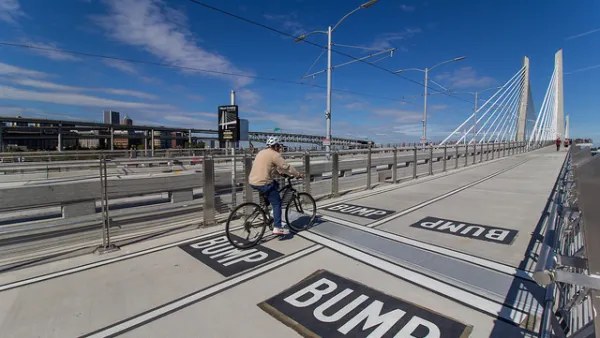
Portland and Multnomah County Push for Lower Speed Limits on Bridges
The Portland Bureau of Transportation and Multnomah County agree on a 30 mph speed limit on five downtown bridges, but the state's department of transportation denied the change on two key spans.
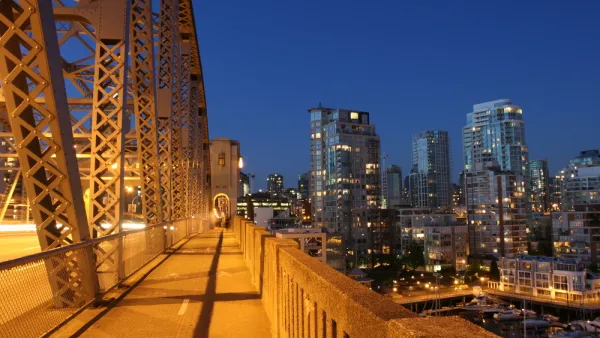
The Post-Bikelash Era?
Building protected bike lanes in Canada isn't as controversial as it once was. Maybe there's hope for the United States?

Planetizen Federal Action Tracker
A weekly monitor of how Trump’s orders and actions are impacting planners and planning in America.

Amtrak, CN end decades-long dispute with eight-year agreement
The new operating agreement establishes an updated framework for the companies to work together, including processes to resolve disputes.
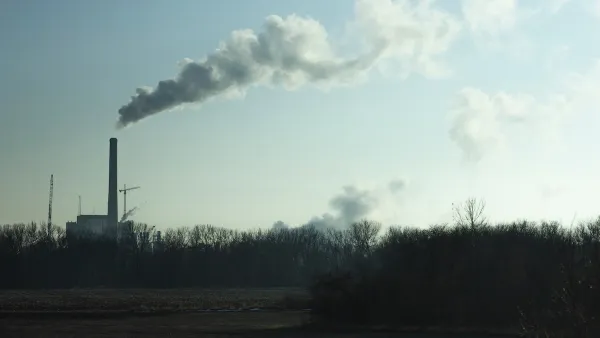
Nation's most wind-powered state turns to coal as data centers increase energy demand
For the first time in decades, Iowa has increased its generation of coal power.

Alabama scores up to $2.5 billion federal loan for largest infrastructure project in state’s history
The Mobile River Bridge and Bayway Project aims to ease congestion at Alabama’s worst bottleneck.

Trump is considering data centers on 6 states' public land — some state officials say they had no idea
If the administration approves the proposed projects, data center and data center-related developments will cover 17,600 acres of public land.

Despite court ruling, Trump is keeping nearly all wind projects in the US on hold
At least 110 wind energy projects have not heard from the government since a federal judge ruled that the Trump administration's freeze on wind turbine clearances was likely illegal.

FREE Course: Walkable City 1: Why Walkability?
After describing his path towards focusing on walkability as the essence of good planning, Jeff Speck marches through his five principal reasons for making more walkable places.
Reinventing Malls: Planning Alchemy—Turning Gray Fields Into Gold
The course focuses on the opportunities and imperatives that shape reinvention of mall sites.

KFH Group Inc.
Greater Baltimore Committee
Eagle County Government
The Architects Foundation
University of Cincinnati Online
The Pocatello Development Authority
The Urban Renewal Agency of the City of Pocatello