Stimulus funds directed at high speed rail projects have inspired a flood of lobbying efforts across the country, according to this analysis from the Center for Public Integrity.


"[A]fter millions and millions of dollars spent studying, planning, and mostly falling short, the American incarnation of high-speed passenger rail is but a single line that travels from Washington to Boston at an average speed of under 80 miles per hour.
Now, though, the Obama administration is looking to change all that, starting with $8 billion in federal stimulus money to be awarded starting this winter. Equally captivated, Congress is considering adding as much as $4 billion more in next year's budget. The House Transportation and Infrastructure Committee chairman, James Oberstar, a Minnesota Democrat, is talking $50 billion after that.
That helps explain the U.S. High Speed Rail Association, which didn't even exist a year ago. Actually, the group was just formed in June, and the timing is no accident. High-speed rail is Washington's latest potential bonanza, it seems, and that $8 billion dollars - just for starters - is attracting lots of attention. In fact, an examination by The Center for Public Integrity found that more than 50 public and private groups explicitly lobbied on high-speed rail policy last quarter - a three-fold increase from a year ago. Even that number fails to capture dozens of other actors likely lobbying on high-speed rail that keep their specific lobbying targets as vague as Washington does its spending plans."
FULL STORY: Washington's Newest Gravy Train: High-Speed Rail

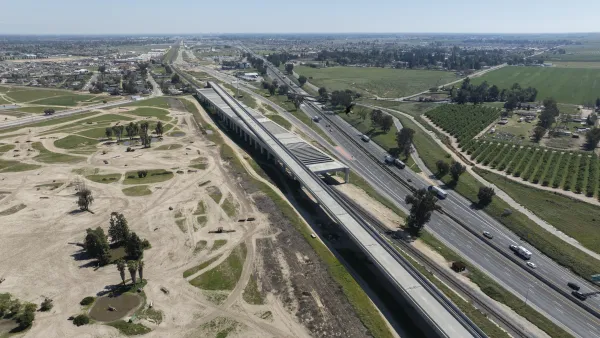
California High-Speed Rail Authority could be broke by the end of 2027
A report from the Office of Inspector General says the authority must borrow against state infusions to stay afloat.
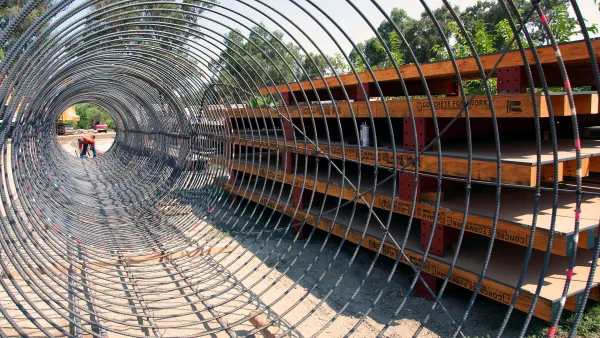
California High Speed Rail to lay first tracks
High Speed Rail Authority officials describe the milestone as "the moment this project truly begins to become a railroad."
TOD Opportunities Around America's First True High-Speed Rail Line
Brightline West hopes to break ground, in anticipation of a 2027 opening. Cities in the Inland Empire and High Desert areas of Southern California are looking to take advantage.

The state-sanctioned urbicide of Austin
People don’t kill cities. Freeways do.

US to reduce Colorado River water deliveries to Mexico
A new Colorado Treaty amendment reduces Mexico’s Colorado River water allocation by 250,000 acre feet.

New Jersey’s second-largest city bans standalone data centers
Jersey City will continue to allow co-location facilities, such as those meant for research institutions that store their own data.

Amtrak not solely to blame for New Jersey commuter rail's unreliability, report finds
A new study from the Garden State Initiative found that NJ Transit’s budget grew 20% across a 4 year period, but reliability declined significantly over the same period.

EPA erases limits on planet-warming pollution from power plants
Under Monday’s plan, power plants would still have some limits on how much mercury, arsenic and other contaminants they can emit.

Phoenix announces new on-demand transit service, more frequent RAPID buses
Both new services will launch in October, and are part of Phoenix's Project Effective Access Solutions for Easing Congestion.

FREE Course: Walkable City 1: Why Walkability?
After describing his path towards focusing on walkability as the essence of good planning, Jeff Speck marches through his five principal reasons for making more walkable places.
Reinventing Malls: Planning Alchemy—Turning Gray Fields Into Gold
The course focuses on the opportunities and imperatives that shape reinvention of mall sites.

Eagle County Government
Harvard University Graduate School of Design
Nashville Planning Department
The Architects Foundation
University of Cincinnati Online
The Pocatello Development Authority
The Urban Renewal Agency of the City of Pocatello
Journal of the American Planning Association