With 100 percent subsidies, transit agencies could drop the pretense of being businesses and serve many more people -- or so proponents say. Agencies aren't so sure.


"Just as websites have attracted millions of users by offering services for free and public schools have long waived tuitions in favor of the ability to offer guaranteed universal education, some contend that by opening up turnstiles and getting rid of the farebox, transit agencies could serve legions of new riders for whom the typical fare presents just enough of a financial or psychic barrier to keep them in their cars."
"Proponents argue that free transit's ability to remove cars from the road and therefore decrease congestion, curb pollution and foster more livable cities would more than justify the added burden on public coffers. It would even reduce insurance claims, since cars that stay in garages don't get into accidents. Olsen also argues that fare-free transit would save money because it would eliminate what he considers an unacceptably costly infrastructure to collect fares."
Thanks to Josh Stephens
Read the full story: Proponents Say Transit Should Be a Free Ride
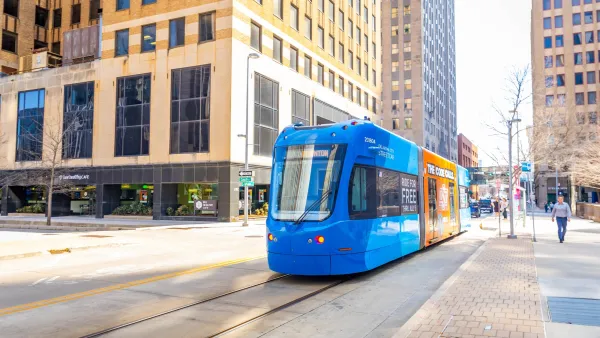
OKC streetcar will stay fare-free after ridership shot up 74%
The downtown streetcar saw a surge in ridership after it eliminated fares in January.
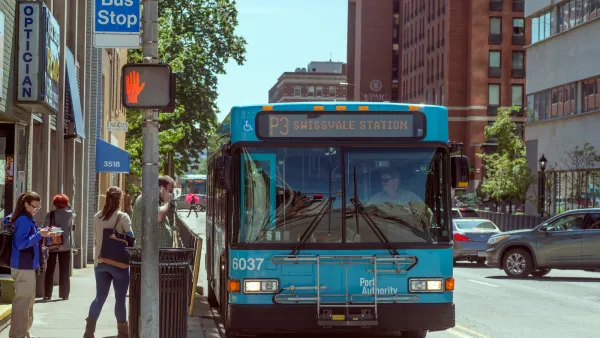
750 Pittsburgh city workers to get free transit passes
City employees working downtown will have access to free transit from Pittsburgh Regional Transit.
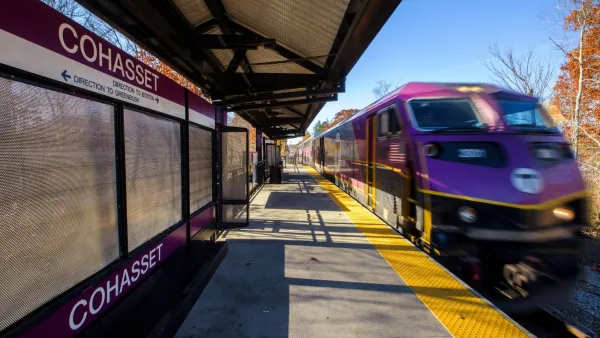
MBTA extends commuter rail discounts and lowers express bus fare to keep passengers riding into the fall
Boston-area commuters can access half-price monthly passes through November.

Planetizen Federal Action Tracker
A weekly monitor of how Trump’s orders and actions are impacting planners and planning in America.

Washington state to charge fee to drivers with fuel-efficient cars
Revenue from the fee will go towards supporting the state’s highways.

Illinois considers spending $1 billion in taxpayer money on data center
A quantum computing campus and data center are currently under construction in Chicago.

People Mover delayed again, LAX and contractor trade barbs
The automated train was last slated to open in January 2027.

Trump to blast ‘hydrocarbon highway’ through ‘world’s longest art gallery’
Environmental and historic preservation groups are suing to stop the project.

25 states cast bids to be the home of U.S. Space Academy
The academy will train scientists, officers and astronauts for the U.S. Space Force.

FREE Course: Walkable City 1: Why Walkability?
After describing his path towards focusing on walkability as the essence of good planning, Jeff Speck marches through his five principal reasons for making more walkable places.
Reinventing Malls: Planning Alchemy—Turning Gray Fields Into Gold
The course focuses on the opportunities and imperatives that shape reinvention of mall sites.

City of Charlotte
City of Rosemead
Rutgers University, Edward J. Bloustein School of Planning and Public Policy
University of Michigan School for Environment and Sustainability (SEAS)
Hunter College, City University of New York (CUNY)
The Architects Foundation
University District Partnership