Queens and Brooklyn homeowners may soon be prohibited from converting front yards into parking pads if a set of regulations is approved. The loss of street parking from new curb cuts was cited as a reason, along with aesthetics.


It's not just the loss of street parking that's driving the new regulations. It's retaining the green space in the neighborhood as well. The new regulations will also specify the width of front yard plantings. However, it does seem to be "all about parking." In fact, the regulation will require more parking if a house is modified to create extra units.
"Ambiguous zoning regulations now allow residents in some neighborhoods to make curb cuts, which are created by breaking the concrete of a regular curb and repaving it to slope up to a private property's front yard."
"These changes are 'key to fostering inviting, walkable blocks,' the city planning commissioner, Amanda M. Burden, said when she announced the proposed new rules on Monday (Nov. 16).
The new rules would tighten the criteria for approving certain curb cuts and new residential parking to consider the 'character of the existing streetscape' and whether the cuts would 'affect pedestrian movement.'"
Thanks to Ed Braddy
FULL STORY: City Moves to Restrict Front-Yard Driveways

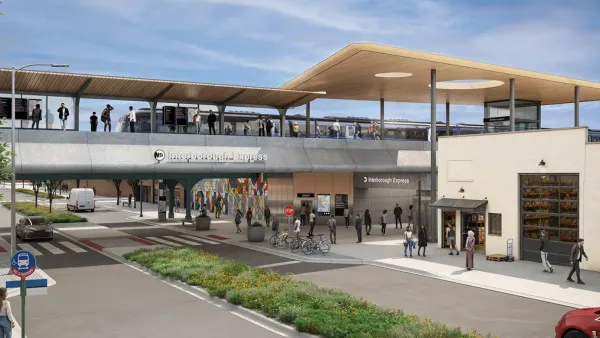
NYC releases new renderings for $5.5 billion Interborough Express
The slated stations will have a modern look, enhanced lighting and improved audio announcements.
NYC needs 700,000 new homes to resolve housing crisis, report states
The report gave every neighborhood a non-binding development target.
Repurposing Parking Space With a ‘Pop-up Apartment’
A New York installation highlights how much urban space is wasted on parking.

Planetizen Federal Action Tracker
A weekly monitor of how Trump’s orders and actions are impacting planners and planning in America.

The state-sanctioned urbicide of Austin
People don’t kill cities. Freeways do.

US to reduce Colorado River water deliveries to Mexico
A new Colorado Treaty amendment reduces Mexico’s Colorado River water allocation by 250,000 acre feet.

Mamdani overhauls NYC's Vision Zero plan with 100 new policy goals
The overhaul aims to reduce traffic deaths and make streets safer for pedestrians, cyclists and drivers through lower speed limits, new safety infrastructure and more.

Amtrak not solely to blame for New Jersey commuter rail's unreliability, report finds
A new study from the Garden State Initiative found that NJ Transit’s budget grew 20% across a 4 year period, but reliability declined significantly over the same period.

EPA erases limits on planet-warming pollution from power plants
Under Monday’s plan, power plants would still have some limits on how much mercury, arsenic and other contaminants they can emit.

FREE Course: Walkable City 1: Why Walkability?
After describing his path towards focusing on walkability as the essence of good planning, Jeff Speck marches through his five principal reasons for making more walkable places.
Reinventing Malls: Planning Alchemy—Turning Gray Fields Into Gold
The course focuses on the opportunities and imperatives that shape reinvention of mall sites.

Eagle County Government
Harvard University Graduate School of Design
Nashville Planning Department
The Architects Foundation
University of Cincinnati Online
The Pocatello Development Authority
The Urban Renewal Agency of the City of Pocatello
Journal of the American Planning Association