With closed borders and a military lockdown on all imports and exports, the Palestinians of Gaza rely on a network of smuggling tunnels to obtain goods.


The tunnels have been around since the '80s, but were primarily used to smuggle weapons. Since 2007, the tunnels have been used to transport more benign goods.
"On the outside, on the 3-mile (5 km) fringe of Rafah town, are sandy hills dotted with tents, tarps and bulldozers. Underneath lies what passes for commerce, the surreptitious journey of goods that help keep the territory running.
'There is only one economy - there's a tunnel economy,' says John Ging, head of the U.N. Relief and Works Agency in the Gaza Strip. 'You have zero exports and zero commercial imports through the [Israeli-controlled] crossing points. All that is allowed in is humanitarian aid and supplies ... In terms of economic activity, there is no economic activity other than the tunnel economy.'"
Thanks to BLDGBLOG
Read the full story: In the Tunnels: Gaza's Underground Economy
Bypassing the Blockade: Risky Business
In order to cope with the Israeli blockade, millions of dollars have been invested in tunnels between Gaza and Egypt. Israel has bombed many of them. Now investors want their money back.
The Middle East's 'Urban Prison'
In this article from Progressive Planning, Tom Angotti looks at Gaza and the land use regulations that have imposed an "urban apartheid".
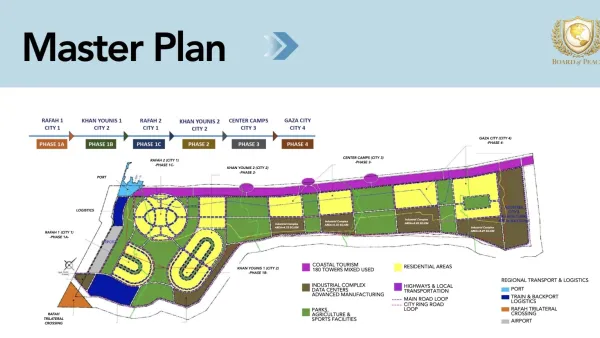
Trump’s Totalitarian Vision for the Future of Gaza
The Trump Administration has put forth its plan for the reconstruction of the Gaza Strip. It is a totalitarian nightmare.

Planetizen Federal Action Tracker
A weekly monitor of how Trump’s orders and actions are impacting planners and planning in America.

California plans to bury El Niño’s downpour
If the state plays its cards right, it may be able to store a billion acre-feet of El Niño’s water in aquifers.

Desperate measures: Advocates weigh draining Lake Powell to fill Colorado River
Draining the reservoir could reduce evaporation losses by a couple hundred thousand acre-feet.

In Texas, data centers are swallowing promised parkland
Residents who moved to Taylor, Texas for a rural community now have to contend with three data centers in their backyard.

How a Chicago-sized wind farm beat the odds and powered on
The project spanned five presidential administrations and a standoff with a U.S. military base.

MTA gives itself 30 days to transform pit into basketball court
The site has been under construction since 2022; the city originally estimated it would finish the court in 2024.

FREE Course: Walkable City 1: Why Walkability?
After describing his path towards focusing on walkability as the essence of good planning, Jeff Speck marches through his five principal reasons for making more walkable places.
Reinventing Malls: Planning Alchemy—Turning Gray Fields Into Gold
The course focuses on the opportunities and imperatives that shape reinvention of mall sites.

City of Rosemead
Rutgers University, Edward J. Bloustein School of Planning and Public Policy
One Hundred Miles
Hunter College, City University of New York (CUNY)
The Architects Foundation
University of Cincinnati Online
City of Cambridge
Montrose County
The Pocatello Development Authority