A revival of small, neighborhood retailers could be an important strategy for countering climate change, enticing people to run errands without driving their cars.


"So far, the public debate about cars and climate change has been dominated by fuel economy. But driving has been growing at such a rapid pace-total miles driven in the U.S. rose 60 percent between 1987 and 2007-that even a big advance in fuel economy is likely to be wiped out by ever more miles on the road...
"This is where local stores come in. Academics who study travel behavior say that the presence of neighborhood businesses is a major factor in how much we drive. Dozens of studies have found that people who live near small stores walk more for errands and, when they do drive, their trips are shorter. And that's not all: a more surprising research finding is that small retailers influence how likely people are to take public transit to work."
Read the full story: Neighborhood stores: An overlooked strategy for fighting global warming
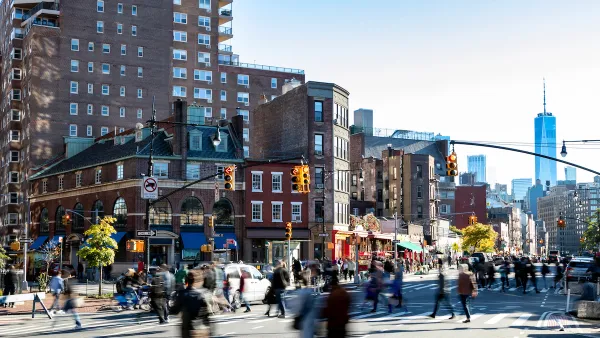
New York State Climate Plan Stalls
Of 35 recommendations presented in the state’s climate scoping plan, just one has been implemented so far.
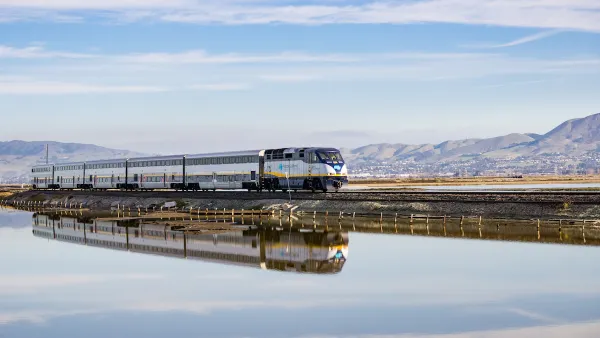
Planning Year in Review 2023: Zoning Reform, a Rail Revolution, and Climate Realities
Last year’s most talked-about planning issues and news.
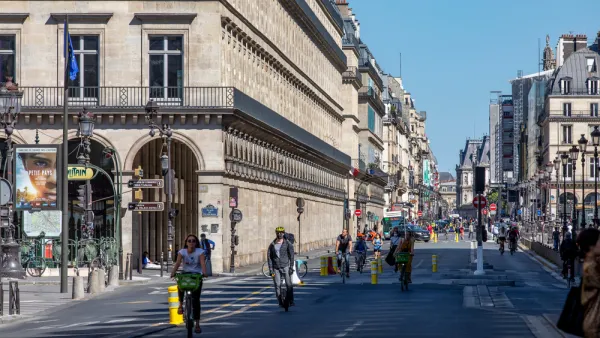
Europe Building a Post-Car Future
While the United States mobilizes to transition to electric cars, cities and countries in Europe are transitioning to fewer cars.

Planetizen Federal Action Tracker
A weekly monitor of how Trump’s orders and actions are impacting planners and planning in America.

California plans to bury El Niño’s downpour
If the state plays its cards right, it may be able to store a billion acre-feet of El Niño’s water in aquifers.

Desperate measures: Advocates weigh draining Lake Powell to fill Colorado River
Draining the reservoir could reduce evaporation losses by a couple hundred thousand acre-feet.

In Texas, data centers are swallowing promised parkland
Residents who moved to Taylor, Texas for a rural community now have to contend with three data centers in their backyard.

How a Chicago-sized wind farm beat the odds and powered on
The project spanned five presidential administrations and a standoff with a U.S. military base.

MTA gives itself 30 days to transform pit into basketball court
The site has been under construction since 2022; the city originally estimated it would finish the court in 2024.

FREE Course: Walkable City 1: Why Walkability?
After describing his path towards focusing on walkability as the essence of good planning, Jeff Speck marches through his five principal reasons for making more walkable places.
Reinventing Malls: Planning Alchemy—Turning Gray Fields Into Gold
The course focuses on the opportunities and imperatives that shape reinvention of mall sites.

City of Rosemead
Rutgers University, Edward J. Bloustein School of Planning and Public Policy
One Hundred Miles
Hunter College, City University of New York (CUNY)
The Architects Foundation
University of Cincinnati Online
City of Cambridge
Montrose County
The Pocatello Development Authority