A new study from The Brookings Institution discusses how school quality and neighborhood affordability are linked, and how both can be improved.


"Public policies have helped shape today's disparities in neighborhood affordability and school quality, although programs focused on affordable housing rarely take public schools into account and school officials typically assume that they have no influence over housing patterns. But policymakers can do better. By strategically addressing the connections between schools and housing, they can trigger positive feedback that enhances neighborhood vitality, improves school quality, and promotes equity and opportunity for families and their children. Most of these policies will be local, but the federal government has a role to play: deploying its considerable resources and leadership to encourage and support local innovation."
Read the full story: Vibrant Neighborhoods, Successful Schools: What the Federal Government Can Do to Foster Both
Baltimore's Big Idea: Schools as the Center of Neighborhood Transformation
The city of Baltimore is taking a new approach to an old idea: that schools should be the center of neighborhoods.
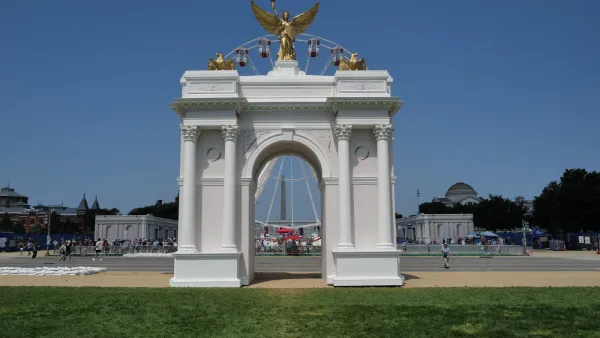
Trump administration says DC height limits don't apply to federal projects
A federal commission cleared the way for the president's proposed 250-foot arch.
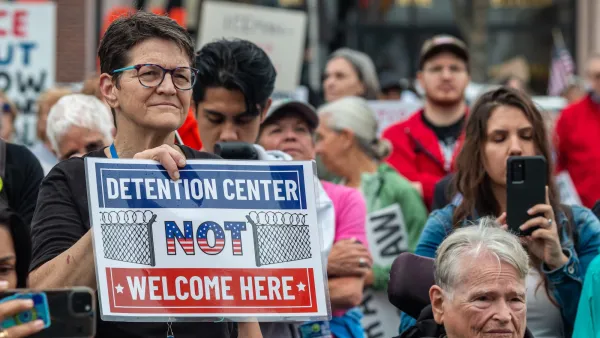
Land use as protest: How American cities are fighting federal immigration detention centers
Across the country, city officials are using zoning codes and land use law to limit where ICE detention facilities can be built.

Planetizen Federal Action Tracker
A weekly monitor of how Trump’s orders and actions are impacting planners and planning in America.

Washington state to charge fee to drivers with fuel-efficient cars
Revenue from the fee will go towards supporting the state’s highways.

Trump to blast ‘hydrocarbon highway’ through ‘world’s longest art gallery’
Environmental and historic preservation groups are suing to stop the project.

MBTA Green Line project moved to next phrase of CIG program
The modernization effort will cost $4.08 billion.

22-mile pedestrian and bike path to encircle Atlanta by 2030
The project will also support affordable housing.

Army detonates nearly 5 tons of lead in Iowa
The detonation comes after days of delays and public outcry.

FREE Course: Walkable City 1: Why Walkability?
After describing his path towards focusing on walkability as the essence of good planning, Jeff Speck marches through his five principal reasons for making more walkable places.
Reinventing Malls: Planning Alchemy—Turning Gray Fields Into Gold
The course focuses on the opportunities and imperatives that shape reinvention of mall sites.

City of Charlotte
City of Rosemead
Rutgers University, Edward J. Bloustein School of Planning and Public Policy
University of Michigan School for Environment and Sustainability (SEAS)
Hunter College, City University of New York (CUNY)
The Architects Foundation
University District Partnership