The new documentary The Greening of Southie follows construction workers in Boston as they adapt to the new rules and regulations of green development (sometimes unwittingly).


"At a construction site in South Boston a couple years back, a foreman was explaining some rules for the job to an increasingly flustered tile-worker. They'll have to use some new non-toxic adhesive. All the waste must be recycled. And the real kicker-there's no smoking in the building. 'You don't understand,' said the foreman, 'this is a green building.'
'That's right,' the tile-worker quips. 'I don't understand.'
The encounter, related in the opening scene of the documentary The Greening of Southie, is far from unique. For all the talk of "green jobs" these days, it's relatively common on construction sites (and in manufacturing plants, for that matter) for workers themselves to be the last to know that their collars have changed color from blue to green.
Filmmakers Ian Cheney and Curt Ellis see this as a problem. 'The extent to which these guys were left out of the conversation about green building was surprising,' Cheney told me. 'It seems like a tremendous missed opportunity if we stop at simply calling these 'green jobs' and don't help the workers understand why this might be a good idea, why it's important.'"
Read the full story: Workers Appraise Their New “Green Jobs”
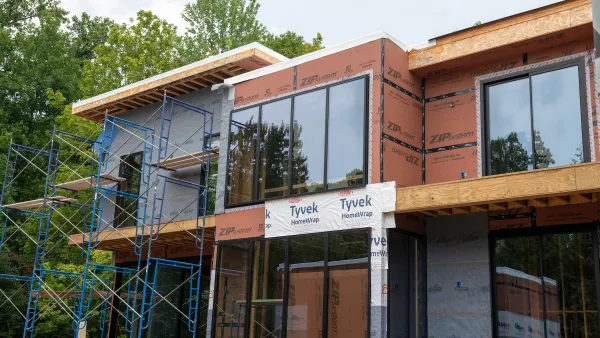
New HUD guidelines call for nixing green building requirements
The newly released 'best practices' advise local governments to streamline permitting processes, cap permitting fees and encourage by-right development of single-family homes.
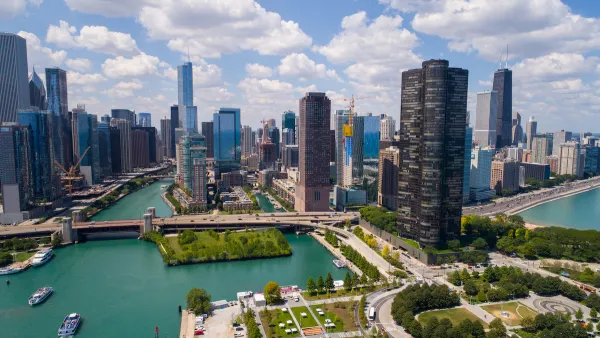
Chicago Approves Green Affordable Housing Plan
The Mayor’s plan calls for creating a nonprofit housing corporation tasked with building affordable housing that meets Green Building standards.
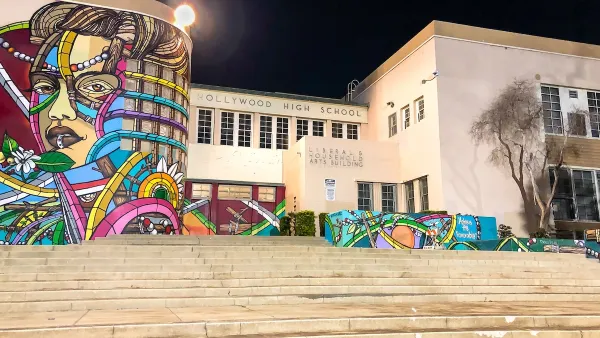
Advancing Sustainability in Los Angeles County Schools
The Los Angeles County Office of Education’s Green Schools Symposium brings together educators, students, and experts to advance sustainability in schools through innovative design, climate resilience strategies, and collaborative learning.

Planetizen Federal Action Tracker
A weekly monitor of how Trump’s orders and actions are impacting planners and planning in America.

Washington state to charge fee to drivers with fuel-efficient cars
Revenue from the fee will go towards supporting the state’s highways.

Trump to blast ‘hydrocarbon highway’ through ‘world’s longest art gallery’
Environmental and historic preservation groups are suing to stop the project.

Data centers need power – lower income, rural residents pay the price
In 2025, data centers paid only 38% of the energy infrastructure costs linked to their growth, with households, especially rural and low-income residents, bearing the remaining burden.

MBTA Green Line project moved to next phrase of CIG program
The modernization effort will cost $4.08 billion.

22-mile pedestrian and bike path to encircle Atlanta by 2030
The project will also support affordable housing.

FREE Course: Walkable City 1: Why Walkability?
After describing his path towards focusing on walkability as the essence of good planning, Jeff Speck marches through his five principal reasons for making more walkable places.
Reinventing Malls: Planning Alchemy—Turning Gray Fields Into Gold
The course focuses on the opportunities and imperatives that shape reinvention of mall sites.

City of Charlotte
City of Rosemead
Rutgers University, Edward J. Bloustein School of Planning and Public Policy
University of Michigan School for Environment and Sustainability (SEAS)
Hunter College, City University of New York (CUNY)
The Architects Foundation
University District Partnership