At the 1939 World's Fair, one of the most popular exhibits was the Futurama, sponsored by GM and portraying a dazzling society of skyscrapers and freeways. Today, a group of architects, engineers and planners are creating a new Futurama.


"Earlier this month, a group of engineers, architects, planners, museum directors, writers and others gathered at the Pocantico Conference Center at Tarrytown, N.Y. to consider the merits of putting on a new Futurama – a vision of what life might be like in 2050, when more sustainable arrangements are likely to be in place, including more transport options such as transit, energy-efficient buildings, and renewable power sources including solar and wind. A more positive portrayal of post-carbon life is needed to balance the apocoplyctic predictions of warming, says organizer Bill Becker, executive director of the Denver-based Presidents Climate Action Project Petra Todorovich from America 2050 demonstrated an interactive presentation on how people would make different journeys in the future, using intelligent transportation or high-speed rail. Gary Lawrence from Arup presented on the planned Chinese eco-city of Dongtan."
Read the full story: A new Futurama


Friday Eye Candy: AI Envisions Solutions to the Challenges Facing Cities
Phoenix reimagined for shade. Los Angeles as a place where everybody walks. San Francisco with affordable housing. AI makes a vision of the future possible.

Friday Eye Candy: 20 AI-Generated Cityscapes
AI-generated images are creating new landscapes and cityscapes, capable of inspiring awe or fear.

A $400 Billion City in the U.S. Desert
The latest futuristic city concept attracting attention on the internet is known as Telosa.

Planetizen Federal Action Tracker
A weekly monitor of how Trump’s orders and actions are impacting planners and planning in America.

‘Going backwards:’ Baltimore mayor, students rally against state's transit funding plan
Maryland's proposed six-year plan provides no funding for Baltimore’s BMORE bus program and reduces its road maintenance funding.
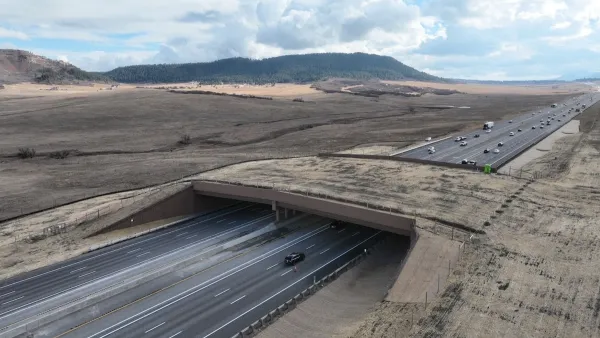
Record-breaking wildlife overpass in Colorado brings 91% reduction in animal collisions
Prior to the overpass, vehicles were hitting one deer per day on Colorado’s Interstate 25.

Mamdani sent nearly 6,000 pied-à-terre tax warnings to homes that didn’t qualify
A judge has ordered the administration to cancel thousands of pied-à-terre tax notices after it sent 35% of them erroneously.

Detroit to transform waterfront with $2.2 billion investment
Developers will convert about 18 acres of unused parking lot space into civic spaces.

‘Going backwards:’ Baltimore mayor, students rally against state's transit funding plan
Maryland's proposed six-year plan provides no funding for Baltimore’s BMORE bus program and reduces its road maintenance funding.

FREE Course: Walkable City 1: Why Walkability?
After describing his path towards focusing on walkability as the essence of good planning, Jeff Speck marches through his five principal reasons for making more walkable places.
Reinventing Malls: Planning Alchemy—Turning Gray Fields Into Gold
The course focuses on the opportunities and imperatives that shape reinvention of mall sites.

City of Thousand Oaks
City of Wisconsin Rapids
Harvard University Graduate School of Design
The Architects Foundation
University of Cincinnati Online
Northern Illinois Transit Authority (NITA)
The Pocatello Development Authority
The Urban Renewal Agency of the City of Pocatello