The latest futuristic city concept attracting attention on the internet is known as Telosa.


The video above, by Tomorrow’s Build, introduces Telosa, a futuristic master planned effort designed for “somewhere in the U.S. desert” at an estimated cost of $400 billion. As noted in the video, Telosa would be built on an economic system known as equitism, defined on the Telosa website as “An economic system in which citizens have a stake in the city’s land — as the city does better, the residents do better.”
Billionaire Marc Lore is the driving force behind the idea, with Bjarke Ingels Group doing the design work. As discussed in the video above, Telosa backers hope to have 50,000 people living in the city by 2030, with eventual plans to grow to a population of 5 million people. Plans for Telosa were first revealed in 2021.
Telosa joins the ranks of other futuristic city-building efforts underway around the world, including The Line in Saudi Arabia, the Floating City in South Korea, and Akon City in Senagal.
FULL STORY: Why a Billionaire is Building a $400BN City in the US Desert

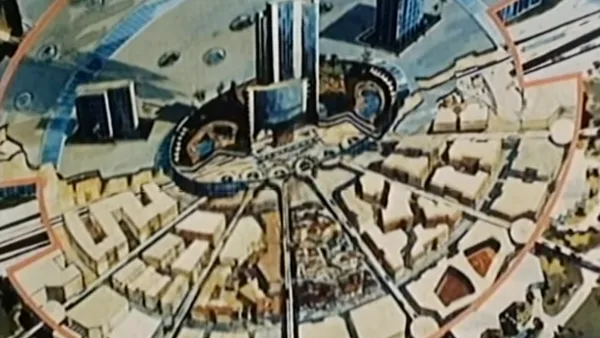
EPCOT: The Original 'Smart City'
What can today’s futurists learn from Disney’s unrealized utopia?

Why Tech-Utopian City Plans Fail
Like others before him, e-commerce billionaire Marc Lore wants to build the ideal city from scratch. Urban experts don't have much faith in his chances.

Culdesac Tempe Defies Expectations
Despite initial skepticism about its true potential for sustainable urbanism, the built-from-scratch “car-free neighborhood” is widely popular with its residents.

The state-sanctioned urbicide of Austin
People don’t kill cities. Freeways do.

US to reduce Colorado River water deliveries to Mexico
A new Colorado Treaty amendment reduces Mexico’s Colorado River water allocation by 250,000 acre feet.

New Jersey’s second-largest city bans standalone data centers
Jersey City will continue to allow co-location facilities, such as those meant for research institutions that store their own data.

Amtrak not solely to blame for New Jersey commuter rail's unreliability, report finds
A new study from the Garden State Initiative found that NJ Transit’s budget grew 20% across a 4 year period, but reliability declined significantly over the same period.

EPA erases limits on planet-warming pollution from power plants
Under Monday’s plan, power plants would still have some limits on how much mercury, arsenic and other contaminants they can emit.

Phoenix announces new on-demand transit service, more frequent RAPID buses
Both new services will launch in October, and are part of Phoenix's Project Effective Access Solutions for Easing Congestion.

FREE Course: Walkable City 1: Why Walkability?
After describing his path towards focusing on walkability as the essence of good planning, Jeff Speck marches through his five principal reasons for making more walkable places.
Reinventing Malls: Planning Alchemy—Turning Gray Fields Into Gold
The course focuses on the opportunities and imperatives that shape reinvention of mall sites.

Eagle County Government
Harvard University Graduate School of Design
Nashville Planning Department
The Architects Foundation
University of Cincinnati Online
The Pocatello Development Authority
The Urban Renewal Agency of the City of Pocatello
Journal of the American Planning Association