Former New York Governor Eliot Spitzer says that as a result of outmoded industrial and funding models, state governments are facing grave financial problems.


"There has never been a tougher time to be a governor...The numbers from the states are downright horrifying-and getting worse. The best estimate is that states, nearly all of which are constitutionally obligated to balance their budgets, collectively face deficits of about $350 billion over the next 30 months. That is about 20 percent of total state spending.
All of this, by the way, does not even touch the problems of governments 'below' the state level. With the dramatic collapse of property values and thus property-tax revenues, counties, towns, and villages are going to be struggling, begging for even more assistance from states, and seeking relief from mandated services and contributions to state programs.
The most promising ideas-increased higher education to foster the knowledge-based economy, high-speed rail to create efficient and environmentally sound transportation in our densest corridors, universal high-speed Internet access, and venture funds to create bio-tech startups-all require the one resource not available: money."
Read the full story: In a State
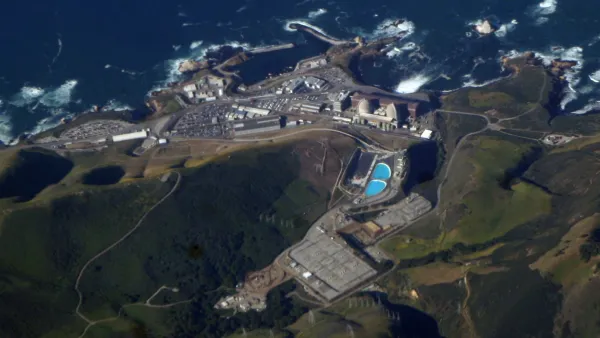
Funding Allocated to Extend Life of Diablo Canyon Nuclear Power Plant
In order to to ensure that the lights stay on, the California legislature approved allocating up to $75 million to extend the life of the state's sole remaining nuclear plant and four natural gas powered plants, to the chagrin of environmentalists.
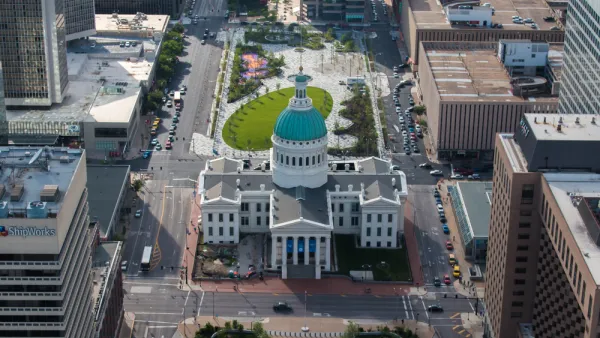
Surveying the Fiscal Nightmare for Cities and States
Governing takes a tour through the fiscal impacts of a suddenly cratered economy and an ongoing public health crisis.

28.3 Million Acres of Public Land at Risk in Alaska
The Trump administration is working on multiple fronts to liquidate public land in Alaska as the state struggles to balance its budget.

Planetizen Federal Action Tracker
A weekly monitor of how Trump’s orders and actions are impacting planners and planning in America.

Eastern Nebraska is running out of electricity
Data centers and electrification are straining eastern Nebraska’s grid, throttling economic development.

Study reveals best places in the U.S. for cycling, walking
New research from Streetlight Data examines bicycle and pedestrian miles per capita in the 100 largest U.S. cities by population.

Officials look to alter BART extension as price goes through the roof
Tariffs and the war with Iran are behind the rising cost.

To power data centers, Utah company may build hundreds of nuclear reactors on state land
In its permit application, Valar asked for the county to confirm that changes within its outlined plan would still be covered by the permit.

San Antonio is using environmental review to stall ICE detention center
San Antonio sued last month to pause work on the new detention center until the federal government studied its effect on the surrounding area.

FREE Course: Walkable City 1: Why Walkability?
After describing his path towards focusing on walkability as the essence of good planning, Jeff Speck marches through his five principal reasons for making more walkable places.
Reinventing Malls: Planning Alchemy—Turning Gray Fields Into Gold
The course focuses on the opportunities and imperatives that shape reinvention of mall sites.

City of Charlotte
City of Rosemead
Rutgers University, Edward J. Bloustein School of Planning and Public Policy
University of Michigan School for Environment and Sustainability (SEAS)
Hunter College, City University of New York (CUNY)
The Architects Foundation
City of Cambridge
The Pocatello Development Authority
The Urban Renewal Agency of the City of Pocatello