Governing takes a tour through the fiscal impacts of a suddenly cratered economy and an ongoing public health crisis.


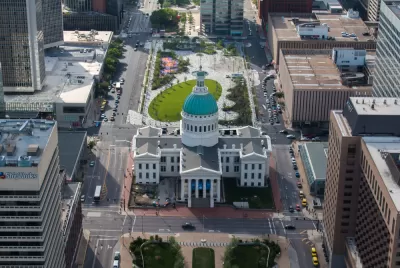
Alan Greenblat provides ranging analysis of the "financial black hole" facing cities and states as a result of the pandemic. This assessment is defined by uncertainty. "State and local officials are well aware that they face the most dire fiscal circumstances in decades," writes Greenblat. "They still don't know just how bad it will be."
According to Greenblat, who writes at the end of May, about 1 million state and local jobs have been lost. "Public employment at those levels has already dropped lower than at any point during the Great Recession," according to Greenblat.
Despite the uncertainty of how far revenues will drop, and how deep cities and states will have to cut as a result, Greenblat does point out some key differences between the current downturn and previous downturns, namely that furloughs and layoffs have impacted public safety workers. Christiana McFarland, research director for the National League of Cities (NLC), is quoted in the article saying that job cuts for police, fire, and health care workers are a canary in the coal mine.
The article includes specific information on the kinds of furloughs being implemented in parts of the country, while also explaining the politics of recovery at the federal level. Just as uncertain as the depths of the fiscal crisis is the likelihood that the federal government will provide additional funding to support local and state governments.
FULL STORY: States and Cities Continue Plunge into Financial Black Hole

Report Details Dire Fiscal Straits of Local Governments
The National League of Cities has produced a highly-anticipated report detailing the fiscal fallout of the sudden and swift economic downturn that followed the coronavirus to American shores.
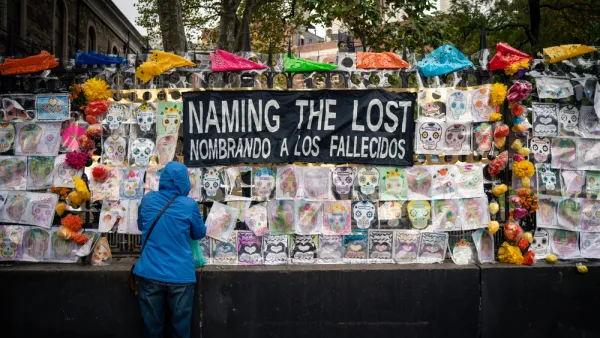
Haves and Have Nots: Planning and the Deep Divides of the Pandemic
The latest in a series of compendia gathering news and analysis about the effects of the COVID-19 on the built and natural environments—now and long into the future.
An Infrastructure Proposal for Biden's First 100 Days in Office
The 100 days in office provides President-elect Joe Biden with an early chance to follow the model of Franklin Delano Roosevelt.

The state-sanctioned urbicide of Austin
People don’t kill cities. Freeways do.

US to reduce Colorado River water deliveries to Mexico
A new Colorado Treaty amendment reduces Mexico’s Colorado River water allocation by 250,000 acre feet.

New Jersey’s second-largest city bans standalone data centers
Jersey City will continue to allow co-location facilities, such as those meant for research institutions that store their own data.

Amtrak not solely to blame for New Jersey commuter rail's unreliability, report finds
A new study from the Garden State Initiative found that NJ Transit’s budget grew 20% across a 4 year period, but reliability declined significantly over the same period.

EPA erases limits on planet-warming pollution from power plants
Under Monday’s plan, power plants would still have some limits on how much mercury, arsenic and other contaminants they can emit.

Phoenix announces new on-demand transit service, more frequent RAPID buses
Both new services will launch in October, and are part of Phoenix's Project Effective Access Solutions for Easing Congestion.

FREE Course: Walkable City 1: Why Walkability?
After describing his path towards focusing on walkability as the essence of good planning, Jeff Speck marches through his five principal reasons for making more walkable places.
Reinventing Malls: Planning Alchemy—Turning Gray Fields Into Gold
The course focuses on the opportunities and imperatives that shape reinvention of mall sites.

Eagle County Government
Harvard University Graduate School of Design
Nashville Planning Department
The Architects Foundation
University of Cincinnati Online
The Pocatello Development Authority
The Urban Renewal Agency of the City of Pocatello
Journal of the American Planning Association