CCS (Carbon Capture and Storage) is an abbreviation that may become more common if the coal industry has its way. But The Economist argues that carbon taxes are a better way to improve the environment than investing in CCS technology.


"There does seem to be a way of reconciling coal and climate. It is called carbon capture and storage (CCS), or carbon sequestration, and entails vacuuming up carbon dioxide from the smokestacks of power plants and other big industrial facilities and storing it safely underground, where it will have no effect on the atmosphere. The technologies for this are already widely used in the oil and chemical industries, and saltwater aquifers and depleted oil fields offer plenty of promising storage space. Politicians are pinning their hopes on clean coal: Angela Merkel and Barack Obama, among others, are keen on the idea."
"Politicians should indeed encourage investment in clean technologies, but direct subsidies are not the way to do it.
A carbon price or tax, which raises the cost of emitting carbon dioxide while leaving it up to the private sector to pick technologies, is the better approach.
CCS is not just a potential waste of money. It might also create a false sense of security about climate change, while depriving potentially cheaper methods of cutting emissions of cash and attention -- all for the sake of placating the coal lobby."
Thanks to Bill Katakis
Read the full story: Funds for clean coal burn little more than cash
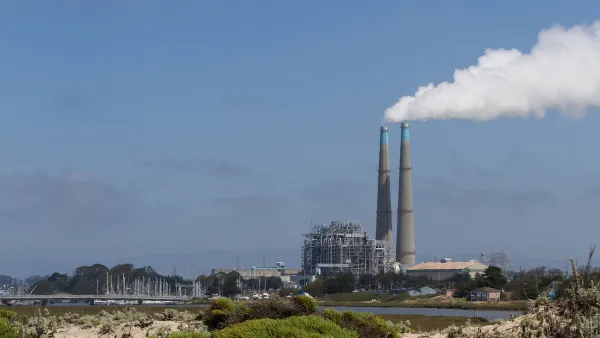
Making Natural Gas Power Plants Cleaner
Carbon capture and storage has long been associated with coal-burning power plants. Calpine Corp. hopes to apply the controversial technology to existing natural gas power plants, beginning with a pilot project to start this month in the Bay Area.
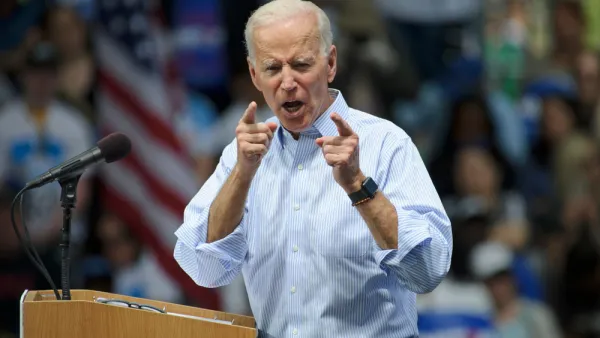
2020 Presidential Campaign: Media Coverage of Climate Strategies
Mayor Pete Buttigieg was criticized for supporting carbon capture and carbon taxes, while Vice President Biden was accused of lifting phrases about carbon capture from a "pro-industry" group. But did the media get these stories right?
No Papal Blessing for Cap-And-Trade
Governments must take correction actions to address climate change, warned Pope Francis in his June 18 encyclical, but cap-and-trade, which places a price on carbon emissions but can lead to speculation, is not one of them.

Planetizen Federal Action Tracker
A weekly monitor of how Trump’s orders and actions are impacting planners and planning in America.

California plans to bury El Niño’s downpour
If the state plays its cards right, it may be able to store a billion acre-feet of El Niño’s water in aquifers.

Desperate measures: Advocates weigh draining Lake Powell to fill Colorado River
Draining the reservoir could reduce evaporation losses by a couple hundred thousand acre-feet.

Chicago voters approve permanent festival grounds, penalty for vacant property owners
Currently, major summer and fall festivals take over public parks for weeks at a time, drawing criticism from nearby residents

NYC votes to cut outdoor dining red tape, speed up permitting
New York City also voted to allow the Department of Transportation to begin work on urgent projects before notifying elected officials.

California appears to reject Prop. 45
The proposition would have expanded the projects that qualify for a streamlined environmental review, effectively paring down the California Environmental Quality Act.

FREE Course: Walkable City 1: Why Walkability?
After describing his path towards focusing on walkability as the essence of good planning, Jeff Speck marches through his five principal reasons for making more walkable places.
Reinventing Malls: Planning Alchemy—Turning Gray Fields Into Gold
The course focuses on the opportunities and imperatives that shape reinvention of mall sites.

City of Rosemead
Rutgers University, Edward J. Bloustein School of Planning and Public Policy
One Hundred Miles
Hunter College, City University of New York (CUNY)
The Architects Foundation
University of Cincinnati Online
City of Cambridge
Montrose County
The Pocatello Development Authority