The author of this article offers a few ideas on how to better use our 46,000 miles of highway. From the integration of rail lines to the development of electricity distribution grids, the interstate has more potential than it seems.


"Say we reimagine the interstate system so that it becomes not just a route for cars and trucks but an intermodal-transportation-and-energy corridor. That should be incentive enough to rethink the nature of development around highway interchanges. Anyone who has done any long-distance driving harbors deep ambivalence about these provisional places. Yes, they're specifically designed to allow you to get off the highway, gas up, use the restroom, grab a?burger, and continue onward with the fewest possible complications. Some of these interchanges have grown into what Joel Garreau called "edge cities"-dense, traffic-clogged jumbles of shopping centers, of-fices, and hotels. These asphalt landscapes now represent planning ideas so discredited that even commercial developers don't much care for them."
Read the full story: Rethinking the Interstate

Washington state to charge fee to drivers with fuel-efficient cars
Revenue from the fee will go towards supporting the state’s highways.
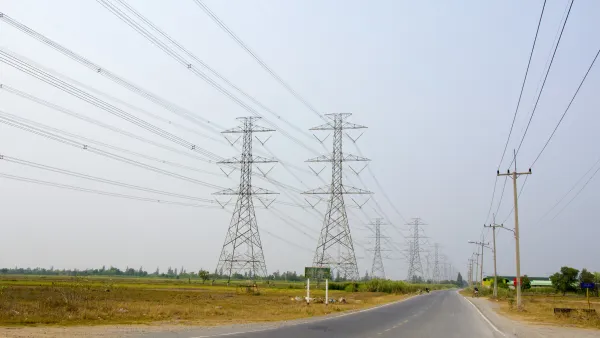
Trump to allow infrastructure along highways, railways in bid to bypass reviews
By building lines close to existing infrastructure, Trump aims to lower costs and bypass environmental oversight and opposition from local communities.
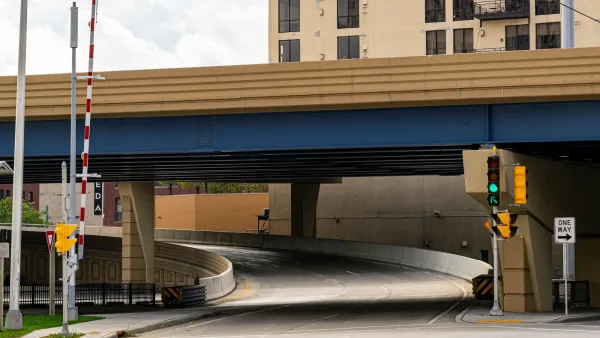
Milwaukee mayor abandons highway removal plan
Mayor Johnson spoke in opposition to a proposed plan to turn part of I-794 into an at-grade boulevard, expressing concerns about traffic.

Planetizen Federal Action Tracker
A weekly monitor of how Trump’s orders and actions are impacting planners and planning in America.

Eastern Nebraska is running out of electricity
Data centers and electrification are straining eastern Nebraska’s grid, throttling economic development.
Washington state to charge fee to drivers with fuel-efficient cars
Revenue from the fee will go towards supporting the state’s highways.

Instead of building new housing, LA developers are turning mansions into mega-mansions
In the richest areas, the number of houses valued at $30 million with demolition permits has skyrocketed since 2018.

Illinois considers spending $1 billion in taxpayer money on data center
A quantum computing campus and data center are currently under construction in Chicago.

As development costs rise, Boston moves to lessen affordable housing requirements
The Boston Zoning Commission and the City Council still need to approve Boston Mayor Michelle Wu’s proposed changes

FREE Course: Walkable City 1: Why Walkability?
After describing his path towards focusing on walkability as the essence of good planning, Jeff Speck marches through his five principal reasons for making more walkable places.
Reinventing Malls: Planning Alchemy—Turning Gray Fields Into Gold
The course focuses on the opportunities and imperatives that shape reinvention of mall sites.

City of Charlotte
City of Rosemead
Rutgers University, Edward J. Bloustein School of Planning and Public Policy
University of Michigan School for Environment and Sustainability (SEAS)
Hunter College, City University of New York (CUNY)
The Architects Foundation
University District Partnership
City of Cambridge
The Pocatello Development Authority