Mayor Johnson spoke in opposition to a proposed plan to turn part of I-794 into an at-grade boulevard, expressing concerns about traffic.


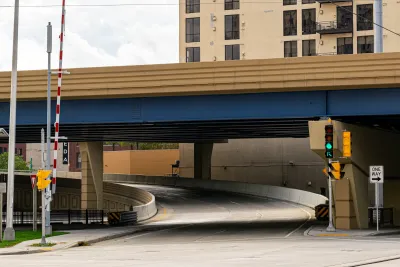
Milwaukee Mayor Cavalier Johnson announced he no longer supports tearing down part of Interstate 794, reports Aaron Short in Streetsblog USA.
According to Short, "Johnson rejected replacing the highway with at-grade boulevards that connect to the street grid because he worried drivers would get stuck in traffic."
Some city council members and advocates blasted the mayor's decision, with a group of officials saying "This is a generational opportunity for our city, and we should not bristle at the idea of freeway removal simply because it represents the greatest departure from the current status quo."
I-794 separates the Historic Third Ward from other downtown neighborhoods, and parts of the span are coming to the end of their useful life. Wisconsin DOT studied several alternatives, from rebuilding the highway (at a cost of $425 million to $575 million) to replacing the span with a boulevard (at a cost of $850 million to $1.25 billion). However, "Advocates argued state officials overestimated the cost of dismantling highways and building new roads, and underestimated the benefit on downtown neighborhoods if boulevards were built instead."
Read the full story: Milwaukee Mayor Abandons Highway Teardown To Calm Irrational Fears Of Driver Class

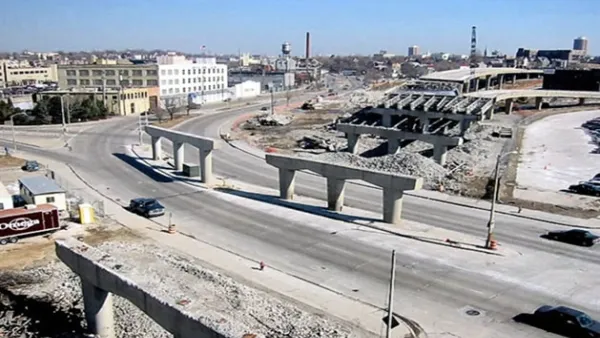
Bridging Divides: The Crucial Role of Collaboration in Highway Removal
Highway removal is most successful when agencies at all levels of government work closely with each other and the impacted community.
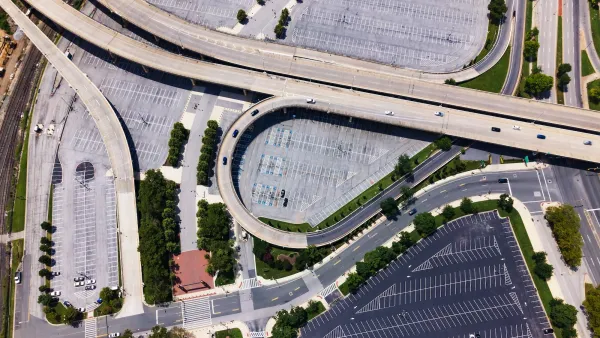
New Tool Uncovers Exact Costs of Downtown Highways
A new research tool can help cities calculate the economic potential that could be unlocked by replacing highways with other uses.
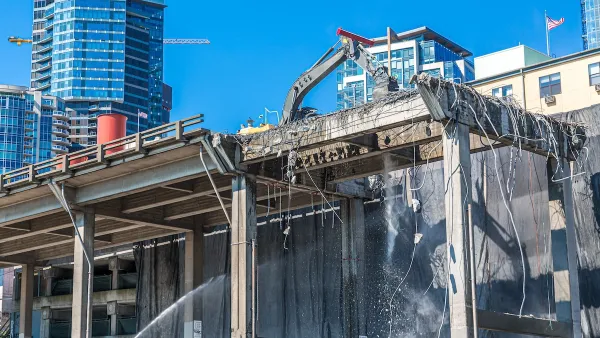
Highway Removal Slowed by Outdated Policy, Lack of Committed Funding
Resistance from state transportation departments and precarious funding sources mean highway removal projects are few and far between, despite their benefits.

Planetizen Federal Action Tracker
A weekly monitor of how Trump’s orders and actions are impacting planners and planning in America.

Chicago breaks ground on $3 billion megadevelopment
The new neighborhood, titled Foundry Park, will one day host 3,700 residences.

Denver is solving homelessness. Why aren't the rest of us?
Since 2023, Denver's street homeless population has decreased by 64%, proving that effective tools exist to support those in need of housing.

MTA kicks off six-year, $1 billion transit upgrade project
The authority is replacing the roughly 90-year-old train signals on the A and C line with modern technology.

Developers may expand largest gas pipeline network in Northwest
Pipeline giant Williams has proposed new expansions for its Northwest Pipeline from the Colorado Rockies through Idaho, Oregon and Washington.

MBTA is using AI to catch drivers who park illegally
The transit agency is working in partnership with Hayden AI, and hopes the technology will improve transit safety across its network.

FREE Course: Walkable City 1: Why Walkability?
After describing his path towards focusing on walkability as the essence of good planning, Jeff Speck marches through his five principal reasons for making more walkable places.
Reinventing Malls: Planning Alchemy—Turning Gray Fields Into Gold
The course focuses on the opportunities and imperatives that shape reinvention of mall sites.

City of Rosemead
Rutgers University, Edward J. Bloustein School of Planning and Public Policy
One Hundred Miles
The Architects Foundation
University of Cincinnati Online
Montrose County
Northern Illinois Transit Authority (NITA)
The Pocatello Development Authority