Pittsburgh Mayor Luke Ravenstahl is considering a plan to raise extra money for his city by leasing public parking spaces and garages to a private company.


"'We're going to need some sort of influx of cash,' the mayor said of the fund, which at last count contained just $261 million of the $899 million it should ideally hold. 'I have been approached numerous times about the value of these assets,' he said of the parking garages, and now he wants to test the market."
"'I think it's really an interesting idea,' said Controller Michael Lamb, who, like the mayor, sits on the Pension Fund Board. 'It's something that we, at the very least, should learn about and find out what kind of interest there is and what kind of funding it could generate.'"
"The potential downside: Parking rates could rise, though that might be constrained by whatever contract emerges, Mr. Ravenstahl said."
Read the full story: Ravenstahl wants to turn parking into pensions
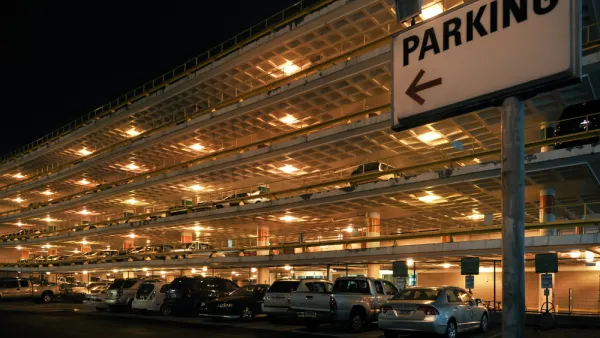
Editorial: Pittsburgh Fails to Provide Adequate Parking Around Downtown
New development coming to Downtown Pittsburgh lacks sufficient parking, according to the Pittsburgh Post-Gazette.
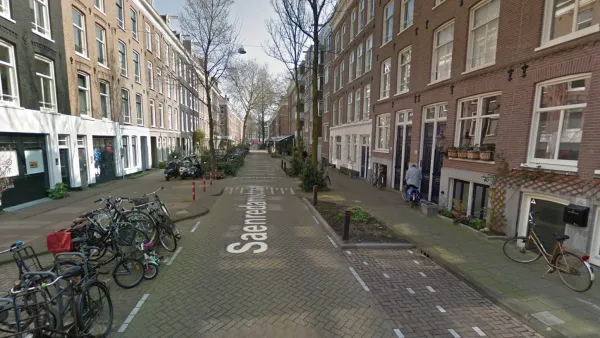
Watch: How to Remove Thousands of Parking Spaces
What the city of Amsterdam will gain by removing cars from on-street parking space.
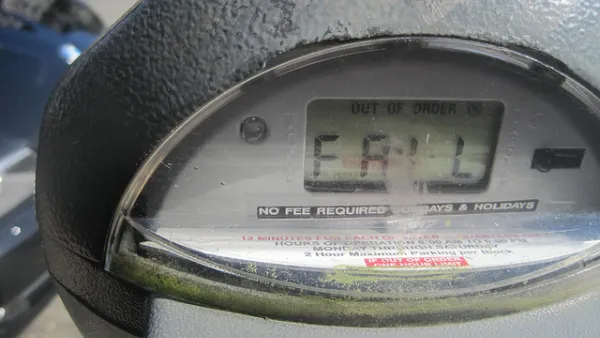
'Pay-By-Plate' Parking Meters Bring Windfall to Pittsburgh
The power of modern parking technology is on display on the streets of Pittsburgh.

Planetizen Federal Action Tracker
A weekly monitor of how Trump’s orders and actions are impacting planners and planning in America.

Eastern Nebraska is running out of electricity
Data centers and electrification are straining eastern Nebraska’s grid, throttling economic development.

Study reveals best places in the U.S. for cycling, walking
New research from Streetlight Data examines bicycle and pedestrian miles per capita in the 100 largest U.S. cities by population.

Federal government nominates new FTA administrator
Mark Aesch is currently the founder and CEO of a transportation management consulting firm.

Developers reveal $10 billion stadium plan as ‘Hail Mary’ to keep Bears in Chicago
The plan would also boast a public park, high- and mid-rise buildings and a youth sports complex.

As Texas embraces carbon storage, a Black community questions the risks
Texas now issues permits for companies to store carbon dioxide underground. East Texas residents fear safety risks, and skeptics doubt the climate benefits.

FREE Course: Walkable City 1: Why Walkability?
After describing his path towards focusing on walkability as the essence of good planning, Jeff Speck marches through his five principal reasons for making more walkable places.
Reinventing Malls: Planning Alchemy—Turning Gray Fields Into Gold
The course focuses on the opportunities and imperatives that shape reinvention of mall sites.

City of Charlotte
City of Rosemead
Rutgers University, Edward J. Bloustein School of Planning and Public Policy
University of Michigan School for Environment and Sustainability (SEAS)
Hunter College, City University of New York (CUNY)
The Architects Foundation
City of Cambridge
The Pocatello Development Authority
The Urban Renewal Agency of the City of Pocatello