A Washington, D.C. church contends that its current facility, a historic Brutalist buildling, interferes with its theology and should be able to replace it with something more "welcoming" and fitting with "the scale of the community."


The D.C. case is particularly interesting because the building doesn't fit the traditional "historic" category and because the congregation says it doesn't reflect its theology, Ms. Vitullo-Martin says. "Making the claim that the Brutalism of the architecture is at odds with their theology is an unusual First Amendment claim."
Yet it's far from certain the church can win in the courts, legal experts say. While there are no litigated historic preservation cases under RLUIPA, there are prior cases under other religious freedom laws.
"I find the church's claim very sympathetic, but courts have been fairly skeptical about claims that a congregation is 'substantially burdened,'" says Robert Tuttle, professor of law at George Washington University. As a technical phrase, that means "the restriction makes the religious activity effectively impracticable."
The courts tend to say, he adds, that if there are alternative uses for the structure, the church could use it as it is or go elsewhere and build another however it likes."
Read the full story: 'Historic' building versus religious rights


Seattle church complex includes 87 affordable homes
The Columbia City Church of Hope deeded part of its property to an affordable housing developer after limiting in-person congregation during the pandemic.
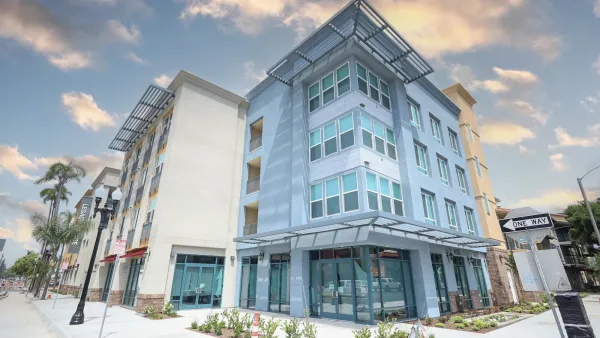
Church-to-housing trend grows in Southern California
Many faith leaders are eager to support housing construction on church land.
Chattanooga selects churches to build up to 400 affordable homes
Eight churches will move forward with plans to develop housing, from emergency shelter to single-family homes, on their properties.

Planetizen Federal Action Tracker
A weekly monitor of how Trump’s orders and actions are impacting planners and planning in America.

Data reveals that NYC’s bet on congestion pricing has paid off
After almost two years of the program, reports show positive impacts on traffic and air quality and no disruptions to parking.

HUD modernizes 50-year-old manufactured housing framework
The Next Generation Manufactured Housing Action Plan establishes new energy-efficiency standards for manufactured homes, and new guidelines for anchoring them.

Small single-family homes are illegal in most of MA. Voters can change that
Most land zoned for single-family housing in Massachusetts requires at least 40,000 square feet of land per house.

Public steps inside U.S.’s first battery-powered train
Metra’s groundbreaking train feature modern seats and a futuristic battery car.

Companies show off AI technology, new innovation hubs at APTA Expo
Nearly 700 companies attended the American Public Transportation Association’s Expo last week, which happens once every three years.

FREE Course: Walkable City 1: Why Walkability?
After describing his path towards focusing on walkability as the essence of good planning, Jeff Speck marches through his five principal reasons for making more walkable places.
Reinventing Malls: Planning Alchemy—Turning Gray Fields Into Gold
The course focuses on the opportunities and imperatives that shape reinvention of mall sites.

One Hundred Miles
County of Mendocino
planning NEXT
The Architects Foundation
University of Cincinnati Online
Montrose County
Northern Illinois Transit Authority (NITA)
The Pocatello Development Authority