Residents of one Las Vegas community fear being evicted as an urban renewal project goes underway. According to this article, projects like this often hurt neighborhoods by destroying the social ties they once contained.


"Mindy Thompson Fullilove, a research psychiatrist at New York State Psychiatric Institute and a professor of clinical psychiatry and public health at Columbia University, calls this 'root shock.' According to Fullilove, tearing down buildings in poor neighborhoods often uproots people from their surroundings, in the name of urban renewal.
The result, she says, is that people lose many resources vital to their well-being, including relationships with family and friends that often form a safety net for surviving poverty.
Fullilove has studied the phenomenon in the wake of the widespread urban renewal projects that swept the United States from the 1950s to the 1980s.
She says planners often tear down areas that are considered blight without including area residents in the planning process, a wrong foot forward.
'Neighborhoods are like an ecosystem, with lots of parts and complex relationships between those parts,' Fullilove says. 'If you have a plan that doesn't take into account all those parts, it's hard to make it work.'"
Read the full story: Renewing an area can hurt a community

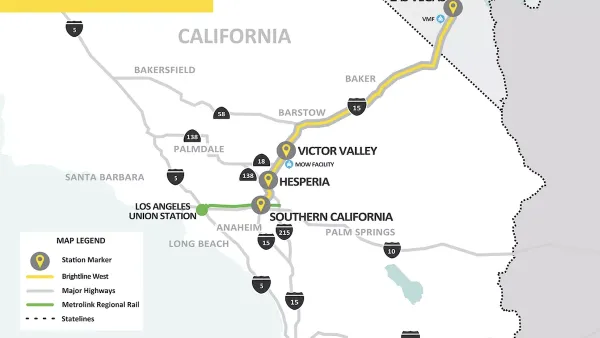
Brightline West’s future may rely on $6 billion federal loan
The company has until Nov. 2 to make a $400 million equity investment into its proposed high-speed rail line.
Nevada sues feds to block Colorado River cuts
The federal government’s newly released plan for managing the Colorado River’s dwindling water supply could cause Nevada to lose over 70% of its allocated water.
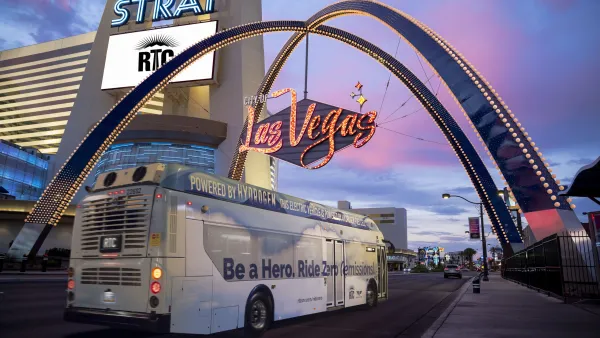
Las Vegas debuts new bus rapid transit
The project also brings widened sidewalks and more trees to the Maryland Parkway corridor.

Planetizen Federal Action Tracker
A weekly monitor of how Trump’s orders and actions are impacting planners and planning in America.

Chicago breaks ground on $3 billion megadevelopment
The new neighborhood, titled Foundry Park, will one day host 3,700 residences.

This MA town is drowning in its own sewage — and residents like it that way
Susan Murcott, a waste water expert, said if Carlisle didn't address their leaking sewage, the problem could turn “deadly.”

Feds to more closely scrutinize proposed Amtrak facility’s environmental impact
The Federal Railroad Administration had initially said the facility qualified for a less extensive environmental review.

Boston is hard to build housing in: its chief of planning wants to keep it that way
Chief of Planning Kairos Shen said she would not make changes to Boston’s affordability requirements for new housing, which critics say have slowed down development.

California plans to bury El Niño’s downpour
If the state plays its cards right, it may be able to store a billion acre-feet of El Niño’s water in aquifers.

FREE Course: Walkable City 1: Why Walkability?
After describing his path towards focusing on walkability as the essence of good planning, Jeff Speck marches through his five principal reasons for making more walkable places.
Reinventing Malls: Planning Alchemy—Turning Gray Fields Into Gold
The course focuses on the opportunities and imperatives that shape reinvention of mall sites.

City of Rosemead
Rutgers University, Edward J. Bloustein School of Planning and Public Policy
One Hundred Miles
Hunter College, City University of New York (CUNY)
The Architects Foundation
University of Cincinnati Online
Montrose County
The Pocatello Development Authority
The Urban Renewal Agency of the City of Pocatello