Two digital cameras atop a billboard at a Tokyo rail station will scan passersby. One will record who is looking at the billboard, the other will count the number of people passing by.


"No, it's not a scene from the movie "Minority Report" where digital signboards served up personalized ads depending on who was passing by, but a real-life example at a Tokyo railway station. Above a flat-panel display hawking DVDs and books sits a small camera hooked up to some image processing software. When trials begin in January the camera will scan travellers to see how many of them are taking note of the panel. It's part of a technology test being run by NTT Communications."
..."Japanese cities are plastered with advertisements. From building-topping billboards to smaller ads around town, it seems like you're never far away from a commercial message, and increasingly these are digital signboards. The effectiveness of delivering a message digitally is still not well understood but that could change with this technology."
Thanks to Slashdot
Read the full story: Japanese billboards are watching back
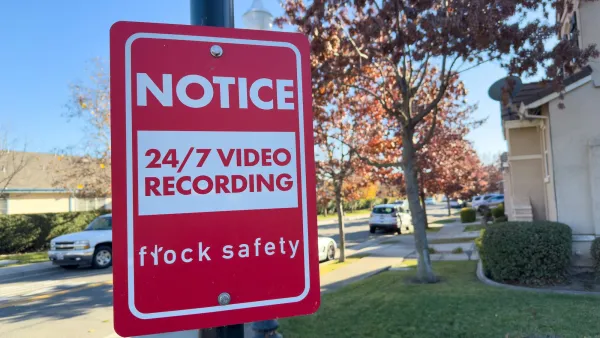
Flock cameras are now in 6,000 US communities
The automated license plate readers are causing backlash from community members concerned about surveillance and privacy.
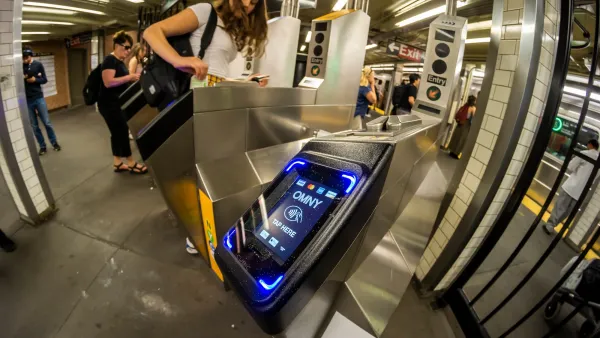
Popular transit payment system linked to Palantir could give ICE access to rider data
The tap-to-pay system is being used widely in transit systems including New York City, Boston and Chicago.

Why a Failed ‘Smart City’ Is Still Relevant
A Google-backed proposal to turn an underused section of Toronto waterfront into a tech hub holds relevant lessons about privacy and data.

Planetizen Federal Action Tracker
A weekly monitor of how Trump’s orders and actions are impacting planners and planning in America.

Eastern Nebraska is running out of electricity
Data centers and electrification are straining eastern Nebraska’s grid, throttling economic development.

Study reveals best places in the U.S. for cycling, walking
New research from Streetlight Data examines bicycle and pedestrian miles per capita in the 100 largest U.S. cities by population.

Officials look to alter BART extension as price goes through the roof
Tariffs and the war with Iran are behind the rising cost.

To power data centers, Utah company may build hundreds of nuclear reactors on state land
In its permit application, Valar asked for the county to confirm that changes within its outlined plan would still be covered by the permit.

San Antonio is using environmental review to stall ICE detention center
San Antonio sued last month to pause work on the new detention center until the federal government studied its effect on the surrounding area.

FREE Course: Walkable City 1: Why Walkability?
After describing his path towards focusing on walkability as the essence of good planning, Jeff Speck marches through his five principal reasons for making more walkable places.
Reinventing Malls: Planning Alchemy—Turning Gray Fields Into Gold
The course focuses on the opportunities and imperatives that shape reinvention of mall sites.

City of Charlotte
City of Rosemead
Rutgers University, Edward J. Bloustein School of Planning and Public Policy
University of Michigan School for Environment and Sustainability (SEAS)
Hunter College, City University of New York (CUNY)
The Architects Foundation
City of Cambridge
The Pocatello Development Authority
The Urban Renewal Agency of the City of Pocatello