The Erie Canal has been long forgotten as a passage for transportation, but the affordability of shipping goods by canal barge is making it a more attarctive option than doing so by trucking.


"Along the Erie Canal, business owners who never gave the sleepy waterway much thought are exploring new ways of putting it to use.
'There aren't too many wagon trails left, but we still have the canal,' said John Callaghan, a mate on the Margot. 'Sure it's history, but it's still relevant. We're making money here.'"
"The canal still remains the most fuel-efficient way to ship goods between the East Coast and the upper Midwest. One gallon of diesel pulls one ton of cargo 59 miles by truck, 202 miles by train and 514 miles by canal barge, Ms. Mantello said. A single barge can carry 3,000 tons, enough to replace 100 trucks.
As the price of diesel climbed over $4 a gallon this summer - the national average is now about $3.31 a gallon - more shippers rediscovered the Erie Canal. On one trip in mid-October, the Margot motored down the canal at about seven knots, pushing a barge loaded with a giant green crane. The machine was being transported from Huger, S.C., to the Pinney Dock, operated by the Kinder Morgan Company in Ashtabula, Ohio."
Read the full story: Hints of Comeback for Nation’s First Superhighway
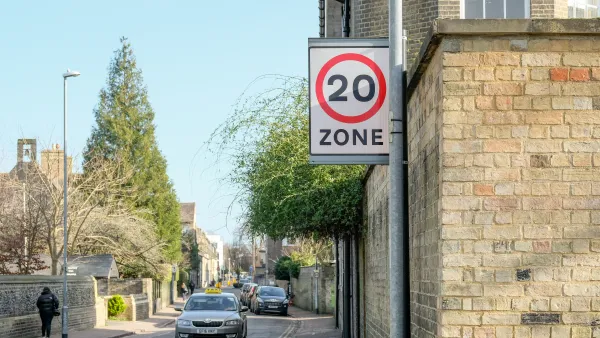
Agencies urge cutting speed limits to save gas amid war in Iran
International bodies suggest 20 is plenty to mitigate consumer pain while oil prices soar.

Use or Misuse of the Strategic Petroleum Reserve?
Rising gasoline prices prompted President Biden to announce on October 19 that he was authorizing the release of 15 million barrels of crude oil from the nation's Strategic Petroleum Reserve.

OPEC Plus Decision to Reduce Oil Output Could Lead to Global Recession
A decision earlier this month by a group of the world's largest oil exporters to drastically reduce oil production to stem the decline in oil prices could be a ‘tipping point’ for a global recession, says the International Energy Agency.

Planetizen Federal Action Tracker
A weekly monitor of how Trump’s orders and actions are impacting planners and planning in America.

Eastern Nebraska is running out of electricity
Data centers and electrification are straining eastern Nebraska’s grid, throttling economic development.

Washington state to charge fee to drivers with fuel-efficient cars
Revenue from the fee will go towards supporting the state’s highways.

Instead of building new housing, LA developers are turning mansions into mega-mansions
In the richest areas, the number of houses valued at $30 million with demolition permits has skyrocketed since 2018.

Illinois considers spending $1 billion in taxpayer money on data center
A quantum computing campus and data center are currently under construction in Chicago.

As development costs rise, Boston moves to lessen affordable housing requirements
The Boston Zoning Commission and the City Council still need to approve Boston Mayor Michelle Wu’s proposed changes

FREE Course: Walkable City 1: Why Walkability?
After describing his path towards focusing on walkability as the essence of good planning, Jeff Speck marches through his five principal reasons for making more walkable places.
Reinventing Malls: Planning Alchemy—Turning Gray Fields Into Gold
The course focuses on the opportunities and imperatives that shape reinvention of mall sites.

City of Charlotte
City of Rosemead
Rutgers University, Edward J. Bloustein School of Planning and Public Policy
University of Michigan School for Environment and Sustainability (SEAS)
Hunter College, City University of New York (CUNY)
The Architects Foundation
University District Partnership
City of Cambridge
The Pocatello Development Authority