Writing from the Connected Urban Development conference in Amsterdam, reporter Scott Smith says that "the sustainable future will be a networked future."


"One element of Amsterdam's strategy is the development of networked co-working centers, the first of which opened last week in Almere. The fast-growing satellite city to Amsterdam's east is typical of sprawl that has emerged as the Netherlands' population has grown in the past few decades. Created in 1971 in part to ease crowding in Amsterdam and now home to 185,000, Almere is expected to double in population by 2030, according to the city's mayor, Annemarie Jorritsma. The Smart Work Centre provides working space for area commuters, including meeting space and fiber-based videoconferencing facilities, taking advantage of the massive fiber network infrastructure that has been laid under the Netherlands in the past decade. The city of Amsterdam uses the co-working space, as does IBM, but it will take many such centers to make a significant impact on working and commuting patterns in the region, and even then proponents will have to break through a traditional work culture built around 9 to 5 presence under management's eye."
FULL STORY: Connected Urban Development: Green Tech for Cities


Swapping your gas car for an EV is greener than keeping it, research shows
An EV repays the 'carbon debt' caused by building it after 4,400 miles.

Climate change could double household water costs in some cities, study finds
New research suggests that climate change-related stressors are straining municipal water systems.
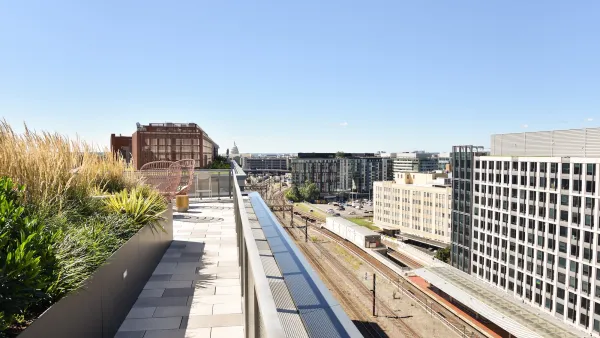
DC energy efficiency rule requires buildings to upgrade their infrastructure or face millions in fines
Building owners and condo co-op members say the upgrades are often prohibitively expensive.

Planetizen Federal Action Tracker
A weekly monitor of how Trump’s orders and actions are impacting planners and planning in America.

The state-sanctioned urbicide of Austin
People don’t kill cities. Freeways do.

US to reduce Colorado River water deliveries to Mexico
A new Colorado Treaty amendment reduces Mexico’s Colorado River water allocation by 250,000 acre feet.

5 New England states march closer to 800 megawatt wind energy project
Securing federal approval for the project may be complicated under the Trump administration, which has historically been hostile towards domestic wind power.

Baltimore to break ground on $50 million Transit Priority Project
The project will bring faster bus trips, safer streets and better bike connections to Baltimore.

Airbnb launches $250 million 'last-dollar financing' housing accelerator, makes first investment in Austin
The company will put $6.4 million towards affordable housing development in Texas’ capital.

FREE Course: Walkable City 1: Why Walkability?
After describing his path towards focusing on walkability as the essence of good planning, Jeff Speck marches through his five principal reasons for making more walkable places.
Reinventing Malls: Planning Alchemy—Turning Gray Fields Into Gold
The course focuses on the opportunities and imperatives that shape reinvention of mall sites.

Eagle County Government
Harvard University Graduate School of Design
Nashville Planning Department
The Architects Foundation
University of Cincinnati Online
The Pocatello Development Authority
The Urban Renewal Agency of the City of Pocatello
Journal of the American Planning Association